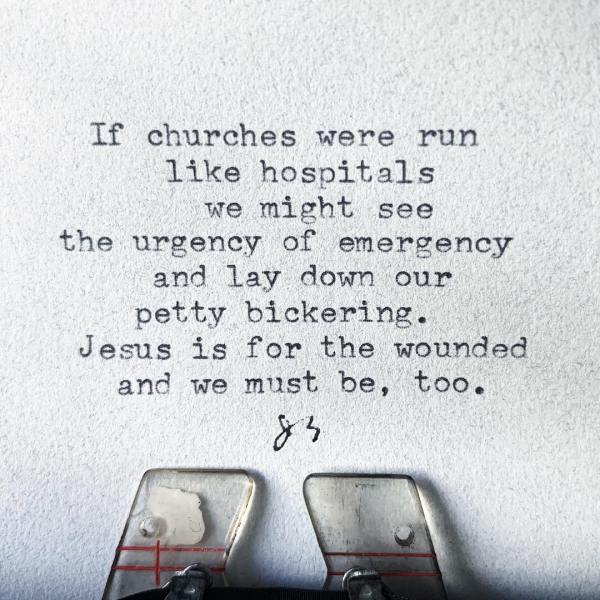
I am with you.
I am for you.
I am sorry.
I love you.
How can I help?
— J.S.
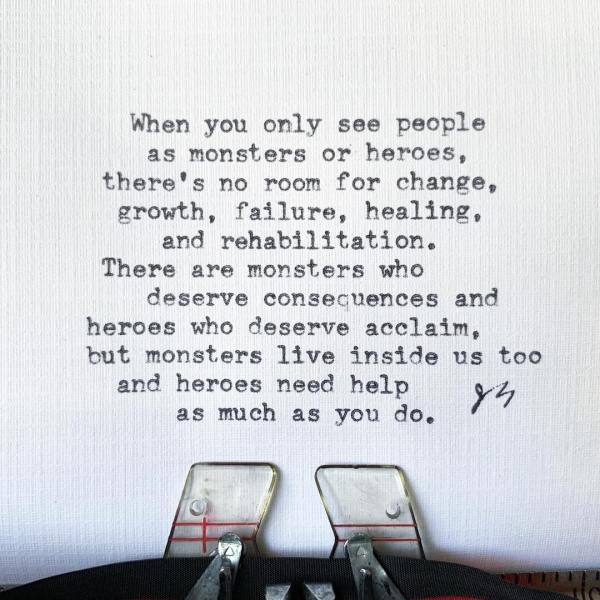
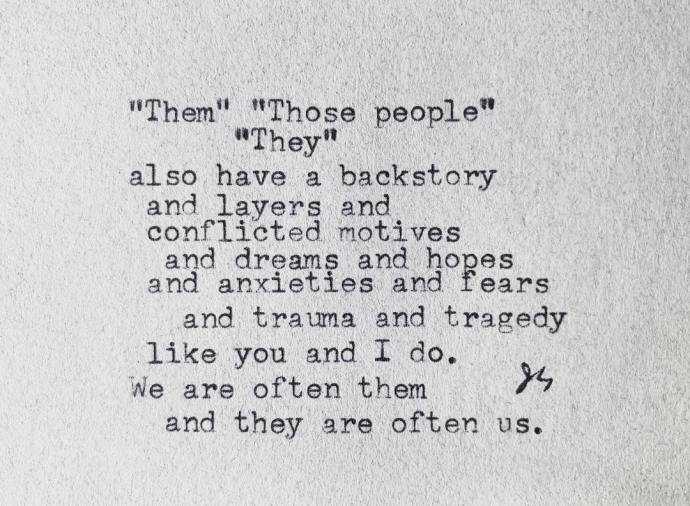
No one is the one-dimensional, evil caricature that they’re painted to be.
No one is the shiny version of a person that’s worshiped on a pedestal.
It’s easier to hate a cartoon-parody idea; to denigrate a hologram; to blast the artificial; to praise the effigy. It’s easier to demonize a faceless, disembodied, phantom enemy.
If you and I could sit down for coffee, we would discover hidden layers, messy dimensions, buried motives, unspeakable trauma, two fractured people hanging on.
We are wildly struggling, conflicted, complex.
We are not wholly evil nor holy good.
Yes, monsters deserve justice for their crimes. Heroes deserve more applause. But I will pause to consider that we are often both. We can be our own worst enemy, and we are just as capable of being our own heroes, overcoming the worst of us with the best in us.
Across a table, chair to chair, eye to eye, we might disagree—but I hope we will learn how we came to be. To hear the whole story.
— J.S.
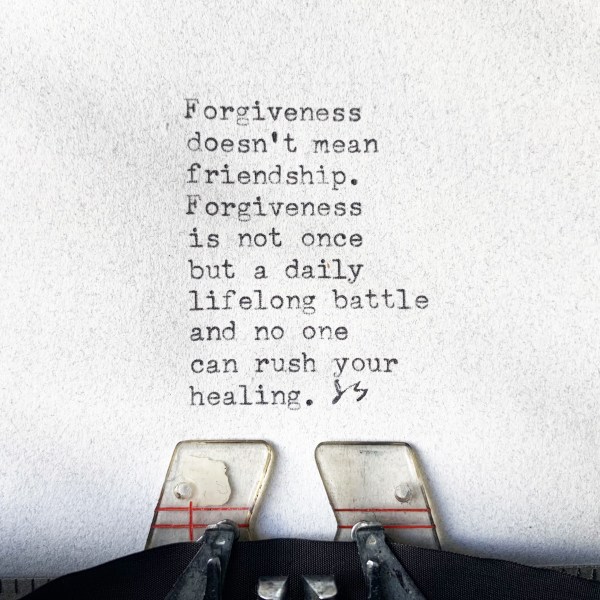
It’s unfair to rush someone into forgiveness. It’s powerful and necessary, but forgiveness is not a one-time moment that magically seals up the wound. It takes a deliberate, daily battle over a lifetime. That occasional angry twitch doesn’t mean you’ve failed at finding peace; it’s only part of the process. Let it happen. It hurts because it meant something. It has to pass through your body, like flushing out poison. No one is allowed to rush your healing, including you. No one can just “get over it.” It’s your pain, your pacing, your tempo. But I do hope to see you on the other side, where there’s freedom. You can take all the time you need, and I’m with you.
— J.S.
The nurse told me that the patient Willard had taken a bite out of another nurse. He had swung at one of the doctors and thrown urine at a surgeon. Willard couldn’t walk; he kept demanding to go home. “Get me a wheelchair, I’ll flop in and ride over you people.” The staff kept trying to get him to stay, to get treated, despite his violent non-compliance, because nurses and doctors have the guts to look past that stuff.
The staff called for a chaplain, and I was the lucky one. I walked in and saw the patient had a tattoo of a swastika on his hand enclosed in a heart.
My eyes locked on the swastika first. The symbol held a terrible place in my memory: when I was a kid, someone had spray-painted a red swastika next to the front door of my dad’s business. Though my dad had tried to paint over it, I could still see it on hot summer days, a scar on the wall and a scar in my head, a mad throbbing declaration of all the world’s ugliness dripping in crimson. I still dream about it sometimes, and in the dream I’ll peer down at my wrists, engraved with the same red marks down to the veins.
The patient, Willard, saw me and said, “Thank God, a chaplain, finally someone who can hear me.”
But I didn’t want to hear him. And a part of me also thought, “You deserve this. I hope you never leave. Then you can’t hurt anyone out there.”
He said, “Look, I see your face, I’m not trying to hurt anybody. You get it? I just want to go home. Fetch me a f__ing wheelchair, would you?.”
Willard got louder. He clenched his fists and waved them around. He went into an f-bomb monologue about the staff, “you people,” about the whole dang world.
I had half a mind to leave. I didn’t have to stay. I didn’t want to stay. I kept looking at that swastika. I kept thinking he deserved to be here, to be sick and sorry and helpless.
When Willard stopped talking for a moment, I said the only thing I could think of.

Here are my Top Twelve Posts of 2018, including topics like the benefit of grief, dealing with depression in marriage, misogyny in the Bible, people-pleasing, and my brush with suicide this year.
For all my typewriter posts, click here or my Instagram here.
My top two selling books this year were the one on fighting depression and the one on King David.
12) Grief Over the Death of a Loved One: To Move On or Hold On?
11) I Called the Suicide Lifeline
10) An Interview About Mental Health, Minority Stigma, and the Church Vs. Depression
8) I Want My Life to End—What Do I Do?
7) I Have Doubts: Am I Allowed to Say That?
6) How Do You Know You’re Persecuted or Just a Terrible Person?
5) Working Through Depression As a Team: What to Do and Not to Do with Your Friend’s Mental Health
4) I Think I Hurt Someone: How Do I Clear the Air?
3) I Care Too Much What Other People Think About Me
2) What’s Up with the Bible Saying “Wives Submit to Husbands”?
Earlier this year, I called the Suicide Lifeline. I was in pretty bad shape. My depression has been a lifelong street fight and it’s always been ugly. It’s not romantic or glamorous or poetic or anything like that; it’s the kind that makes people leave. But most of the time, nobody can tell I’m hurting just by talking to me. I tend to smile real big and laugh just as loud. Only in small quiet moments, when I‘m not “on,” not performing, there‘s a shadow across my face. A fog. I can pretend to be okay for a long time.
I’m glad I called the lifeline. I didn’t talk to anyone. The phone started ringing and I hung up. But it was enough to get me moving again. Even the possibility of human connection, sometimes, is enough.
There is a moment after crawling out of an episode of depression where I can hardly believe it happened. It seems silly, even. I think it’s because life is so filled with wonder and goodness, it’s hard to imagine giving it up. But when depression hits, it’s hard to imagine why I should go on.
I’m trying to hold on to that wonder and goodness. To remember there is a sun behind the fog. It’s a cheesy thing, I know. It’s also kept me alive. The dark always looms, encroaching, and I am afraid one day it will win. But I’m always glad I survived. I’ve been blessed and hopefully have blessed some. I am glad to know life today. By the grace of God, I am here.
— J.S.

Anonymous asked a question:
I’m only a teenager, but I already feel like my life should just end. For my whole life I’ve felt like I am only a burden to those around me, and feel I don’t deserve to live. Honestly, I cant even get myself to pray because I feel I am undeserving of gods love and insight, and that he couldn’t love someone as foolish as me anyway.
Hey dear friend: I love you. We love you. Stay alive. You deserve life. God loves you. I have experienced God’s love, and while it’s hard to believe sometimes, He does love you. I promise that if He can love a guy like me, He can love anybody. I mean it. I seriously mean it.
Maybe this won’t be very comforting, but I love this study. Almost everyone who tried to jump realized later that their pain was bound within time, within a crisis, rather than a permanent pain. One of the people who survived jumping the bridge said, “I instantly realized that everything in my life that I’d thought was unfixable was totally fixable—except for having just jumped.”
I cannot promise that life gets better. Life can be cruel, unfair, intolerable. People can be downright mean. Failure and rejection will happen. Risks don’t always pay off. You will miss chances and opportunities. Injuries and disease are a real danger. Our brains are often broken by depression and other lifelong illnesses. People will leave.
But none of these things, none of these things, determine your worth as a person. Nothing that has happened to you gets the say on who you are. Of course, life hurts. We’re allowed to hurt. We’re allowed to be mad. We can vent and yell and shake a fist at God. All of that is being human. But all the ways in which life can be unfair do not have a single thing to say about you as a person. You are loved, regardless. You are loved simply because you were born. For me, that’s often enough for the next breath. Looking back, I’m glad I breathed again.
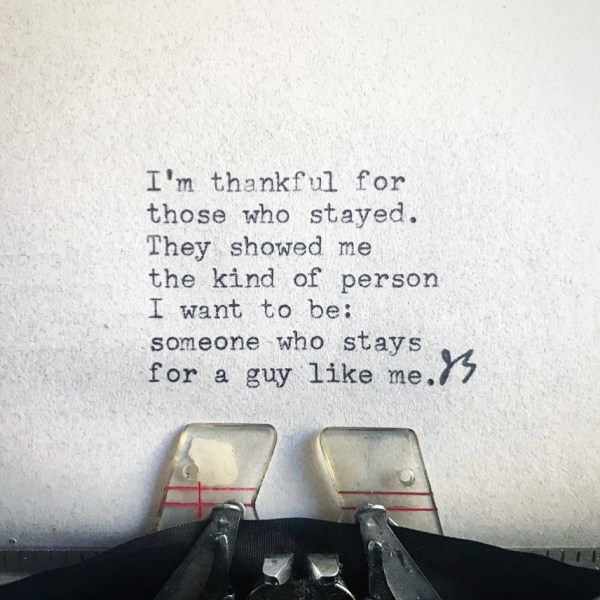
Most testimonies have a turning point: “And then I met ___” or “Someone reached out” or “I got this text at the perfect time.” It seems random, but those people and encounters and messages of encouragement happened on purpose. Someone made a choice to reach out, get involved, get near another person’s heartache, and help them for one more step. It was enough to get them moving again. Maybe it was no big deal for the person who reached out. But to the person they helped, it meant everything. It was the turning point. It was the beginning of seeing new light, of finding a new dream, the start of healing. A little bit of your time and wisdom might turn someone’s life around. I’m thankful to those who pressed in and breathed life.
— J.S.
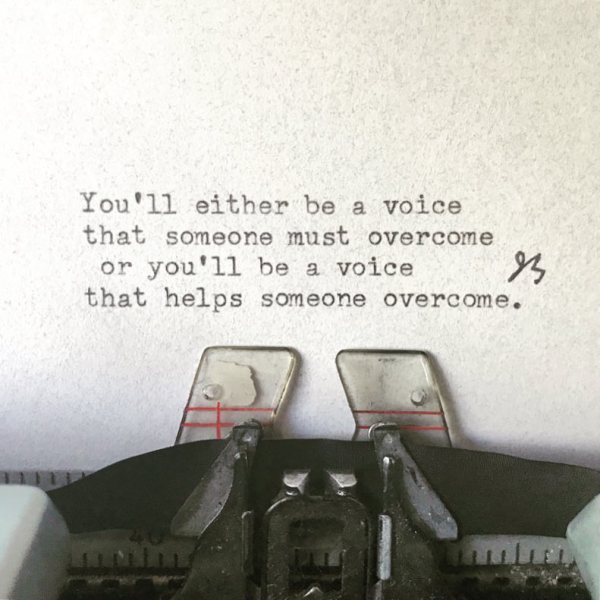
I took a speech class in college because of my stage fright. The professor, Mr. Johns, was about the most encouraging guy on the face of the earth.
There was a girl in the class who was just like me. She was the class because she wanted to overcome her fear. In her first speech, she burst into tears and couldn’t stop shaking. I thought I had it bad, but this girl came undone at the seams. I was worried that we’d have to call an ambulance for her. She wanted to stop but the professor got up right next to her, nudging her to finish. Some of the others stood with her and we cheered her on, rooting for her, clapping and fist-pumping and even saying “amen” the whole way. She finished the speech.
By her final one, she could do it up front by herself. She knew we were still with her up there.
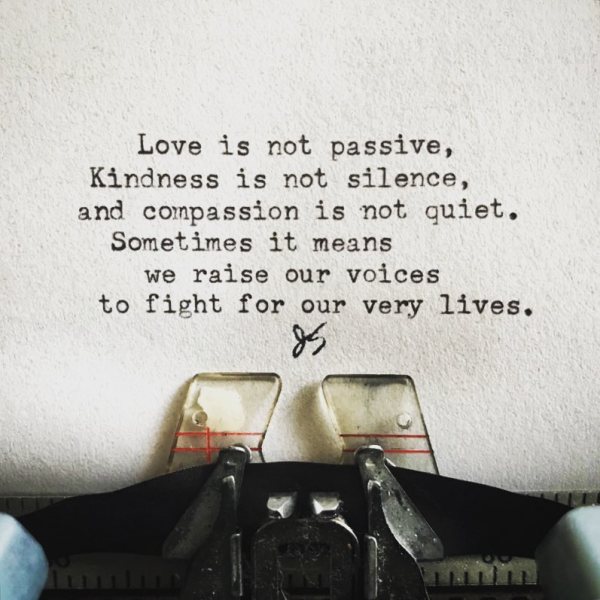
I’m all for love and patience and understanding and compassion —
But there’s also a time to say enough is enough. There’s a time to vent, weep, scream, shake a fist, and to simply be mad. There’s a space when things aren’t okay and the injustice is still a fresh wound and no one is supposed to tell you how to feel. We need to grieve before jumping to commentary and those extra little points of debate and platforms and policy. We need to grasp the magnitude of what happened without rushing to a better place, so we can do the hard work of healing deeply, and to ensure that justice is not forfeited for the sake of politeness. Sometimes love has to be outraged, because it won’t sit down and take anymore of this. Sometimes love has to get up and fight.
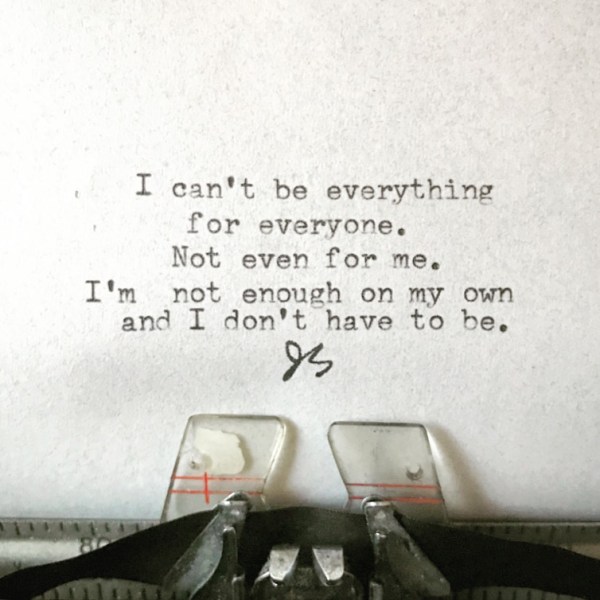
Everyone has a vision for your life. Everyone knows who you ought to be. Everyone has advice, the right answer, the easy fix.
But no one can bear the burden of those expectations. You can’t be enough all the time, not even for yourself.
You will disappoint people. You will disappoint you. It happens. It hurts. And that’s how it goes. The eventualities of life have a way of creeping in, regardless of best efforts and right motives.
You will get crushed by the weight of others’ plans. But you’re not obligated to respond to everyone’s criticism all the time. There’s no pleasing everyone. Some will have already made up their mind about you, no matter how much you sing and dance. Your side of the story won’t always be heard. Your intentions will be negatively filtered and your words shot down at first glance. That’s okay. Criticism is important, but you can’t speak on what you didn’t say. You can only mean what you did say, and mean it well.
Be encouraged, friends. You are doing a good thing. A new thing. By the grace of God we do our best and get up again.
— J.S.
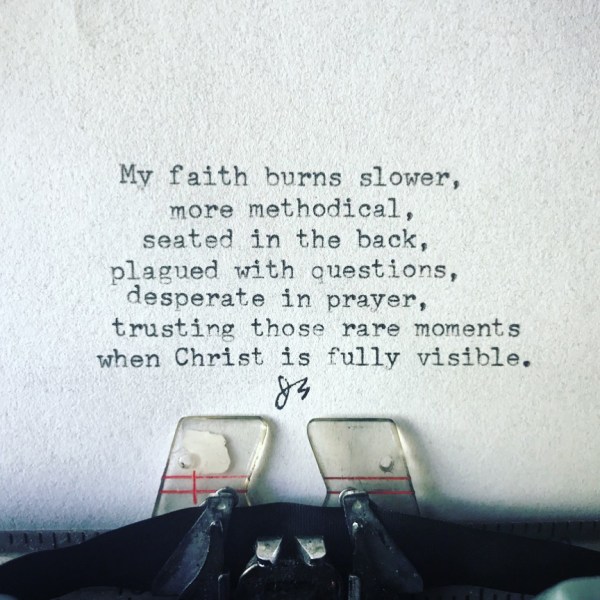
I imagine that when Moses split the Red Sea, there were two groups of people.
The first group was composed of victorious triumphant warriors saying, “In your face, Egyptians! This is our God!” They were pumping their fists and thrusting their spears.
The second group was composed of doubtful, panicking screamers running full speed through whales and plankton.
I’m a Screamer. I’m a cynic. I’m a critic.
I’m a Peter, who can make a good start off the boat, but falls in the water when my eyes wander.
I’m not endorsing a halfway lukewarm faith. I believe God wants us to have a robust, vibrant, thriving relationship with Him. But as for me, I’ll be limping to the finish-line.
I’m more of a Thomas than a Paul. I’m more Martha than Mary. I’m more David than Daniel.
Yet the Warriors and Screamers all made it through.
It’s not easy to have faith the size of a mustard seed. But Jesus promised that this would be enough to move mountains, and I’m learning to be okay with that.
— J.S.
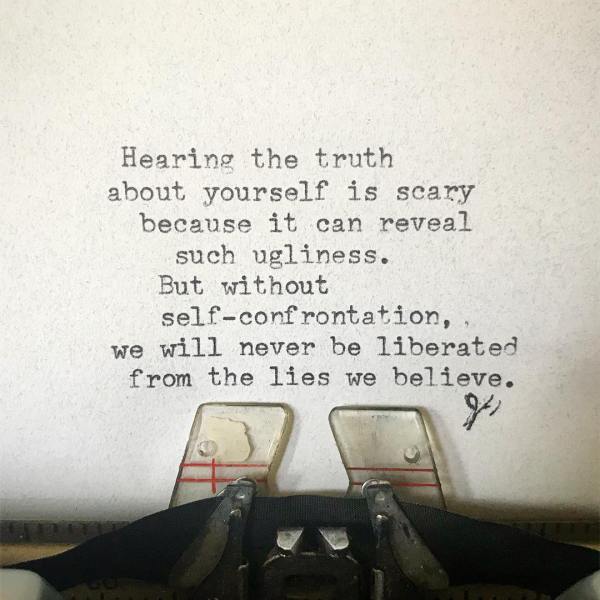
If you want any hope of change, freedom, progress, recovery, and growth: you’ll need to confront yourself, too.
The quickest way to not grow is to surround yourself with yes-men, run from rebuke, only read self-affirming bias, and unfollow all disagreement.
I don’t mean we listen to every opinion. Especially not online. I don’t mean we call each other out over the smallest infraction. I mean getting with the one friend who has tears in their eyes, voice shaking, who knows that friendship isn’t all giggles and games, who can say, “You’re better than this.” I still run from it all the time. Hearing the hard stuff is excruciating. But as hard as it is, to admit “I was wrong, I’m sorry, I’m learning, please forgive me and show me” is not the end of the world. It hurts, but not more than the pain of staying ignorant in our ego.
I hope too that we can make space for those who admit they’re wrong and apologize and ask to be further schooled. I hope we can start and finish with grace. Trust and honesty and confession only happens in spaces where we won’t be met with cringing, but embrace.
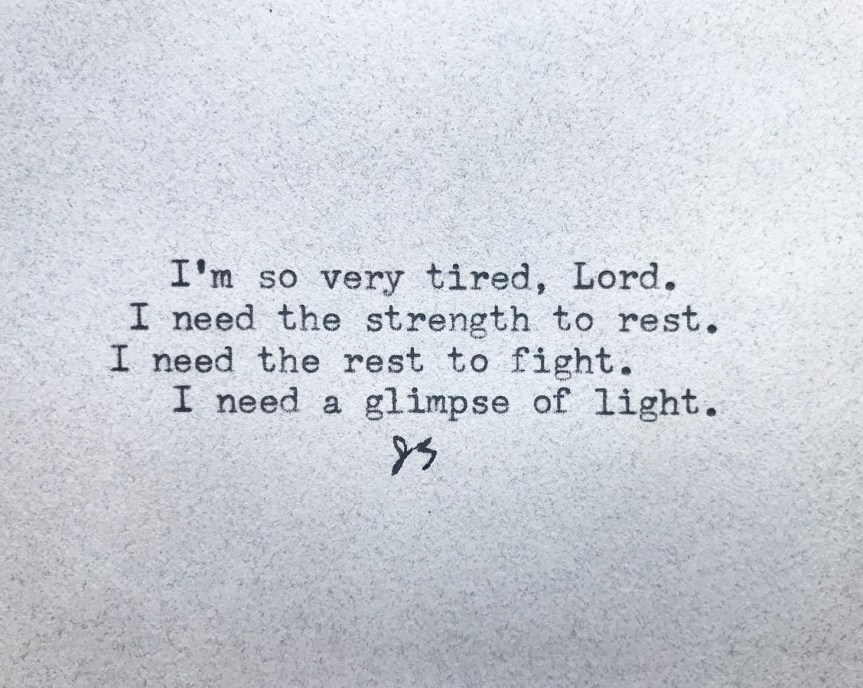
“May God bless you with discomfort at easy answers, half truths, and superficial relationships, so that you may live deep within your heart.
“May God bless you with anger at injustice, oppression and exploitation of people, so that you may work for justice, freedom and peace.
“May God bless you with tears to shed for those who suffer from pain, rejection, starvation, and war, so that you may reach out your hand to comfort them and turn their pain to joy.
“And may God bless you with enough foolishness to believe that you can make a difference in this world, so that you can do what others claim cannot be done.
“Amen.”
— A Franciscan blessing

Note to future self:
When you don’t get it right —
Apologize quickly and let go.
Don’t beat yourself up or defend yourself too long.
Humans are squishy with small brains. We don’t get it right every time. And that’s okay. Being wrong is not the end of the world.
— J.S.
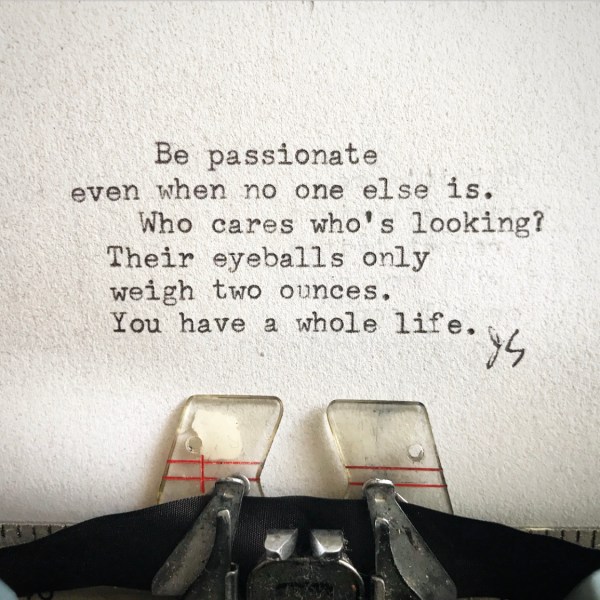
Don’t settle for less.
Don’t sell yourself short.
Don’t be rushed into a feeling, a decision, an opinion.
Don’t let anyone talk you down.
Drop the mic often.
Prioritize, for our time on earth is short.
Think for yourself.
Find your vision. Listen.
Do not hide tears; they’re yours.
Trust God. Take heart. Keep passion.
Fight the good fight, fellow traveler.
Fight.

You still have a story to tell.
Nothing about you is over yet.
Tell it well.
Finish strong.
Don’t look in the rearview too long.
No matter what’s been done or done to you,
you can still be you, truly.
No one else can write your story.
Live it well.
— J.S.
Photo from Image Catalog, CC BY PDM

You’ve had the Late-Night Regret Twitch: to mourn over why we couldn’t have just done better. There are defining moments in the past where we think, “I should’ve went to that city. I should’ve gotten that job. I never should’ve dated her. I wish I could un-meet him.”
My dear friend: If you’ve really messed it up, I don’t believe you can “fall off” God’s Will. I don’t believe that God’s Will could be a fixed straight line. I don’t think God ever says, “Well, you fell off the track so good luck in the ditch for the rest of your life.”
Many earnest Christians assume that this relationship or this job or this house is the one that God really has for them, so they invest their entire heart into these things. But at any moment, our idea of the future can be upturned. We see it happen all the time. Did that mean God had it coming for them? Does that mean they’re now out of line with God’s Will and they need to claw for their dream again?
When I read Scripture, I see that most of the biblical characters had to change choices on the fly. They would run into a dead end, back up, and start again. They spent years in circles. Sometimes God would reveal what to do next; other times they would just pack up and start walking. Their lives were flexible. They didn’t have one specific dream. They did mess up, a lot. I’m sure they had tons of Late-Night Regret Twitching. I’m sure, like us, they often thought, “It’s too late for me.” But in hindsight, the very interruptions and unforeseen circumstances in their lives were part of God’s Plan A. Every wrinkle in their story was a new doorway.
And God’s Will, in the end, wasn’t so much about what they were doing, but the kind of person they were becoming. The destination was important, but the journey was the pulse that beat their hearts.
Photo by Image Catalog, CC BY PDM

This is the Preface for my book Grace Be With You. The Preface is about the gravitational power of story that connects us. The book is a compilation of my stories, encouraging quotes and poems, and everyday encounters from the road to the hospital to cafes and gas stations. Be blessed, dear friends.
—
There’s an old Star Trek episode where a particular alien species, the Tamarians, can only communicate in images and allegories. As the helpful android, Lt. Commander Data, puts it:
“Their ability to abstract is highly unusual. They seem to communicate through narrative imagery, a reference to the individuals and places which appear in their mytho-historical accounts.”
This strange constraint plays out to amusing fashion throughout the episode, as each party is frustrated by their miscommunication, and the tension nearly boils over into a knife-fight and all-out war (maybe your idea of amusement is different than mine). By the end, one of the Tamarians sacrifices himself in order to create a heroic narrative that both his people and the Federation can understand. It succeeds; this act of nobility becomes the bridge towards peace. The great Captain Picard realizes, “The Tamarian was willing to risk all of us, just for the hope of communication—connection.”
We’re not much different than the Tamarians. We risk the friction of our jagged edges to connect, not merely by formulas or flowcharts, but by a sloppy crawl through our shared, lived-in journey. We crave a common vocabulary beyond the heavy anvils of prose, crafted from imagination and our unified experiences.
Stories contain power because they seem to unveil secrets that have long been muddled, as if we’re unearthing lost royal treasure. But more than that, stories are a connective tissue, bringing us together by the longing and landing of a resolution.
Since a narrative thrust is essentially driven by an unresolved tension, with unassailable obstacles besetting a goal on every side, we discover in them the depth of our courage and cowardice, and we find out how to be. We find what we’re meant to look like.
We find, perhaps unwillingly, that we are not always the heroes, but in need of rescue: because we’re so often the cause of our own tension. And this is what puts us in the same boat, the same battle. The best stories require first an examination of our limitations, and then a cooperation as equals, through a slow-burning realization that we are not opposed to one another, but can reach the same goals with a little spunk and ingenuity. From Star Wars to The Karate Kid to The Lord of the Rings to Up, from the Epic of Gilgamesh to the Odyssey to a genie in a bottle, these are tales told side-by-side. We find we are fellow travelers, not so different, really, with a universal desire for shalom, a harmony—and we can’t get there alone. Heroes cannot fly solo, and villains are not beyond change.
Stories and symbols have a way of disarming us, too, getting to the inside of the matter with gentle precision. Propositions are a bit like bricks and beams: necessary for the foundation, but soon rigid and inflexible. Narratives and metaphors have a dynamic of growth to them, like seeds pushing through the dirt into the sun, and they give breath. Or maybe, as one theologian said, they are windows that light up the house and give it air. It’s why Nathan the prophet did not approach David with lectures and bullet points—”Three reasons that adultery and murder are bad!”—but instead with the innocent story of a poor man and his ewe lamb, ending on a twist that David could not negotiate. It forced David to rise from the dirt, into light.
Jesus himself spoke in parables with great aplomb, from mustard seeds and millstones to swords and sparrows to wedding feasts and rebel-runaways. Jesus’s disciples often had trouble deciphering his parables, which Jesus seemed to deliberately obscure at times—but ultimately, the parables were pointing to a future work on a cross and in a tomb. His stories pointed to his heart, and his heart sculpted the greatest story of them all: a final sacrifice to bring us peace with God and one another. He spoke of rescuing us, because we could not do that on our own. We were never meant to.
Only Jesus could become our bridge of peace, our shalom. And this kind of love is not merely the royal treasure, but the very purest stone from which all treasures are made.
The following pages are much like rotating the facets of such a jewel, pointing to the pulse of the galaxy-sculptor. These stories and poems and thoughts are chiseled by joy, sorrow, failure—and the great love that has cast a shadow on them all.
My hope is that we meet somewhere between the words, to connect, because I believe this is the truest stuff of life. Stories help us to mesh in this tapestry, that in our overlap, we’d find strength hand in hand. I’m excited. I’ll see you there.
— J.S. Park // Grace Be With You

Photo at top by sonlight972, used with permission.
 J.S. Park: Hospital Chaplain