Love Doesn’t Enable, But Empowers.


I fell for the romanticized, destructive idea in both church culture and pop culture that we must constantly “love and forgive and give away,” a sort of martyr-hero syndrome that guilts us into perpetual generosity.

I spent too many years consumed by the “sacrificial radical love” model of Christianity, which required that I pour out more than I had—but it only scooped out my guts and left me bitter and resentful and exhausted.

To love must include truth, wisdom, and boundaries. Sometimes it means distance. It means knowing when to rest and recharge and to embrace our limits. It always means to have grace for yourself, too.

And to love is not enabling, pampering, coddling, or letting someone off the hook—or it wouldn’t really be love at all. There’s a way to help others that really hurts them because it only feeds into their harmful patterns.

For those who have been abused or traumatized: Forgiveness doesn’t mean friendship. No one should ever be rushed into forgiveness, not for the sake of “getting right with God.” Not for trying to look like the “bigger person” or “because it’s the right thing to do.” We need to recognize patterns of unrepentant abuse and gaslighting and manipulative language that will only guilt-trip back into a vicious cycle. We can never mindlessly open the door again on an abusive relationship. You have the right to say “no.”

God does redeem the evil, yes, but God is for the victims, for the abused, for the survivors, too. God is for the exile, the foreigner, the despised, the despondent who crossed the Red Sea. God is for you.


— J.S.

Squishy Small Brain.


Note to future self:
When you don’t get it right —
Apologize quickly and let go.
Don’t beat yourself up or defend yourself too long.
Humans are squishy with small brains. We don’t get it right every time. And that’s okay. Being wrong is not the end of the world.
— J.S.

No, You’re Not Persecuted.


There is a particular Christianese language that demonizes “the enemy” and “the infidel,” in which “God is on my side” and “They’re holding me back.”

This triumphalistic self-affirming theology, wrapped up in warfare terms and royalty cliches, cannot stand criticism.

It assumes all disagreement is trolling.

It attempts to say “I have the truth” as if truth must be weaponized to hold over someone’s head.

It breeds yes-men and an insider’s club.

It moralizes its own values based on “who we are not.”

It is an anti-theology that covers deep insecurity with little fleeting boosts of ego.

It attacks the most minor offenses in “secular worldly” culture in order to play victim—when sadly, Christians and truly persecuted groups are killed daily overseas.

I’m guilty of abusing the persecution complex, too. It’s incredibly easy to fall into a dichotomous division between in-groups and out-groups, between my church and your church, my dogma versus yours, to feel important, as if by lots of motion I am really moving. It’s easy for me to write a post like this and presume that I’m above all of it somehow, as if by mere awareness I have it figured out. It’s easier to look certain in our convictions rather than say, “I don’t know, I’m still figuring it out,” or, “Can you help me understand?”

In the end, Jesus told us to love our enemies. Yes, them. To them, it’s us. Every person in this discussion needs grace and a generous space. The people who “don’t get it yet” are also you and me. The people who cry “I’m persecuted” need as much grace as you and I do. I pray for me. I pray for you.

— J.S.

Mental Illness Vs. Religion: 4 Thoughts About the Church Against Depression

Anonymous asked a question:

What are your thoughts on mental illness and religion? I’ve seen some Christians state that you can pray mental illness away and once you’re saved you won’t be depressed or have suicidal thoughts anymore. As someone in the mental health field, it kind of annoys me to hear people say this. Mental illness is so complex and multifactorial but obviously there is a biological component to it. These people need medications and counseling to get better, not JUST God.

Hey dear friend, I once did an interview about this subject here:

– An Interview About Mental Health, Minority Stigma, and the Church Vs. Depression

I agree with you 100%. The way the church has approached mental illness has been misinformed at best and atrocious at worst. It’s the same with the westernized brand of bright-sided “positivism” and attempting to tell someone, “Cheer up, snap out of it, don’t cry, it’ll be okay, you have to be strong.”

Here are some thoughts to consider about the church and mental illness:

Continue reading “Mental Illness Vs. Religion: 4 Thoughts About the Church Against Depression”

Stay Passionate.


Don’t settle for less.

Don’t sell yourself short.

Don’t be rushed into a feeling, a decision, an opinion.

Don’t let anyone talk you down.

Drop the mic often.

Prioritize, for our time on earth is short.

Think for yourself.

Find your vision. Listen.

Do not hide tears; they’re yours.

Trust God. Take heart. Keep passion.

Fight the good fight, fellow traveler.

Fight.

— J.S.

They Say “Don’t Cry” — But So We Must.


It’s a crazy incredible thing to be in a place where people slow down and listen, where they hear your whole story and let you paint your full heart in the air.

I was telling one of my fellow hospital chaplains about life lately, about my health problems and secret panics and suddenly about a billion other things, every humiliating and painful and neurotic moment that had been twitching over for the longest time, and I didn’t realize how much I had bottled up in my neatly wrapped fortress. My chaplain friend never judged, only nodded, never flinched, stayed engaged. She then prayed for me, a really beautiful prayer, like cool water for bruised purple hands. And I wept. A lot. Quietly, but inside, loudly. It was a little embarrassing. But something shifted and settled and became still for a moment, like the leaves of a tree coming together after a strong wind, a momentary painting. I left lighter.

Later I visited a patient who had nearly died from a brain bleed, and when I offered prayer, the nurse grabbed me and said, “Me, too.” I took her to the side, and she whispered, “Cancer. I might have breast cancer, and I’m afraid, chaplain. I’m so damn afraid.” She clenched her teeth and tried not to weep, but I put a quick hand on her shoulder and she wept anyway. She talked. I listened. There was nothing for me to say but to be there. And maybe nothing had changed—except we were made light somehow, and together drew something bigger than us. We drew colors into the gray.

There are still places, I believe, even in a busy and unhearing time, where we can draw free. I hope to meet you there, where we are not okay, but less gray than yesterday. I hope to pray for you, that we become bigger.

— J.S.


Late Night Regret Twitch.


I often pass myself off as more put-together than I really am, but most nights I sit down after a long social gathering and I beat myself up for all the dumb cheesy things I said, and things I wish I had said differently or didn’t say at all, and how off-balance and weird and twitchy I must look, and how I’m not really making progress on becoming this whole acceptable well-adjusted cool approachable guy that everyone else seems to be already without even trying.

I end up thinking I’ve failed something, or lost at life somehow. I replay that joke I told which completely bombed and derailed the banter. I sometimes think everyone else has this secret ingredient to being blended in so smoothly to the inner-circle, like there’s this key or password that no one has told me about, and maybe one day I’ll achieve that code and I can go home in peace without this stomach full of remorseful anxiety over my lack of tact and style, and it’ll be as easy as those wrinkle-free people in fast-talking movies.

Does this happen to you too? The late night regret twitch? Social hangover? The crazy replay loop?

— J.S.

Some Days It Feels Like a Crazy Lie.


There are days or weeks or even months when I read the Bible and there are no grand epiphanies.

There are whole seasons of Sundays when I sing praise and feel nothing.

There are times of prayer where the silence kills me.

There are great Christian books and podcasts that I eat up which don’t budge my spiritual life.

There are too many times when I doubt the very existence of God and the sending of His Son.

It can all feel like a crazy lie.

It’s in those times that I ask myself, “Am I out of love with God somehow? Am I losing my faith here? How do I get back to where I used to be?”

But I keep reading my Bible. I keep singing on Sundays. I keep praying. I soak in books and sermons. I serve. I enjoy the company of mature Christians. I enjoy the fellowship of the broken.

And you know, sometimes the clouds part and God comes through and His love squeezes my heart and I fall to my knees remembering how good He is.

Then I read Scripture and can’t stop weeping and I turn on Christian songs in my car full blast and sing loud enough to scare the traffic. I serve with shaking hands and get convicted by those sermons and soak in God’s goodness all over again.

So I’ve learned over time: I wasn’t really out of love with God. I’m just a fragile human being who changes as much as the weather. I was setting a ridiculous standard for myself that can’t be defined by self-pressuring parameters. I was tricked by the enemy into judging my flesh. How I feel is important, but it’s not the whole basis of my faith. It’s wholly, solely, defiantly by His grace—and in that, I think I can finally relax.

— J.S.

I Will Disappoint You.


Eventually I’ll say something that you’ll totally disagree with. I will disappoint you. I’ll come off shrill, inconsiderate, ignorant, and misinformed. Your favorite writer or pastor or celebrity will miss an angle or fumble a point or miss the whole thing. You’ll think, “How could I have ever liked this guy?” And we completely dismiss and demonize this person based off one sentence, one phrasing, one particular choice of word. I’ve done it, too. Farewell, forever.

Maybe it’s for a legitimate reason, and they really did go too far. I just wish we could give a little chance for conversation over coffee. It’s possible this person misspoke, because they’re just a person, and they don’t always get it right. It could be that they need the patience of dialogue to re-examine what they said, instead of the hasty hate-train that offers no fair exchange. I want your help. I want to know when I’m wrong – but it’s hard to hear what’s right when everyone is yelling. I want the freedom to make mistakes so that I’m not afraid to learn from you. I don’t want to be afraid that you’ll freak out when I don’t phrase things exactly as you’d like. We can tell when you’re ego-boosting your platform and winning internet-points with the choir. I’m not sure if you would listen to that sort of yelling, either.

I know there are some non-negotiables that we must agree on, like common dignity and humanity, but none of us will ever agree on everything. And that’s okay. I think we can have the nuance to disagree over a few things, but not judge an entire person based off a few degrees of difference. We can disagree and still be friends. It’s in our disagreements that we can become better together, and not worse.

– J.S.

Is It Okay to Be Angry with God?

Anonymous asked a question:

What if I am angry at God. How do you cope with the frustration and anger towards Him?

Hey dear friend, I’m really sorry. There must be many things happening internally and externally, and I’m with you and for you. So is everyone here.

I have to tell you up front: I’d much rather be mad with God than mad without Him.

That’s not some cute little statement that only works abstractly on Instagram. I’m dead serious. If you’re angry with God, at the very least, you’re talking with Him. He’d rather you be mad at Him than displacing that anywhere else. God isn’t put off by our barest, most raw emotions: because He made them, and He made you, and He’s going to work with that.

Continue reading “Is It Okay to Be Angry with God?”

From Atheism to Faith: Discovering the Hidden Story of Humanity


About my journey from atheism to faith, and how our historical impulse for religion points to the hidden story of humanity. I also engage with Yuval Noah Harari’s Sapiens and his take on religious metafictions.

For my seminar and Q&A “Jesus for Atheists,” click here.

Subscribe to my YouTube channel here: https://www.youtube.com/user/jsparkblog

Love y’all, friends!
— J.S.

Spoken Word: Friday / Saturday / Sunday – Death, Doubt, and Deliverance


Hey friends, this is a Spoken Word performance that I gave with Yale University Students in CT. About the three fateful days from Jesus’s crucifixion to resurrection, told from the viewpoint of a modern day disciple.


To download directly: http://traffic.libsyn.com/thewayeverlasting/JS_Park_-_Fri_Sat_Sun_Spoken_Word_1-21-18.mp3

I’m also on iTunes here: https://itunes.apple.com/us/podcast/j-s-park-the-way-everlasting-podcast/id395594485?mt=2

Be blessed and much love to you, friends! — J.S.

Scars and Heaven.


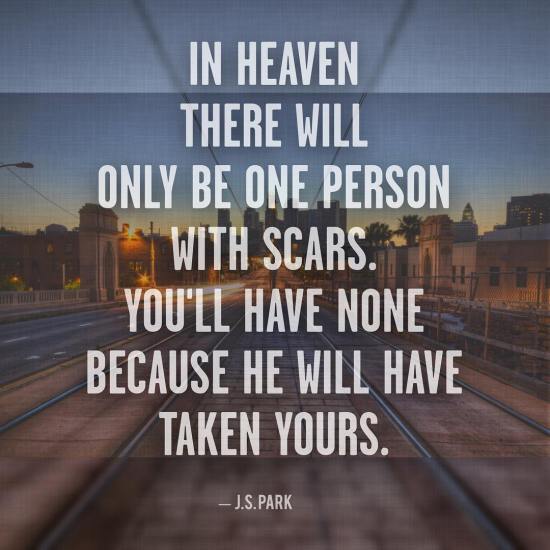
In Heaven, there will only be one person with scars. You’ll have none because he will have taken yours.
J.S.


Angry About Anger


An honest confession:

I struggle a lot with anger.

I’ve also been told that anger is wrong, so I tend to stuff it down. Eventually there’s a breaking point where it flies out like twice a year. I look pretty laidback and congenial until I have my semi-annual blow-up. It’s ugly. Embarrassing. Enough to make people leave forever.

Anger, of course, can be scary. I have thrown things. I have punched a wall. I have yelled uncontrollably. There’s no excuse for that sort of behavior and I deserve every consequence. People have a right to leave.

But I never knew there was a healthy kind of anger. That anger is pointing to something true, real, and valid. That it means something is very wrong around us or inside us, and it needs healing. At the very least, it needs to be heard.

No, we should never use anger as an excuse to hurt someone. It’s never okay to say, “I only did that because I was angry.” Nothing justifies abuse. Ever. We must be held accountable regardless of how we felt at the time.

I just wonder how we can talk about this in an honest way without totally writing off the angry person.

I’ve found that underneath rage is usually pain. Grief. A kind of hurt that has left us powerless.

The hard part is venting our anger in a way that’s constructive instead of explosive. The even harder part is to talk about it without people judging.

The common response is always condemning: “I knew he was terrible. His life is so good, he has no reason to be mad.” And maybe that’s true. But how can we correct this unless we talk about it? Aren’t there sometimes real reasons a person is mad? There must be a safe venue for an angry person to say, “I’m bitter, I’m resentful, I can’t forgive, and I don’t know what to do with this.”

My fear is that no one will make room for it. You can usually tell someone you’re insecure, sad, or lonely, and they’ll hear you. Tell someone you’re angry and they assume you’re a “bad person.” Sometimes angry people are also “bad people,” sure. But I wish we could find help for our rage without immediately being crushed and cast out. I wish we could talk through the stigma.

I think, in the end, that anger must have a place. You can be angry for instead of against. It can be motivated by justice. There are legitimate reasons to be righteously mad. A call for reparations. A proper outrage when someone is oppressed, exploited, abused. I wish I had known this sooner. I want to be angry for you, not at you. I hope there’s grace enough to learn how.

— J.S.

A Relationship Is Not a Wishlist


Look, a romantic wishlist is a nice thought, but it’s also creepy and unfair. It’s setting up an impossible monstrosity of expectations and you’ll be disappointed for no other reason than you played yourself.

I don’t mean lowering your standards. I mean setting real ones, for actual people who exist. For people who are just people and not a customized Frankenstein creature.

The person you’ll end up with is going to be their own personwith their own hopes, dreams, goals, anxieties, and weird little habits. They’re not a checklist trophy that will meet your every size or quota.

They’re going to be way different and in fact way more interesting than the stitched up hologram made from half-baked movie cliches and choir-preaching memes.

Relationships are about compromise. Not compromising yourself, no. But about two weird people making it work. It’s a wild mix of chemistry, compatibility, non-negotiables, history and trauma, highs and lows, disagreements and pushback and feedback, augmenting goals, and lifelong change.

“Get you a guy/girl who” only works if you see yourself as a main character-savior-hero and you see others as a secondary prop to fulfill your romantic comedy narrative. In that case, you have other issues and you can wait.

And waiting in the meantime is a really good time for growth, for self-discovery, and for becoming the kind of person you never knew you were looking for. Singleness, really, isn’t waiting. It’s being.

J.S.


Photo from Unsplash

The Truths and Myths of Christian Dating and Relationships

julettejoonengaged-073


Hello wonderful friends! Here’s a seminar that I gave in San Jose, CA about the truths and myths of dating & relationships within both the church-culture & pop-culture. Stream below or download directly here.

Some things I talk about are: “The time I overheard a couple have their final knock-down drag-out fight, my absolutely favorite type of scene in the movies, what everyone really wants in the hospital, dating theology from Taylor Swift, when God looks at you through the ceiling, and Christianity according to a cologne sample.”


I also did a follow-up Q&A which you can stream below or download here.


Be immensely blessed! — J.S.


Photo from my engagement shoot, by Angel He Photography

I Never Knew I Was at a Toxic Workplace—Until I Went to a Healthy One.

I love my current workplace. I mean, the work itself is incredibly difficult: grief counseling at a hospital, notifying family members of an accident, bringing up end-of-life decisions. But it makes a difference to have co-workers who are more than faceless employees. We are fellow sojourners on a mission together.

One of my previous workplaces was not like this. There was bullying, nepotism, high suspicion, and hateful gossip. The people were just mean. No one cared about seeing the best in each other. Every call or email from the higher-ups would throw me into a panic. Of course, I had my issues too. But I walked through them alone, alienated, with constant dread.

I recognize now that I’m lucky. At my current job, we’re all on the same page, we pause and listen, we clarify our communication without fear of retaliation. We deeply care about each other and the work we do.

The thing is, I didn’t know how awful my previous job was until I landed where I am.

My guess is that most of us will tolerate an abusive, toxic, punishing work environment because “I’m paying my dues” or “This is all I can get right now.” And that’s true. We often have to do things we don’t like to get where we want to be. We can still thrive in those places. Sometimes it’s the best we can do, and we can still be our best there.

Continue reading “I Never Knew I Was at a Toxic Workplace—Until I Went to a Healthy One.”

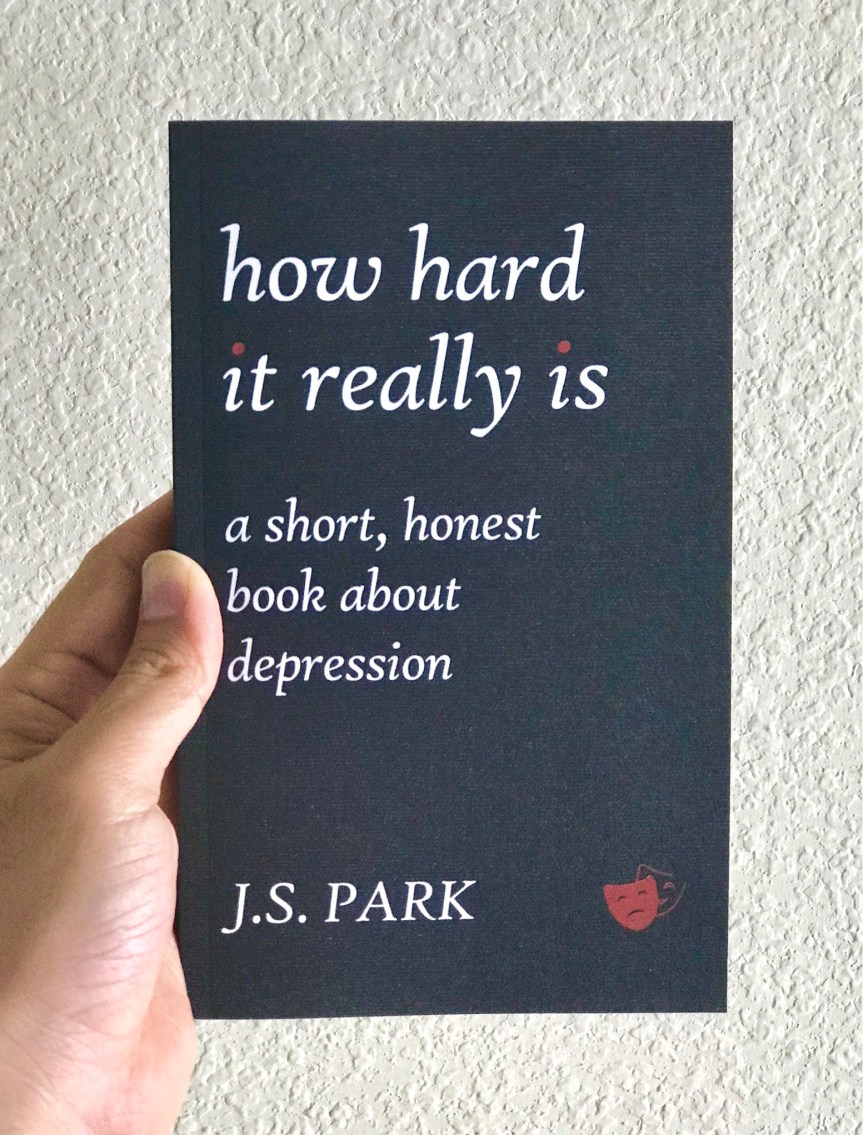
How Hard It Really Is: A Short, Honest Book About Depression


**Edit January 2018** My book on fighting depression has been revised with a new a cover and about a 10% change in content. If you’ve already purchased the book, please email me at pastorjspark@gmail.com and I’ll send a digital copy of the updated version.


Hello lovely friends! After a year and a half of painstaking work, my book on fighting depression is here. It’s called: How How Hard It Really Is: A Short, Honest Book About Depression.

The book covers:
• The science behind depression
• The helpful (and unhelpful) dialogue around mental illness
• The debate between seeing it as a choice or disease
• Stories of survivors
• A secret culture of suicide worship
• An interview with a depressed doctor
• The problem with finding a “cure”
• My own attempt at suicide
• A myriad of voices from nearly two-hundred surveys conducted over a year

The paperback is here. The ebook is here.

For my video on depression, check here: https://www.youtube.com/watch?v=xggg6xFObIE

Be blessed and love y’all, friends. A reminder that if you’re in a dark place, I hope you’ll reach out. You are truly more loved than you know. 
— J.S.


A Friendly Reminder: I Am Not Your Counselor and I Am Not a Journalist


I keep forgetting that most people on social media who act like authorities are young 20-somethings who haven’t seen much of the world and don’t know how it works. They want to change the world from their basement, or they’re just hungry to go viral. It doesn’t mean they can’t have an opinion. It means I need to double check theirs.

Bloggers are not your counselors or journalists. Most are just making up stuff with flowery words and “what I would do” sentiment. It’s not that we’re bad or wrong. But please keep in mind that most social media users care about your clicks, not your life.

I’m always asking, “Says who? By what authority? What makes it credible? Why do you believe it to be true? Why should I believe you? And how is it working out for you?”

Don’t trust me. Don’t believe me. Just because I have “followers” doesn’t mean a thing. Check the facts. For the love of God, triple check. Discern. Think for yourself. I can speak with authority on some things, but I won’t get it right every time. Trust with a closed grip.

J.S.


Photo from Unsplash

How Do You Know You’re Persecuted or Just a Terrible Person?

illuminirk asked a question:

how do you differentiate when you’re being persecuted for christ and being slammed for… for lack of a better word, for being a shitty person? for instance, i see a lot of american christians claiming persecution when really people are mad that they’re racist or homophobic or etc. how do you navigate that? how do you know?

Perhaps the simplest way is this:

Look around. Do you live in the West? You’re probably free to express your faith. So most likely you’re not being persecuted, but you’ve picked the wrong battle.

Look around. Do you live in the East? You’re probably not free to express your faith. So most likely you’re being persecuted, because you’re in the battle at all.

The thing is, early first century Christians were being persecuted simply for existing. Their faith was not primarily about self-improvement (though that’s in there), but about enduring the suffering of a cruel world. They didn’t have much room for political rallies or fighting for moral issues. They were in survival mode. They saw Christianity as the good news of a God who walked with them, rather than some kind of behavioral improvement tool. So while they did care about self-improvement, their first priority was merely survival.

Many Christians in the West today don’t experience the same kind of cultural suffering. They’re not in survival mode, so they’re focused more on self-improvement. I include me in this. It’s not a bad thing. I actually have space to think about how to better my own life and live like Christ. So sometimes Christians have too much idle time and pick the wrong fights in a free society. 

And really, when you have the chance to self-improve, it’s easier instead to stand up for some policy outside yourself. It’s a way to offload responsibility for your own actions: by trying to change laws or take the “moral high ground,” you then don’t have to look at changing yourself. Christians find it hard to follow Scripture, so they pick a path of lesser resistance (I include me here, too). It’s easier for Christians to shout really loudly in a free society than actually change their own self-destructive habits and live a useful, meaningful life.

I don’t mean that a person who experiences physical pain for their faith is necessarily a “real Christian.” Sometimes that’s just self-imposed martyrdom, and that’s selfish too. I mean that real persecution is about a cultural baseline of restricted freedom. If you’re free to express yourself, you’re not persecuted. If you express yourself and some people complain, you’re not persecuted. If you express yourself and some people call you mean names and avoid you at work, sorry, but you’re not persecuted.

Continue reading “How Do You Know You’re Persecuted or Just a Terrible Person?”