Crazy Male Asians: Stories Matter


With the release of Crazy Rich Asians, here’s my most popular post from last year: On the “Ugly Asian Male” stereotype, and why Asian-American males are considered the least attractive people and the least likely to be a lead.

– Ugly Asian Male: On Being the Least Attractive Guy in the Room

I was surprised this post got any traction at all. Often when I talk about anything Asian, people glaze over and tune out. “You’re smart, you have it easy, you work hard, you people are privileged too,” I always hear, as if my only say in the matter is to be grateful and bow all the time. And I know that “diversity” is not an issue everybody wants to hear because it’s been used as a guilt-sledgehammer. So I rarely talk about it here.

But these things do matter to me. I learned quickly as a young Korean-American that my life was a second-class existence. I was a prop, the comic relief, the third acquaintance. I wish I had any sort of Hollywood hero to aspire to.

Asian males in American media are often emasculated hair-dyed plot devices, mute kung fu experts, evil villains, or the computer guy in a chair. It’s almost impossible to name the last time an Asian male was the romantic interest in any American movie. Even Mulan​ was the only animated Disney movie where the romantic leads didn’t kiss. I guess an Asian male having that sort of energy was too weird.

That’s all fine, I suppose, but the power of mainstream art has a way of drawing boxes around our perception of others, including the perception of self. I suffocated in this box for too long. And God forbid we have actual dreams, hopes, insecurities, and backstories like everyone else.

With recent shows like Kim’s Convenience​, Fresh off the Boat​, and Ugly Delicious​, it’s great to see we’re slowly chipping away at old conventions. I’m not sure that Asian-Americans are going to have the “one huge hit that will change everything.” If that happens, I’m all for it. I’m also all for working modestly towards the horizon, like we’ve always done. I hope you will hear us. Our stories are worth sharing. Here’s to breaking boxes.

— J.S.

One Korea


One of the most heartbreaking things in my Korean heritage is our divided country. I wasn’t born there, but I took an interest back in college when I rallied with Liberty in North Korea at the steps of Capitol Hill in DC. I remember knocking on the doors of Congress members’ offices, even speaking with a few as they let students share about the tragedy of two Koreas.

Seeing the two Korean presidents meet is a big deal. It’s worth celebrating. I also have doubts, questions, uncertainties, as I’m sure many citizens do. I remain both cynical and hopeful that this meeting is a good first step. I still believe that reunification is possible in our lifetime.

From Atheism to Faith: Discovering the Hidden Story of Humanity


About my journey from atheism to faith, and how our historical impulse for religion points to the hidden story of humanity. I also engage with Yuval Noah Harari’s Sapiens and his take on religious metafictions.

For my seminar and Q&A “Jesus for Atheists,” click here.

Subscribe to my YouTube channel here: https://www.youtube.com/user/jsparkblog

Love y’all, friends!
— J.S.

A Relationship Is Not a Wishlist


Look, a romantic wishlist is a nice thought, but it’s also creepy and unfair. It’s setting up an impossible monstrosity of expectations and you’ll be disappointed for no other reason than you played yourself.

I don’t mean lowering your standards. I mean setting real ones, for actual people who exist. For people who are just people and not a customized Frankenstein creature.

The person you’ll end up with is going to be their own personwith their own hopes, dreams, goals, anxieties, and weird little habits. They’re not a checklist trophy that will meet your every size or quota.

They’re going to be way different and in fact way more interesting than the stitched up hologram made from half-baked movie cliches and choir-preaching memes.

Relationships are about compromise. Not compromising yourself, no. But about two weird people making it work. It’s a wild mix of chemistry, compatibility, non-negotiables, history and trauma, highs and lows, disagreements and pushback and feedback, augmenting goals, and lifelong change.

“Get you a guy/girl who” only works if you see yourself as a main character-savior-hero and you see others as a secondary prop to fulfill your romantic comedy narrative. In that case, you have other issues and you can wait.

And waiting in the meantime is a really good time for growth, for self-discovery, and for becoming the kind of person you never knew you were looking for. Singleness, really, isn’t waiting. It’s being.

J.S.


Photo from Unsplash

The Truths and Myths of Christian Dating and Relationships

julettejoonengaged-073


Hello wonderful friends! Here’s a seminar that I gave in San Jose, CA about the truths and myths of dating & relationships within both the church-culture & pop-culture. Stream below or download directly here.

Some things I talk about are: “The time I overheard a couple have their final knock-down drag-out fight, my absolutely favorite type of scene in the movies, what everyone really wants in the hospital, dating theology from Taylor Swift, when God looks at you through the ceiling, and Christianity according to a cologne sample.”


I also did a follow-up Q&A which you can stream below or download here.


Be immensely blessed! — J.S.


Photo from my engagement shoot, by Angel He Photography

I Never Knew I Was at a Toxic Workplace—Until I Went to a Healthy One.

I love my current workplace. I mean, the work itself is incredibly difficult: grief counseling at a hospital, notifying family members of an accident, bringing up end-of-life decisions. But it makes a difference to have co-workers who are more than faceless employees. We are fellow sojourners on a mission together.

One of my previous workplaces was not like this. There was bullying, nepotism, high suspicion, and hateful gossip. The people were just mean. No one cared about seeing the best in each other. Every call or email from the higher-ups would throw me into a panic. Of course, I had my issues too. But I walked through them alone, alienated, with constant dread.

I recognize now that I’m lucky. At my current job, we’re all on the same page, we pause and listen, we clarify our communication without fear of retaliation. We deeply care about each other and the work we do.

The thing is, I didn’t know how awful my previous job was until I landed where I am.

My guess is that most of us will tolerate an abusive, toxic, punishing work environment because “I’m paying my dues” or “This is all I can get right now.” And that’s true. We often have to do things we don’t like to get where we want to be. We can still thrive in those places. Sometimes it’s the best we can do, and we can still be our best there.

Continue reading “I Never Knew I Was at a Toxic Workplace—Until I Went to a Healthy One.”

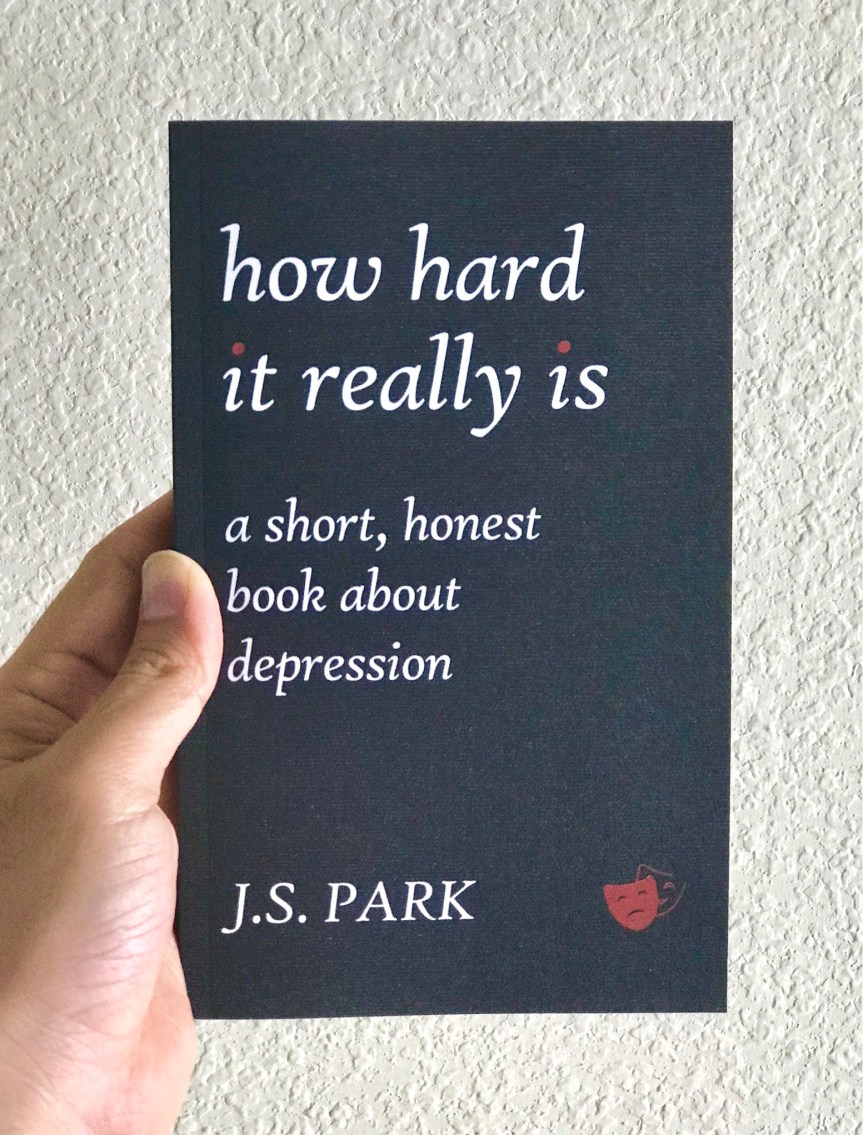
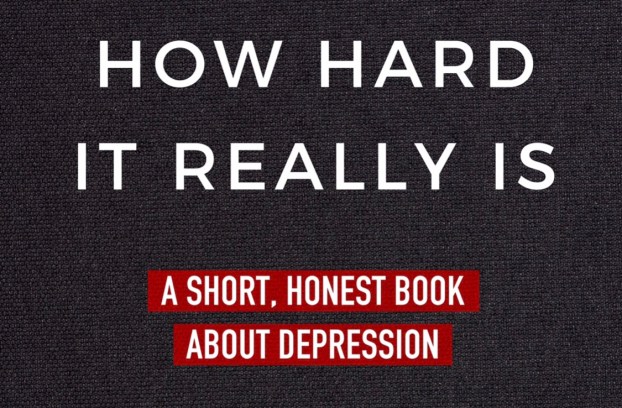
How Hard It Really Is: A Short, Honest Book About Depression


**Edit January 2018** My book on fighting depression has been revised with a new a cover and about a 10% change in content. If you’ve already purchased the book, please email me at pastorjspark@gmail.com and I’ll send a digital copy of the updated version.


Hello lovely friends! After a year and a half of painstaking work, my book on fighting depression is here. It’s called: How How Hard It Really Is: A Short, Honest Book About Depression.

The book covers:
• The science behind depression
• The helpful (and unhelpful) dialogue around mental illness
• The debate between seeing it as a choice or disease
• Stories of survivors
• A secret culture of suicide worship
• An interview with a depressed doctor
• The problem with finding a “cure”
• My own attempt at suicide
• A myriad of voices from nearly two-hundred surveys conducted over a year

The paperback is here. The ebook is here.

For my video on depression, check here: https://www.youtube.com/watch?v=xggg6xFObIE

Be blessed and love y’all, friends. A reminder that if you’re in a dark place, I hope you’ll reach out. You are truly more loved than you know. 
— J.S.


A Friendly Reminder: I Am Not Your Counselor and I Am Not a Journalist


I keep forgetting that most people on social media who act like authorities are young 20-somethings who haven’t seen much of the world and don’t know how it works. They want to change the world from their basement, or they’re just hungry to go viral. It doesn’t mean they can’t have an opinion. It means I need to double check theirs.

Bloggers are not your counselors or journalists. Most are just making up stuff with flowery words and “what I would do” sentiment. It’s not that we’re bad or wrong. But please keep in mind that most social media users care about your clicks, not your life.

I’m always asking, “Says who? By what authority? What makes it credible? Why do you believe it to be true? Why should I believe you? And how is it working out for you?”

Don’t trust me. Don’t believe me. Just because I have “followers” doesn’t mean a thing. Check the facts. For the love of God, triple check. Discern. Think for yourself. I can speak with authority on some things, but I won’t get it right every time. Trust with a closed grip.

J.S.


Photo from Unsplash

How Do You Know You’re Persecuted or Just a Terrible Person?

illuminirk asked a question:

how do you differentiate when you’re being persecuted for christ and being slammed for… for lack of a better word, for being a shitty person? for instance, i see a lot of american christians claiming persecution when really people are mad that they’re racist or homophobic or etc. how do you navigate that? how do you know?

Perhaps the simplest way is this:

Look around. Do you live in the West? You’re probably free to express your faith. So most likely you’re not being persecuted, but you’ve picked the wrong battle.

Look around. Do you live in the East? You’re probably not free to express your faith. So most likely you’re being persecuted, because you’re in the battle at all.

The thing is, early first century Christians were being persecuted simply for existing. Their faith was not primarily about self-improvement (though that’s in there), but about enduring the suffering of a cruel world. They didn’t have much room for political rallies or fighting for moral issues. They were in survival mode. They saw Christianity as the good news of a God who walked with them, rather than some kind of behavioral improvement tool. So while they did care about self-improvement, their first priority was merely survival.

Many Christians in the West today don’t experience the same kind of cultural suffering. They’re not in survival mode, so they’re focused more on self-improvement. I include me in this. It’s not a bad thing. I actually have space to think about how to better my own life and live like Christ. So sometimes Christians have too much idle time and pick the wrong fights in a free society. 

And really, when you have the chance to self-improve, it’s easier instead to stand up for some policy outside yourself. It’s a way to offload responsibility for your own actions: by trying to change laws or take the “moral high ground,” you then don’t have to look at changing yourself. Christians find it hard to follow Scripture, so they pick a path of lesser resistance (I include me here, too). It’s easier for Christians to shout really loudly in a free society than actually change their own self-destructive habits and live a useful, meaningful life.

I don’t mean that a person who experiences physical pain for their faith is necessarily a “real Christian.” Sometimes that’s just self-imposed martyrdom, and that’s selfish too. I mean that real persecution is about a cultural baseline of restricted freedom. If you’re free to express yourself, you’re not persecuted. If you express yourself and some people complain, you’re not persecuted. If you express yourself and some people call you mean names and avoid you at work, sorry, but you’re not persecuted.

Continue reading “How Do You Know You’re Persecuted or Just a Terrible Person?”

Real Dark Jesus


So my church showed this video of Jesus doing a bunch of miracles. Great production values. All non-whites, mostly authentic languages, culturally and ethnically reproduced to how it would look in the first century eastern world.

But — I was amazed and amused by the reaction of the church attendees (most of whom are classically westernized i.e. white). They were squirming like crazy the entire video. Like very, very bothered. It wasn’t hard to read.

I was smiling ear to ear that this video mostly got the “look and feel” of the actual first century east. But soon I became angry and sad that the church was so squirmy because they didn’t see western interpretations of white Jesus on the screen.

I’m sure this sounds silly and petty, but our preconceived ideas of Jesus, the east, and the grit of the first century plays a lot into how we view culture, faith, and “the foreigner.” Whitewashing is a big trigger word that’s overplayed, but it’s real.

And for evangelical Christians who are used to seeing a tall, handsome, blonde Jesus, this ain’t how it was. Not even close. By all biblical reports, he was ordinary, unattractive, unremarkable, and dark. Christianity is built on a guy that most of the west is scared of by default.

I’m super-glad my church risked an authentic interpretation of Jesus, and super-sad it bothered the church so much. I also had to wonder how many normative images I have in my head of beauty, truth, heroism, and villainy—and how these images have harmed how I see others.

J.S.


Photo from Image Catalog, CC0 1.0

I Care Too Much What Other People Think About Me


undefeatedx asked a question:

how do i stop caring about what people think about me?? 😦

Hey dear friend, I really wrestle with this, too. I’ve discovered in therapy that I’m a people-pleaser, even codependent, and I often have this crazy conspiracy in my head of small-town backroom rumors, where everyone I know secretly dislikes me and laughs about me in some seedy, poorly lit poker room.

A few things about how to deal with what others think about you:

Continue reading “I Care Too Much What Other People Think About Me”

How Do I “Let Go and Let God”? Does Working Hard Mean I’m Not Trusting God?

sunmoonandmyrtle asked a question:

Hi JS, I was wondering about the balance between trusting God and making your plans/taking action. I am a bit OCD about planning. My journey at the moment seems to be learning to let go of trying so hard and have faith in God to provide. On the other hand, I don’t want to be the kind of person who says God will bless them yet doesn’t work hard or look for ways to work smart. I’m not looking for a quick solution, but would be glad to just hear what you think. (I hope you’re having a nice day.)

Hey dear friend, I really wrestle with this too: When do I let go and “let God”? If I hustle and pursue, does that mean I’m not trusting Him?

Here are a few things I’ve learned about trusting God:

Continue reading “How Do I “Let Go and Let God”? Does Working Hard Mean I’m Not Trusting God?”

An Update from Florida

For now, me and my family are staying home in Florida, but it could all change very quickly. My local area has closed its churches, schools, and most businesses. Please continue to pray for those affected by the storms, fires, floods, and earthquakes the world over. I recognize I’m incredibly blessed with resources when many are not; please consider donating to The Salvation Army USA and your local ground teams. Love you and thank you, friends.

Here’s awesome weather reporter and meteorologist Alan Sealls with a clear, concise update:

Texas, Nepal, India, Bangladesh, Sierra Leone


Texas, India, Nepal, Bangladesh, and Sierra Leone have all been affected by disasters in the last week. Not all of them are being equally reported; thousands have died in Asia and Africa. This isn’t a rant but a request. You can still help. Please consider donating to The Salvation Army for their teams in Texas or Save the Children for their emergency fund around the world, which will provide food and water to those in need globally. Please share and pray.

– How to help: http://www.independent.co.uk/news/world/asia/south-asia-flooding-how-you-help-victims-india-bangladesh-mumbai-millions-a7920641.html

– Save the Children Emergency Fund: http://www.savethechildren.org/site/apps/nlnet/content2.aspx?c=8rKLIXMGIpI4E&b=9506655&ct=15003327&notoc=1

– Salvation Army: http://helpsalvationarmy.org

Condemning Hate Is Not Enough


Condemning hate isn’t enough. That’s the bare minimum. We also need solidarity. Compassion. Calling out. Standing with. Fighting for. Ground level work. Sleeves up. In the dirt. There’s the difficult brutal unpopular risk of getting on the right side of history. In the home. Out there. Over fences, across oceans. Side by side when it isn’t pretty, when no one’s looking, when everyone is, when the wounded lean heavily on our shoulders, when no one cares. That’s the stuff that changes where we’re going.
J.S.

Can Shaming Really Motivate? 4 Thoughts About Shame, Guilt, and Change

waylandheat asked a question:

Hi J.S. Park! I’ve been reading your book What the Church Won’t Talk About because I am currently struggling a lot with stuff and on top of that feeling a very dry season with God. I honestly love reading through your thoughts and stories on Tumblr, and reading through this book has brought me a renewed perspective on things- so thank you J.S. Park for being a light in so many lives! I don’t know if you have written anywhere on it before- but have you ever shared your thoughts on shame?

Hey dear friend, thank you so much for your encouragement and your kind words. I really needed them today. Also the book you’re referring to is here for anyone interested.

Here are a few thoughts about shame:

1) Shame is a very poor motivation for long-term change.

Shame is that sick physical feeling of being washed through with a debilitating shiver; emotionally it can be an internal bomb of embarrassment, grief, anger, or regret; psychologically it feels like losing self-worth and value. We try to escape this feeling as much as we can—it’s an awful, nauseating, dizzying flush that your entire body recognizes on impact.

Shame is socially weaponized to coerce others into “doing the right thing.” Other times, it’s just to make someone feel like a terrible person, like they could never do any good. In the best case scenario, “shaming” would create the desire to reflect and change your ways for the better. It provokes a sort of social conformity in which you must fall in line for the common benefit of everyone else.

You can see shame tactics being weaponized everywhere. Think of every “public shaming” blog, made famous first by Tumblr, that calls out your fave celebrities for being problematic or mocks the guy who uses the entire four-chair table at Starbucks. Think of books like Battle Hymn of the Tiger Mother or movies like Whiplash. Think of the model who was recently charged for “fat-shaming” (the actual charge was invasion of privacy, and rightly so). Think of this recent method to help quit smoking, in which if you relapse, you donate the amount of money you’ve saved off cigarettes to a campaign that you hate (this combines shame with aversion). Think of a typical evangelical preacher, who uses fear, shame, and fire-and-brimstone to manipulate you into “getting right with God.” Think of terms like “slut-shaming, virgin-shaming, gay-shaming”—and the list goes on.

In the short term, some studies show that shame can make change. However, other studies show that shame is destructive and does permanent long-term damage.

I believe that shame doesn’t really work as a motivation for long-term change. All it does is modify behavior to look like it’s conforming, without actually getting to the root of the issue.

For a great talk about shame and vulnerability, watch Brene Brown’s TED Talk, the most watched TED Talk of all time. Her research is the absolute seminal work on this topic.

2) Shame and guilt are two entirely different things.

You’ve probably heard this by now, but guilt is saying, “I did something bad,” while shame is saying, “I am bad.”

It sounds like splitting hairs, but our approach to both can have entirely different outcomes.

If we can adapt to guilt—”I did something bad”—then we can focus on the how and why of the behavior and even internally change our motivations.

If we adapt to shame—”I am bad”—then there’s no room to look at how and why we do things, and instead can only use punishment and external deprivation to make change. This in turn only makes us craftier and more likely to suppress our true motivations without changing them.

We’ve all seen this before. You can have two people who attend church sit side-by-side who look exactly the same: they show up on time, they donate to charity, they bring coffee and donuts, they read their Bible everyday, they mow your lawn for free. But one is motivated by the anxiety of possible punishment and always compensating for a terrible gap inside them, as if they’ll always be found out. The other is motivated by doing good purely for the good in itself.

Of course, our motives are very messy and never this clear-cut. We could be a blend of both. But the next time you mess up, pay attention to your thoughts and feelings. Do you feel guilt or remorse or even anger about the thing you did? That’s more or less normal. Or do you disproportionately beat yourself up and wish you could disappear for a week? There’s probably buried shame that’s been carved into you by condemning voices over a lifetime—and really that’s no fault of your own. Many of us have been indoctrinated since birth to only respond to shame, and so we’ve become maladaptive.

Continue reading “Can Shaming Really Motivate? 4 Thoughts About Shame, Guilt, and Change”

The Deal with North Korea


Here’s the deal: If you share any misinformed hype about North Korea, I’m blocking you here and I’m done with you in real life, for good.

North Korean citizens are scared, exhausted, and threatened daily into falling in line. They’re in constant fear of death or worse. They’re imprisoned and tortured for the smallest infractions, and about 3500 die every month from starvation. The very few in power in NK are the monsters, not the people. The entire nation is not some one-dimensional evil entity: it’s comprised of families, and they want peace as much as you or I do.

If your only idea of North Koreans is a ridiculous caricature from action movies or ratings-driven media, then don’t speculate. Either learn or seriously shut your mouth.

Those of you hyping up North Korean panic are exactly the reason why there’s a panic. And yes, you know who “you” are. I’m especially appalled and ashamed at the evangelical American church for fear-mongering and flag-waving about North Korea. I’m shaking as I write this and absolutely disgusted at your antics.

I pray for North Korean citizens. Their liberty is one of the very few times I’ve marched in front of the White House in raising peaceful awareness of their awful conditions. Please pray with me and help however you can. Start with clamping down on misinformation.
J.S.


Photo by Stephan, CC BY-SA 2.0

I Need Your Help: Test Readers


**Edit – June 17th**

Dear friends: The draft of my upcoming book on depression has been sent to your email. Test reading has begun! If you’d still like to join, please email me. Love y’all friends, and thank you again for making this possible. — J.S.

pastorjspark@gmail.com


Hey friends, I’m giving away a draft of my book on depression before it’s released. All I ask for in return are feedback and a review on Amazon.

If you want to be a test reader, please send me your email to
pastorjspark@gmail.com

and I’ll send it as soon as it’s ready. The final book will be out this summer. Love y’all, friends. — J.S.

Ugly Asian Male: On Being the Least Attractive Guy in the Room

Statistically, I’m the least attractive person in the dating scene. Alongside black women, the Asian-American male is considered the most ugly and undesirable person in the room.

Take it from Steve Harvey, who won’t eat what he can’t pronounce:

“‘Excuse me, do you like Asian men?’ No thank you. I don’t even like Chinese food. It don’t stay with you no time. I don’t eat what I can’t pronounce.’”

Eddie Huang, creator of the groundbreaking Asian-American sitcom Fresh Off the Boat, responded to Steve Harvey in The New York Times:

“[Every] Asian-American man knows what the dominant culture has to say about us. We count good, we bow well, we are technologically proficient, we’re naturally subordinate, our male anatomy is the size of a thumb drive and we could never in a thousand millenniums be a threat to steal your girl.”

Asian-American men, like me, know the score. That is, we don’t count at all.

Hollywood won’t bank on me. Think: When was the last time you saw an Asian male kiss a non-Asian female in a movie or TV show? Or when was the last time an Asian-American male was the desired person in a romantic comedy? And more specifically, when where they not Kung Fu practitioners or computer geniuses? I can only think of two examples: Steven Yeun as Glenn from The Walking Dead and John Cho as Harold from Harold and Kumar Go to White Castle. So it takes either a zombie apocalypse or the munchies to see a fully breathing Asian male lead, or a Photoshop campaign #StarringJohnCho for an Asian protagonist with actual thoughts in his head.

It’s so rare to see a three-dimensional Asian male character, with actual hopes and dreams, that Steven Yeun remarks in GQ Magazine:

GQ Magazine: When you look back on your long tenure on The Walking Dead, what makes you proudest?

Steven Yeun: Honestly, the privilege that I had to play an Asian-American character that didn’t have to apologize at all for being Asian, or even acknowledge that he was Asian. Obviously, you’re going to address it. It’s real. It’s a thing. I am Asian, and Glenn is Asian. But I was very honored to be able to play somebody that showed multiple sides, and showed depth, and showed a way to relate to everyone. It was quite an honor, in that regard. This didn’t exist when I was a kid. I didn’t get to see Glenn. I didn’t get to see a fully formed Asian-American person on my television, where you could say, “That dude just belongs here.” Kids, growing up now, can see this show and see a face that they recognize. And go, “Oh my god. That’s my face too.”

Growing up, I never had that, either. I can’t help but think of this scene from the biopic, Dragon: The Bruce Lee Story, in which Bruce Lee watches the controversial Asian stereotype played by Mickey Rooney in Breakfast at Tiffany’s to a theater filled with derisive laughter. This moment with Bruce Lee is most likely fictional, but the weight of it is not lost on us:

This was a powerful moment for me as a kid, because I grew up with the same sort of mocking laughter, whether it was watching Short Round in Indiana Jones and the Temple of Doom with my white neighbors, or being assailed by the Bruce Lee wail in the local grocery store. I knew they were laughing at me, and not with.

Continue reading “Ugly Asian Male: On Being the Least Attractive Guy in the Room”

Prayer Request, Friends.


Hey friends, I’d like to ask for a quick prayer and encouragement. I’ve been working on a new book about fighting depression, and it’s about halfway done. It was supposed to be done three months ago. It’s been excruciating to get through each page, and it’s a crucially important work (for me, anyway) to share with fellow fighters. At times, I want to give up: it’s painstakingly difficult to finish, not least of all because of revisiting the shadows behind me.

I know this is a tiny problem amidst all that’s happening out there, but please pray I’d have the fortitude to follow through. If it helps just one reader, it’ll have been absolutely worth it. Thank you and love you, friends.
J.S.


Photo from Image Catalog, CC BY PDM