Trauma Has Ruined My Life: How to Recover? Here Are Six Ways to Post-Traumatic Growth

Anonymous asked a question:

I went through a traumatic life experience about 3 years ago. As it played out over the last 2 years, I feel like I’ve lost my inner drive to do anything. What do I do?

Hey dear friend, I’m sorry to hear this and thank you for sharing about it with me.

While I’m not a doctor or therapist, I can speak just in my capacity as a trained hospital chaplain. Trauma is a serious issue that’s gotten a lot more attention in the last decade, which I’m really grateful for. I highly recommend reading The Body Keeps the Score. (Warning that it does contain some hard descriptions.)


– Therapy.
 I can’t recommend this enough. Self-disclosure is one of the absolutely best ways to get through trauma. Whether that’s with a therapist, friend, mentor, pastor: we need to talk it out. Jamie Pennebaker’s studies about self-disclosure reveal that it’s not just about venting, but sense-making. Even simply writing about your trauma (if you don’t like writing, then recording it by audio) for fifteen minutes a day for several days can have noticeable health benefits. Pennebaker suggests answering these two questions: Why did this happen? What good might I derive from it? (Quoted from The Happiness Hypothesis by Jonathan Haidt.)


– Interoception.
 When trauma occurs, it not only leads to a loss of personal and spiritual control, but also physical control of our own bodies. We can experience fatigue, chronic pain, numbness, depersonalization, or dissociation. In other words, we can become detached from ourselves. So often this happens because our internal narrative says, “This bad thing happened to me, therefore I am bad.”

One of the ways to fight this is to “master” our own bodies again. That can be done through exercise, yoga, dance, martial arts, bike-riding, or any sensory experience that requires rehearsed and specific moves. To get to know your own body again is to own your body again. (Concept of interoception from The Body Keeps the Score by Dr. Bessel van der Kolk.)

Continue reading “Trauma Has Ruined My Life: How to Recover? Here Are Six Ways to Post-Traumatic Growth”

I Accidentally Joined a Cult: How a Cult Got Me and the Warning Signs


I was part of a cult once. There was one warning sign that I missed—and I don’t want you to miss it. It’s not as easy to spot as you think.

I never thought I’d fall for something like that. When we think of cults, it seems obvious: they take your money, they isolate you, they talk about aliens or conspiracies, they make you wear pajamas. But this one was way different. It took me a long time to recognize I was being tricked and brainwashed. Because I was a people-pleaser, it was even harder to speak up.

If you’re at a church or workplace or student body or nonprofit or group that doesn’t allow for questions: you have to question if that’s a healthy place. The places I’m most worried about are not the weird ones, but the charming ones that get along too well.

In my book, I talk about how we can easily fall for hidden narratives, groupthink, and persuasive speech, and ways to proof ourselves.

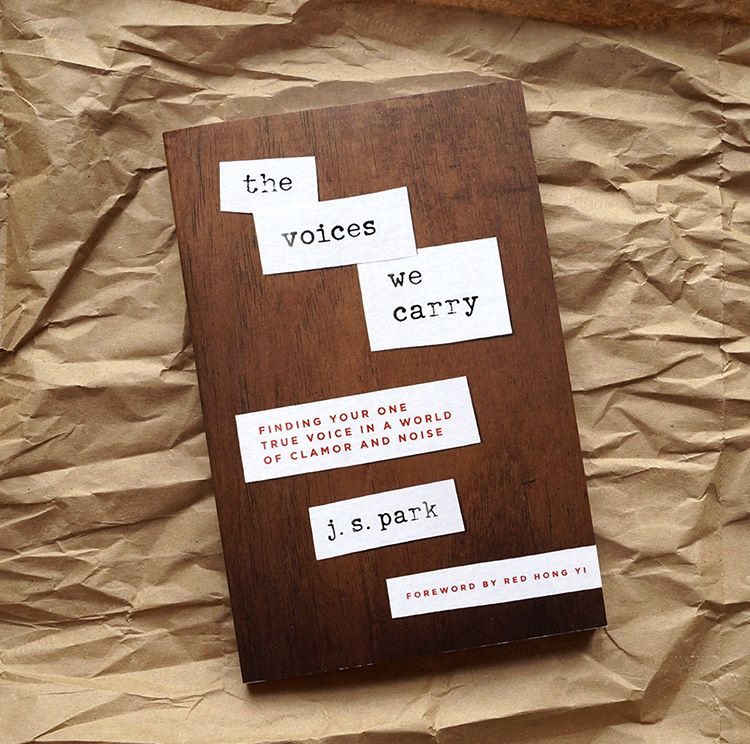
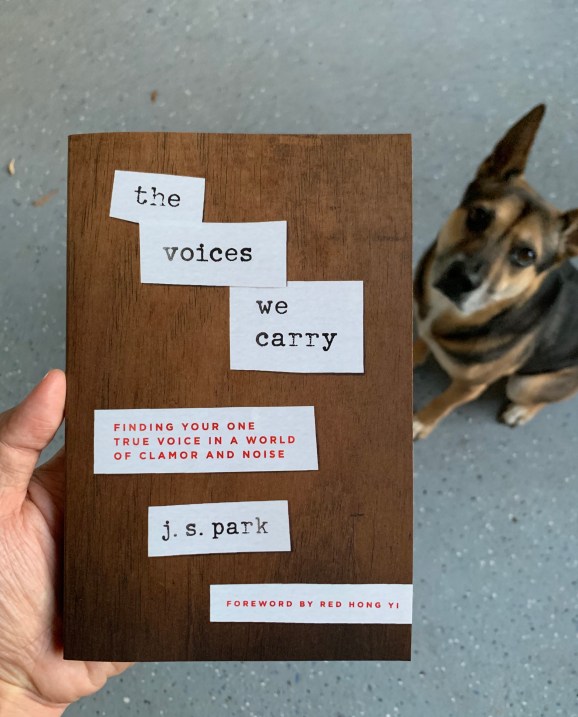
Grab my book here: The Voices We Carry: Finding Your One True Voice in a World of Clamor and Noise

I Am Invisible: No One Ever Believes I’ve Experienced Racism

View this post on Instagram

It’s hard and uncomfortable to talk about race—but I have to tell you this story. I’m always saddened and surprised at how much people roll their eyes at it. At how much we’re unwilling to hear each other. It’s why I’m always scared to bring it up. When I share I’ve experienced racism, I’ve been called crazy, oversensitive, dramatic, or a liar. “You’re reading into it too much” or “It’s all in your head” or “That doesn’t happen anymore.” Is it always racism? Maybe not. But without confronting ourselves, there’s no hope of healing and accountability. Then our stuff stays hidden and continues to destroy. In this video, I discuss the two most dangerous lies we tell that prevent us from hearing each other. Whether it’s race, gender, mental health, culture, class, or faith: we all get dismissed in some ways. We need to hear each other more, not less. Real compassion is not comfortable, but confronts the injustice that has been ignored. Compassion challenges us to be better. In particular, it seems no one cares about the Asian-American experience at all. When I talk about it, it’s always ghost town. I am invisible. I know my story is not as hard as many others; I’m generally lucky. But it’s still a lonely thing when nobody hears you—especially when no one believes you. My hope is that even if your story isn’t like mine, you would still hear me, and that I would hear you too. #compassion #justice #empathy #prejudice #race #racism #dialogue #injustice #privilege #poc #accountability #hope #asianamerican #asian #asianpacificamericanheritagemonth #koreanamerican #solidarity #iamwithyou

A post shared by J.S. Park (@jspark3000) on


It’s hard and uncomfortable to talk about race—but I have to tell you this story.

I’m always saddened and surprised at how much people roll their eyes at it. At how much we’re unwilling to hear each other. It’s why I’m always scared to bring it up.

When I share I’ve experienced racism, I’ve been called crazy, oversensitive, dramatic, or a liar. “You’re reading into it too much” or “It’s all in your head” or “That doesn’t happen anymore.” Is it always racism? Maybe not. But without confronting ourselves, there’s no hope of healing and accountability. Then our stuff stays hidden and continues to destroy.

In this video, I discuss the two most dangerous lies we tell that prevent us from hearing each other. Whether it’s race, gender, mental health, culture, class, or faith: we all get dismissed in some ways. We need to hear each other more, not less. Real compassion is not comfortable, but confronts the injustice that has been ignored. Compassion challenges us to be better.

In particular, it seems no one cares about the Asian-American experience at all. When I talk about it, it’s always ghost town. I am invisible. I know my story is not as hard as many others; I’m generally lucky. But it’s still a lonely thing when nobody hears you—especially when no one believes you. My hope is that even if your story isn’t like mine, you would still hear me, and that I would hear you too.

[Thank you to Moody Publishers for sharing this video on Instagram.]

Interviewed by Ben Amoah of The Auricle Podcast


I was interviewed by Ben Amoah of The Auricle Podcast. We talked about having a healthy skepticism for our beliefs, what brought me from atheism into faith, and my work as a hospital chaplain.

On Apple Podcast / iTunes here: https://podcasts.apple.com/us/podcast/the-necessity-of-being-a-skeptic-ft-j-s-park/id1434506901?i=1000474189654

Interviewed by Oleg Lougheed of Overcoming Odds


I was interviewed by Oleg Lougheed of Overcoming Odds. We talked about grief in the pandemic, confronting failure and the consequences of always trying to improve, plus why we shame and shun those who are ill.

On Apple Podcasts / iTunes here: https://podcasts.apple.com/us/podcast/how-do-we-thoughtfully-approach-mental-health-loved/id1292465138?i=1000471867963

Interviewed by Sean Bloch of Soul Tears


I was interviewed by Sean Bloch of Soul Tears. We talked about navigating grief through the pandemic and how I helped to plan a funeral, plus my book The Voices We Carry and what it means to own your voice.

On Apple Podcasts / iTunes here: https://podcasts.apple.com/us/podcast/how-to-own-your-voice-serve-others-hospital-chaplin/id1474418082?i=1000473378494

On Libsyn here: https://projectsoultears.libsyn.com/website/-how-to-own-your-voice-and-serve-others-with-hospital-chaplin-js-park

My Family Broke Me: Breaking Family Patterns and Why Therapy Works

https://www.instagram.com/tv/B_ynqigBJMp/


Generational patterns can be passed down through family, even from great-great-grandparents we never met. This is called multigenerational transmission. If you draw a genogram—a detailed family tree that shows relationships and medical history—you’ll notice a surprising amount of repeated loops down the line.

One of the ways of breaking patterns is to seek therapy, to talk it out, to explore our own stories. There’s something powerful about telling our story that brings closure, revelation, and healing to us—especially when someone really listens.
My book has a whole chapter on family dynamics and focuses on one hospital patient who learned to make peace with her complicated family.

Grab my book here: The Voices We Carry: Finding Your One True Voice in a World of Clamor and Noise


[Patient details altered to maintain privacy.]

My Friend Called Me a Racial Slur: Are They a Racist?

Anonymous asked a question:

If a friend of yours who showed no signs of racism ever just happened to get mad at you about something and called you a racial slur, what would you do?

Hey my friend. That’s terrible that this happened to you, and I’m sorry.

That’s also a very, very big yikes for me.

The short answer here is that your friend is most likely a racist, and it’s a good idea to drop them.

Some words are so charged, violent, and historically poisonous that they should never be spoken, certainly never from a friend you trusted, whether they were angry or not. For me, that would be a red flag, dealbreaker, and burned bridge all in one. I would have an extremely difficult time forgiving, much less trusting, this person again.

Before that sounds too harsh, here’s a story that my friend told me.

Continue reading “My Friend Called Me a Racial Slur: Are They a Racist?”

I’m a People-Pleaser: On Ennegrams, Romanticized Outcomes, and Codependency


In a recent live video, I answered the question, “What’s your enneagram?” I talk about being a giver and how it overlaps with people-pleasing. I share a hospital story about all these ideas at play: how people-pleasing can end in disappointment, especially with those who reject our giving.

My book The Voices We Carry also discusses people-pleasing, why we do it, and how to navigate it.

Grab my book here: The Voices We Carry: Finding Your One True Voice in a World of Clamor and Noise


[Patient details altered to maintain privacy.]

If You Hurt, I Hurt Too


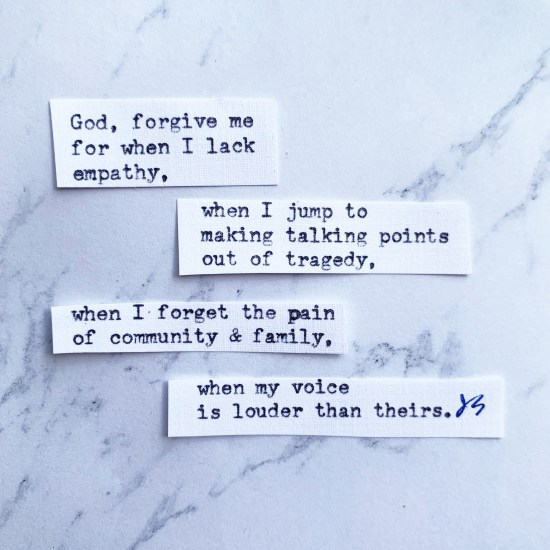
I never want to politicize, moralize, or spiritualize someone’s pain.

I am always on the side of the wounded. Where there is loss, I am for the bereaved. Where you are hurting, I want to bring healing. Anything less is making us less human and not more.

It would take only a few seconds to consider the other person’s pain and perspective and point of view. That has the power to heal. The only cost to empathy is losing bigotry, self-righteousness, and pride. Empathy is that good.

It should never be on the wounded to explain their pain, defend their injury, or to forgive over and over the injustices that never should’ve happened but keep happening. Even if your hurt is not my hurt: because you’re hurting, I hurt too.

I want to empathize first, to listen first, to grieve first, and to be angry and to weep alongside. Not lecture, lessonize, or minimize. I don’t want to add burdens, nor demand explanations, nor kick you while you’re down. I want to crawl down there with you.

I cannot understand the hasty, vicious speed by which real hurting people are turned into talking points. I don’t mean the platforms for justice. I mean the ones that degrade and deny. I cannot understand the evil scorn and jeering and mockery: there is no honor in desecration, but only violence to the soul. And while I do not believe we must be forced to give our opinion all the time—so often the silence is chilling, and apathy can be the most destructive force of all.

May I never lose sight of the wound and the wounded. May God forgive me for when I wasn’t listening, for not getting it right. Above all, I must grieve. Through tears, prayer, and action, I grieve with you.
— J.S.

#AhmaudArbery

Interviewed by Heather Parady of Unconventional Leaders


I was interviewed by the amazing Heather Parady on her podcast Unconventional Leaders. We talked about some tough topics, including mental health, my hospital work, and navigating trauma.

I acknowledged Heather Parady in my book The Voices We Carry. She not only interviewed me years ago when I was a “nobody,” but she’s the real deal. Genuine, passionate, and truly a wonderful leader.


On Apple Podcasts / iTunes here:
https://podcasts.apple.com/us/podcast/unconventional-leaders/id1412461408?i=1000473502583

On Spotify here:

Book Launch: The Voices We Carry


Happy day, friends! My book The Voices We Carry is officially released.

The Voices We Carry is about wrestling with our voices, such as self-doubt, people-pleasing, trauma, grief, and family dynamics, and finding our own voice in world of mixed messages. I talk about my hospital chaplaincy, what I learned from patients at the edge of life and death, and giving a voice to those who have been silenced—those like you and me.

The month of May is also Mental Health Awareness Month and Asian Pacific American Heritage Month. My book talks about the challenges of both. I believe that the more we can share our stories and make room for our many voices, the better we become.

God bless and much love to you, friends. Thank you for allowing me to speak into your life, faith, and journey.
— J.S.


The Voices We Carry is published by Northfield of Moody Publishers.

#MentalHealthAwarenessMonth
#AsianPacificAmericanHeritageMonth


A Voice to Carry You


My book comes out on May 5th, in just a couple days. I’m grateful to so many.

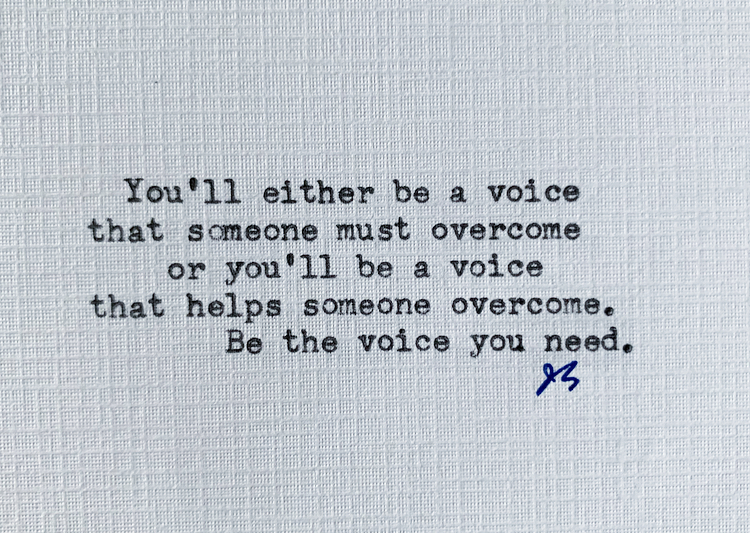
I believe that no one is a self-made person. People enter our lives, whether for a second or a season or decades, and they support us. But perhaps more importantly, they speak into us.

I want to thank two people in particular. In grade school, I had a teacher that I’ll call Ms. Macklin. After we did a short story assignment, she took me aside after class and said, “You need an agent.” At first I thought she said, “You need an Asian.” Maybe she was telling me I needed an Asian friend, since I was the only one in the entire school. But she explained, “A literary agent. You know, to get your work published. It has to be published.”

Before this encounter, I had always wanted to be a writer. I had carried around a notepad since I was five or so. I wrote stories about the ducks at the local pond, especially about this one duck who had a lopsided wing. I made up an entire conspiracy about how the town was polluting the water and causing the ducks to be sideways. The twist: the ducks were fighting each other, and it was the violence that caused them to be lopsided (and yes, they eventually united to stop the pollution too).

Ms. Macklin believed in me. It was really the first time someone had commented on my writing. It put the bug in my ear: “It has to be published.”

In community college, I met Professor Marcus, who preferred to be called Rocky. She smelled like potpourri and was fond of wearing trench coats, probably made of hemp. She took me aside after class (this is a common tactic apparently), and told me, “I say this to everyone but I only mean it once in a blue moon. You have to be a writer.” Rocky coached me. That entire semester she poured into me: how to write, edit, edit, edit, simplify, clarify, amplify. It was hard. It was wonderful. Like an education at Hogwarts. What a gift she was.

Ms. Macklin and Professor Rocky are still a part of me. Their voice, the gentle way they corrected me, their kind way of saying hello when I entered. I was a lonely kid a lot of the time. But they made it bearable. And they made me a writer. Just thinking of them, my heart swells. Where would we be without the people who look us in the eye and with total confidence say, “You, you got the stuff, you got what it takes, and you, I even like you, and I like what you bring into the world” …?

I’m thankful. So thankful for the teachers, leaders, mentors, counselors, therapists, parents, random elders at the airport, the security guards who paused to chat, and the man who helped push my car out of the road after an accident in the rain: each of you made me a writer. I hope I spoke into you even a fraction of what you spoke into me.

I’m thankful for you. In a world such as this, you have been strength and beauty.
— J.S.

3 True Hospital Stories and What They Taught Me About Grief, Hope, and Unseen Work


I share three true hospital stories which are “deleted scenes” from my upcoming book, The Voices We Carry.

— J.S.


[Stories have details changed to maintain privacy.]

Is Anxiety a “Sin”? Does It Mean That I “Lack Faith”?

Anonymous asked a question:

Is anxiety a sin? God says to be anxious for nothing. I googled it and apparently lots of Christians say anxiety is a sin. Means you don’t fully trust God

Hey dear friend: No, I don’t believe that anxiety is a sin.

Anxiety results from a broken brain, originating from a world that is flawed, fractured, and has fallen short. At most, anxiety is the result of a sin-torn world. But no, it is not a sin that you’re premeditating, as if you’re somehow planning on having an anxiety attack.

When Scripture says “Be anxious for nothing,” well—that word anxious also means distracted or divided or pulled in every direction. Later Paul says he is content with being hungry or well fed, living in plenty or in want. In other words, he does not have a consuming preoccupation with a perfect situation. He is not basing his happiness on a full stomach or material pleasures. He is writing from prison, after all, and has chosen not to to base his value on his surroundings.

I think there’s a kind of anxiety not related to mental health, which is more of a restlessness for “better,” and it can never be content. This is not about mental health, but rather a moral choice of internal character. Paul says that by praying we’ll have “the peace of God that transcends all understanding,” which in context appears to mean that we’re not always consumed with upgrading our circumstances. It means trusting God even when we don’t have everything that we want. That sort of peace is not easy to find, but it’s possible.

But let’s assume Paul was talking about anxiety the way we understand it.

Continue reading “Is Anxiety a “Sin”? Does It Mean That I “Lack Faith”?”

Spoken Word: In the Middle Along the Way


In my book launch group, I performed a spoken word poem I wrote on finding peace. Hope it blesses you. (Sorry for all the sweat.)

My book drops May 5th. You can preorder here:

Holding My Book, “The Voices We Carry”


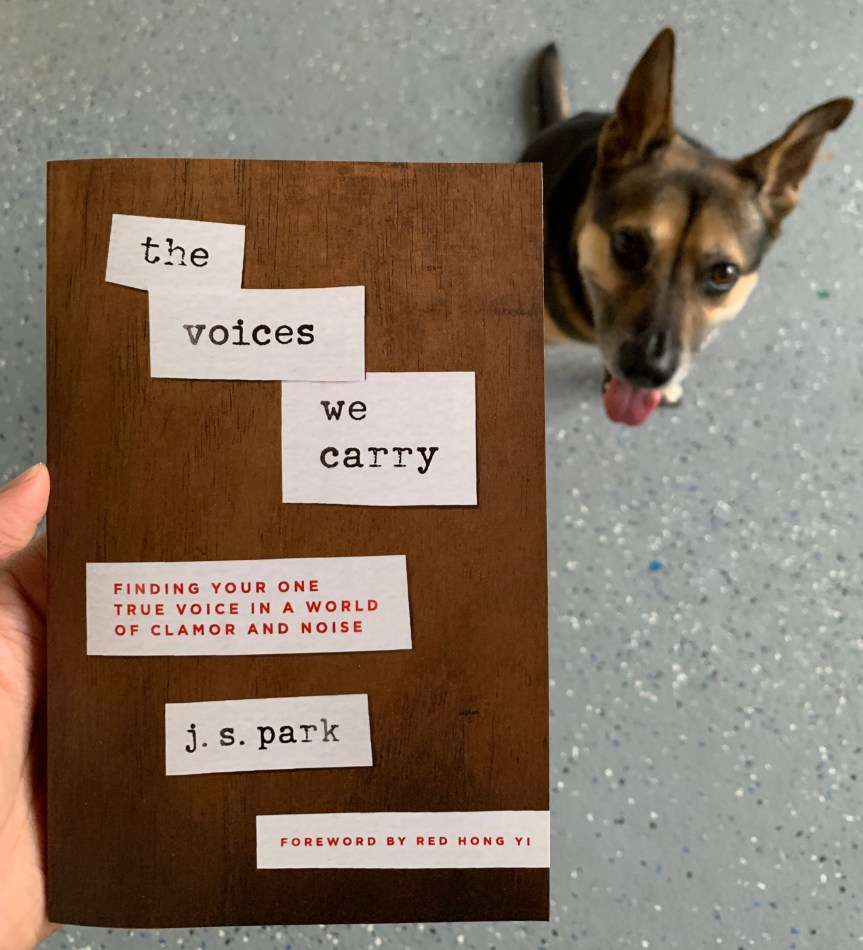
Good Friday to you, friends. My publisher sent my books early for me. It’s incredible and surreal to finally hold my book in my hands.

My book launch team is still open if you would like to help support the book release. You get an advance copy of the book, giveaways (like art by Red Hong Yi), Q&As, and live video chats: https://www.facebook.com/groups/thevoiceswecarry

You can also preorder my book here, which releases May 5th: https://www.amazon.com/The-Voices-We-Carry/dp/0802419895

God bless and much love to you, friends. All peace and grace be with you.
— J.S.

[Thank you, awesome team at Moody Publishers.]


Join My Book Launch Team for “The Voices We Carry” Now Live!


Hey friends! My book is releasing in one month, and my Book Launch Team is now live!
The Book Launch Team is for those who want to support my book release. If you’re committed to joining the team and writing an honest review, check it here:
https://www.facebook.com/groups/thevoiceswecarry

You’ll get a free advance copy of the book and giveaway prizes, and I’ll be doing live chats and Q&As. There will be some really awesome discussion and fun activities along the way. Space is limited!

My book is available for preorder here and releases on May 5th.
To find out what the book is about, check here.

Thank you and much love to you!
— J.S.

I Messed Up. I Hugged Someone.


I messed up. I hugged someone. We’re supposed to practice social distancing, but my friend badly needed a hug. I know I shouldn’t have. I couldn’t help it.
— J.S.

The Storm Doesn’t Always Pass


Not everyone can stay home to wait it out.
Some have to keep working.
Some have lost their jobs.
Some have never had a home.
Some will never go back.

Maybe things are “not that bad” for you. Maybe “this too shall pass”—in your world. But someone you know doesn’t have that luxury. Someone you know is permanently affected. They’re grieving a loss, whether it’s loss of their autonomy or a whole person. Our advice doesn’t apply to them, because it can’t.

Stats and facts gloss over real loss. Two in one-hundred doesn’t sound like a lot, but if any two people I knew had died this week, it would be absolutely devastating.

To downplay any grief and loss doesn’t help, and if you keep quoting statistics to show “it’s not that bad,” you’d be the last person I would go to for help.

No, we shouldn’t panic.
But please don’t tell people it’s fine
when they’re not.

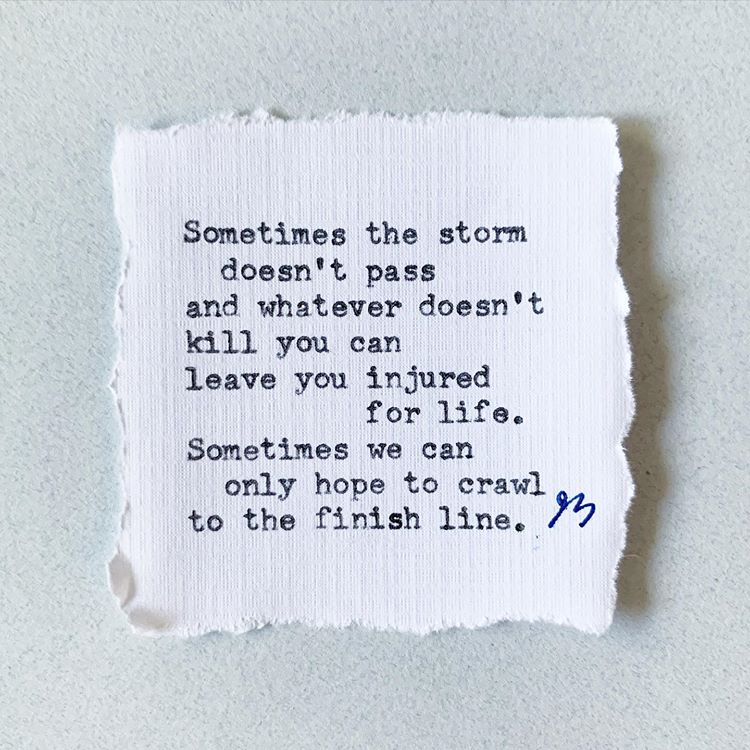
The storm doesn’t always pass. Not for everyone. Pain can last for a lifetime. We can only hope to adjust to the new normal. By the grace of God, I will crawl down there with you.
— J.S.