
Hey friends, I was featured as “the best of WordPress.com” by the editors! Very cool honor and a huge, humbling blessing.
— J.S.
Hey friends, I was featured as “the best of WordPress.com” by the editors! Very cool honor and a huge, humbling blessing.
— J.S.

Anonymous asked a question:
I feel like I just keep failing God. I feel like I’m constantly disappointing him and that I will never get my walk with him right. I’m really starting to question and wonder if I’m worth the trouble I’ve caused him and if I matter to him. I didn’t know who else to tell but I’ve read your posts and you are so kind and respond so humbly so I wanted to ask for some help. I really just don’t know what to do anymore.
Hey dear friend, thank you for reaching out with such honesty. I’m very sorry for what’s happening and I’ve been there.
I think the main thing is that you cared enough to message a stranger like me, and that’s already awesome & commendable. I also think you’re being awfully hard on yourself. Our default setting is going to be messy, full of mistakes and outright sabotage — so any kind of “right living” is a crazy miracle, as miraculous as birth. Please don’t judge yourself on an unfair parameter. God doesn’t, either.
I hope that instead of looking back over a “pattern” or anything like that, you might be able to tackle each day, as they say, a day at a time. It sounds like a platitude, but many of us grade ourselves on the last few weeks or months in a row — and if you self-criticize on such a myopic scale, you’re always finding that you “should be better” and “ought to know better” and “I used to be so much better.” It’s way too critical, and impossibly illogical.
Of course, we should do everything we can to stop certain things and start other things, but it begins by almost not paying attention to “how much” we’re getting better. We can only improve the moment we quit grading our improvement and simply move on with it. It’s as C.S. Lewis says, that to make a good impression or good art, you care less about making it good and simply get there.
Continue reading “The Christian Life Isn’t a One-Shot Deal, But a Walk Painted by Steps”
I’ve recently been asking questions on social media to know we are not alone.
So far, I’ve received over seven-hundred responses from Facebook, Tumblr, WordPress, and email, privately and publicly.
They’ve been enlightening, encouraging, and have created great discussions.
Join the conversation on Facebook or with comments at the bottom:
Please respond however you like, whether visually, metaphorically, or personally.
– How do you act/think/feel when you know someone in the gathering doesn’t like you?
– How do you feel when someone compliments you or praises you or remarks you did well? And why?
(Asked again here.)
– What is worse: Rejection or Failure? And why?
(Asked again here.)
– What’s the first thing you feel when you walk into a crowded room?
– How do you feel, think, or act when you fail?
– When you feel like you’re losing an argument, what is your go-to response and/or tactic? And why?
– Fill-in-the-blank: I feel insecure when _____ because _____.

cobih asked a question:
How can we contribute to your ministry?
Dear friend, thank you so much for asking this question and for even considering how to contribute. I’ve never gotten this question before and I’m absolutely humbled you would ask.
– Please pray for me. Really. Even if it’s just a few seconds. I love the work I do in the hospital, but at times it’s extremely difficult. With my packed schedule, plus self-doubt and sudden bouts of depression and doing my best to be a good husband, it can be overwhelming sometimes.
– If you’d like to help in a tangible way, please consider buying any of my books here, and leaving a review after. I don’t make much off them, but I’m blessed to be a blessing in your journey. The ebook versions work on every device (you can read them almost the instant you buy them) and they’re super-cheap. The paperbacks are priced very low, too.
– Follow me on Facebook and Twitter and Instagram, maybe? (In my best Zoidberg impression possible.) Also on Tumblr, why not?
– Please send an encouraging message once in a while. I’d love to hear from you. I get plenty of hate-mail and harsh comments, and I wish I could say I brush them off, but that’s not always easy. A little kindness is very helpful.
Love you and thank you, dear friend. — J.S.

Here’s an article I wrote that’s been published on X3Church, called:
“3 Ways to Stop Blaming Others and Finally Own Your Porn Problem.”
It’s about letting go of blame and receiving accountability for destructive habits, including porn and other addictions. It’s also centered around a talk by author and researcher Brené Brown.
Here’s an excerpt:
Our instant defense mechanism when something goes wrong is to say, “Tag, you’re it.” Our egos are constantly trying to protect us from feeling wrong, because we associate this with being unloved or unaccepted. All this makes a logical sort of sense, but it’s dangerous, because our initial instinct is to drag others down with us. This in turn only justifies and reinforces our cycle of destruction.
We feed our bad habits with blame. This loop can go on forever. Yet if we struck down this Hydra of Blame like a whack-a-mole before it got to others or ourselves, the inner monologue might change.
Thinking this way, as Brené Brown implies, suddenly lets go of control and creates a scary uncertainty. But it also exposes our blame-game for what it is: an excuse to use, stay mad, or stay withdrawn. When blame is named, it shrivels up and loses power.
Read the full post here. My book on quitting porn is here.
— J.S.

The world says, “Clean up your mess” and suffocates us into conformity. Jesus stepped into our mess and gave us breath called grace.
Everyone else is saying, “Catch up” and “Get over it” and “Not enough.“ God says, “I have loved you with an everlasting love,” “I am close to the brokenhearted” and “Do not be afraid, for I am with you.”
You will squeeze from people what only God can freely offer. You will please people up to a point: but only God is truly pleasable.
Everyone is desperately racing to be accepted by incremental measurements: but at the cross, we are equally zero, and at the cross we are equally welcome.
When everyone else abandons you in your weakest vulnerability – God does not leave. He cannot. He is the endless constancy. He is unconditional. He is the one we’ve all been looking for.
— J.S.

I love you just because I love you. It isn’t for anything else but you. Not for cash or status or my ego or an accessory, not because I’m afraid of loneliness, and it’s beyond the first bursts of chemistry. Love is hard work and it requires all of me, everything, with no guarantees, except the love in itself that’s promised and true. That’s just-because love. I love you for you.
— J.S.

Right now, you might be facing a ton of giants, and others have told you to “be the bigger person.” This is good advice and I recommend it. Yet if everyone is trying to be the bigger person, we end up stomping on each other. If you treat every person and problem like Goliath, you’ll be bitter all the time. It’s a triumphalist, self-affirming theology that cries, “They’re in my way.” It stirs up a dichotomous conflict by turning people into obstacles and critics into haters. It keeps us in the cycle of retaliation.
Taking down Goliath means taking me down first. It’s me. I’m the giant. I’m the bad guy.
The thing is, the idea of the “underdog” shouldn’t even have to exist. It implies that there is “my side” versus “your side” and it forces me to demonize an opposition. We cheer when an underdog wins, but we forget that someone else had to lose. You might think you’re the good guy, but to someone else, you’re definitely the bad guy. So who is cheering for whom? Who gets to win?
Jesus is the only one who won every side by losing for them. In order to undo our back-and-forth, binary violence, Jesus stepped into the crossfire and called us all equally loved and heard, which meant that every side hated him for loving the other side. He got rid of sides. He crossed the dichotomous divide of demonization. The divide died on the cross with Jesus. He called you a friend when you called him an enemy. Jesus killed his enemies by making them friends. And that’s why they had to kill Jesus.
But I can’t be against them. I’m them. You’re them. And I’m crossing over, that grace might win.
— J.S. | The Life of King David

Right now, you could be toiling away unseen and unnoticed, waiting for your big break. You might be discouraged because nothing is paying off, or you feel you’re constantly catching up to a version of someone you’ve yet to be. You could be compensating for a failure behind you or trying to prove your merit to the people around you.
No one likes this part, because we see everyone else’s highlights and we presume they’ve got it together and we’re relegated to second-rate status. We might even feel that our current work is beneath our true potential. We want to be doing “great things,” but we’re stuck in limbo, in that icky middle.
The truth is that you can prosper right where you are. You can still be teachable in your season behind-the-scenes, even if that season is for life. God’s greatness is available to you so long as you remain available. No one needs to climb the throne to get there. You only need to be present and presently engaged.
This is tough, because we’re so used to climbing the pecking order. We’re tempted to superimpose a future hologram of big stages and big audiences on our current station. But such fantasies draw us out of engagement with now. There’s work to be done today, no matter the size of your stage. Your effort doesn’t always have to “pay off.” Some of us want to be the king of our fields overnight, but God has already called His children a royal priesthood, and we’re called to harvest for a lifetime. No matter what kind of work you’re doing, it’s essential in the tapestry of God’s Kingdom.
— J.S. Park | The Life of King David

We need help beyond ourselves. Like David, we need a Nathan. We need someone who can gently revoke our self-righteousness and apply truth to usurp our sinfulness.
Here’s how we see that grace is a surgical, sculpting chisel that renews us by confronting the worst in us with pinpoint precision and acknowledging our desperate need as sinners. Grace, after all, is a love that presses through sin. The God of the Bible doesn’t merely drop a truth-bomb and beat you into submission, but gently removes your self-deception and empowers you to return home. It hurts like crazy. His grace does not merely comfort, but grabs your sin by the fistfuls and kills it with the relentless violence of love. It neither condemns nor condones, but convicts and re-creates. It’s a scalpel that will work with you to the messy end.
It demands getting honest. It demands getting with those who will graciously rebuke you because they love you and know you can do better. It takes knowing that you might be wrong, that you might be blinded, that you don’t have it right this time. It takes confession.
— J.S. Park | The Life of King David

gollywholly asked a question:
Have you ever read “The Worm at the Core” by Sheldon Solomon et al? It’s about death, and basically the theory is that everything we do and believe in is to mitigate our fear of death. It follows from that that religion, and our belief in Jesus, is just a way to mitigate our fear of death. And this is messing with my head big time. What do you think?
Hey dear friend, I’m sorry for my late reply. I’ve been on a break (due to a breakdown) but still checking my inbox, and I really love this question.
I actually studied this very phenomenon for my undergrad in Psychology, also known as “Terror management theory” or “Mortality Salience.” The basic idea is that death is inevitable, so we must give meaning to life. Therefore, religion and culture and identity are responses to death. We could call this “whistling past the graveyard.”
While the premise is intriguing and persuasive, it’s also a bit Swiss cheese, which sociologists have addressed and countered just as persuasively. Many of the counter-arguments can be found online, but I’ll offer some of my own thoughts.
Here are a few things to consider about “Christianity as a way to mitigate the fear of death.” Please feel free to skip around.
Continue reading “Was Religion Made Up Just to Sugar-Coat the Fear of Death?”
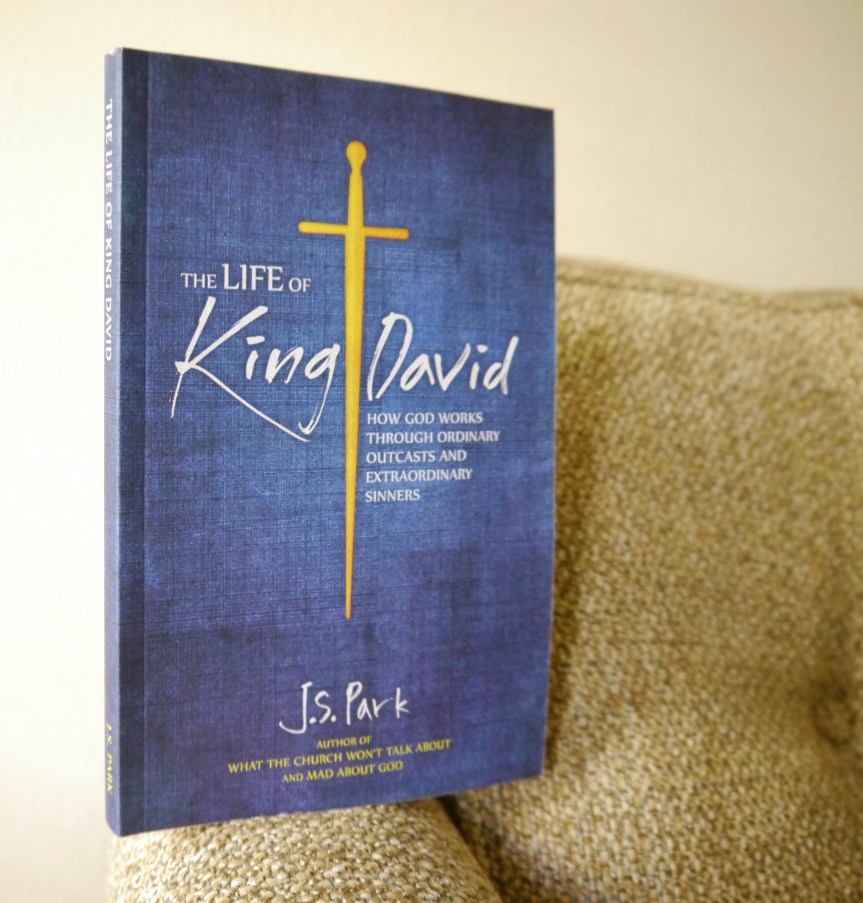
One of the most remarkable things about David was his doubt.
All through the Psalms, we see David contending with his doubts about God. Whenever there’s a stanza of praise, it follows just as quickly with despair and confusion.
There are so many Psalms where David is singing in a flowery refrain of awe, but out of nowhere, he’ll say, “Do I not hate those who hate you, O LORD, and abhor those who rise up against you? I have nothing but hatred for them; I count them my enemies.” It’s all going so well, until you turn the page. These are like cysts that swell over the canvas, so jarring and troubling that you won’t see them on coffee cups and Twitter.
David was really all over the place in his faith.
But just as much as David interrupts his own Psalms with rage and grief, these are rolled over by a sudden clarity of God’s goodness, like a splash of cold water for bruised, bent hands. Most of the Psalms have a Turn, an about-face resolve where David recalls the truth about God’s sovereignty. These upward Turns don’t solve the situation, but they break David’s fear and paralysis, and keep a terrible season of life from making him just as terrible.
These sharp Turns in the Psalms are a frail and feeble call to remember God in the midst of so much distress. The deepest of David was calling out to deep.
In David’s prayer-life, we see both severe drops into depression and sudden bolts of euphoria, and we find a point of dizzying tension.
David managed to live with both complete joy and complete sorrow at the same time. He had a foot in the heavens and a toe in the abyss. He had a frighteningly pessimistic view of the world in the worst of his questions, but he was absolutely optimistic about a God who was working all things together.
David let the gravity of his hopelessness sink in. The Psalms are full of yelling because David and the other psalmists don’t hide under false coping mechanisms to dampen the pain. They hardly ever run to thrills and pills and religion and therapy, and if they do, they just as quickly run back. David allows the emptiness of his heart to take full course until the bottom gives out, so that he has no other choice but to find refuge in a bottomless God. The resolve of every Psalm could only come by scraping along the walls of a downward spiral, until there was a landing. It’s in our full-on grief that we find the fullness of grace.
— J.S. Park | The Life of King David

A few quick things about forgiveness.
– Forgiveness is not a one-shot deal, but a daily lifelong process that might take a hundred times a day. This is partially what Jesus meant when he said forgive seventy times seven.
– It’s okay to be mad. It’s okay to grieve about what happened. You don’t have to stuff these feelings. In fact, it’s better to feel them down to the bottom if you want to make it back out.
– Forgiveness does not mean friendship. Boundaries are necessary and you’re not required to hang out with the people who hurt you. It’s possible to be kind, but that doesn’t require becoming best buddies.
– Forgiveness does not mean that the hurt should be forgotten or dismissed. In fact, true forgiveness actually confronts the very real hurt that was done to you and says, “This is not okay. This is something terrible that requires that someone pays.” The Christian recognizes that reparations are required, while at the same time we absorb the emotional hurt with the process of forgiveness.
– Christians are too quick to rush this process and it’s almost like they become lawyers for the perpetrator instead of healers for the wounded. The people who hurt you should still be held accountable, with all the mercy you can give and with all the justice that they’re owed.
Continue reading “A Few Quick Things About Forgiveness: What It Is and What It’s Not”

I’ve been thinking about how much has changed over the last few years.
I’ve been grieving over the reactionary microcosm of social media. The fiery rhetoric. The click-baiting. The “experts.” Beirut, Paris, Syria, the two earthquakes in Nepal, the ISIL threat, the US shootings, the protests in South Korea, racial tension, the political circus, the same celebrity drama.
I’ve been expecting the same predictable cycles at every headline: the outrage, the outrage against the outrage, the ever-loving trolls, the escalating comment sections, and the sudden silence when the bandwagon has moved on. I’ve been thinking how easy it is to lose sight of the real outrage, when we truly have the right to be offended amidst the “crying wolf,” and how unfortunate it is that true pain gets drowned in the viral-seeking echo chambers that never reach across the divide, but choir-preach with buzzwords and snarky flashy lines.
I’ve been wondering if we’re really this crazy.
If we’re really this hateful.
If we’re finally in the burning wreckage of a dying age.
If we’re really this angry about the wrong things and silent about the right things.
If we’re really this lost.
I’ve been thinking about how we can get better, or if we’re beyond recovery. That maybe I should give up, and give in to the cynicism, because it’s easier.
I was with a patient in the hospital who had a blood condition. “Derrick” suffered debilitating physical pain his entire life. His knees were twisted in circles, his fingers into claws, his body turned sideways, his eyes burned with baggage. He didn’t have much longer to live. It hurt him to talk, but he wanted to talk so badly. We were face to face, and he spoke about his illness, his dreams, his hopes, his insecurities, his faith, his fears, his family. We didn’t break eye contact for over an hour.
The news was on TV and there was another awful headline. The ticker-tape was scrolling at the bottom, one thing after another. The TV caught Derrick’s eye.
He said, “I don’t understand. I don’t get how we’re still fighting. I don’t understand how we’re still so mad. I’m hurting every second, and I see the news, and people still want to hurt each other. When is it enough? I can’t even play with my kids; I can’t hold them long; I can’t work or run or laugh too loud. If I just … if I could just walk without falling into a heap, the things I would do. The things we could do, you know, and we choose this instead.”
He tried to point to the television but he barely got his arm up.
“I’ll never get better. Physically, I mean. I’m at the end of my time here. But we can get better, you know, in the way that matters. I think if we knew … if we knew we’re all hurting somehow, we might be better. We might reach for each other.”
I looked over at Derrick and he was weeping. For the world. For himself. For me. For you. For us to get better.
And I wept, too. I knew that sort of pain, that desperate burden for healing and connection. To reach across the divide.
Derrick looked at me and said, “This is what matters. Right here. You and me, this is it. Can you stay with me? Can you pray with me? Can you pray for me and the hurting people?”
Through tears, we prayed. At the end, all I could really think to say was, “God—give us hope.”
I prayed for hope against the cynicism. Hope to make the best of it. Hope to hold on in the burning wreckage. Hope that there’s still good in us. Hope that we’ll make it. Hope that we’d find each other with our tiny little time on earth.
We held hands tightly. We held onto hope.
— J.S.

For those who have had a tough year:
Only look back to learn and to laugh.
A new year is approaching, which is no guarantee of better times, but an opportunity for a better you.
Trust Him, that though nothing might change around you, you can affect change through Him.
He’s in the business of turning deserts into pastures.
That includes you, too.
— J.S.

Marriage is hard. Pretty pictures and bite-sized highlights might give you a false impression that it only takes sparks and looks: but the gritty reality is work, tears, and sacrifice. It’s a dance, everyday, to compromise and serve. In the depth of this tough humility, there can be great beauty. Real joy requires a fight from our very best.
— J.S.

20) Letting Go or Holding On: The One Friend I Want to Help, But Can’t Anymore
19) We Say Goodbye, One More Time.
17) Forgetting How To Be, Reclaiming How To Breathe
16) The Scary Horrible Thing About Depression
15) Why Is God So Homicidal In The Old Testament?
12) You Can Do The Thing: And It Starts With This One Phrase
10) Three Lessons I Learned Instantly in My First Week of Marriage (That I’ll Need for Life)
9) A Friendly Reminder: You Are Loved
8) Surviving Suicide: A Testimony
6) 11 Thoughts From A “Conservative Christian” About Marriage and Sexuality

20) Being a Christian Means and Doesn’t Mean
19) Sometimes Pain Is Just Pain, Not a Lesson
18) I’ve Tried to Turn Away From God So Many Times
17) One of the Worst Things to Do to Someone
15) We Don’t Hurry Someone Wearing a Cast
14) When I Doubt God and Doubt Myself
13) When You See Who Jesus Was
12) I Demanded God To Explain Himself
10) Jesus Loves You, Right Now
9) Eyes To See What God Is Doing
8) The Only Time a Christian Should Be First
7) Two Kinds of Faith: Warriors and Worriers
6) It Might Have Been a Tough Week
5) Your Voice Is Important, Don’t Go Halfway
4) The Heartbreaking Journey of Loving Others
3) I Have Him, But More Importantly …

For my chaplaincy, I had to answer the questions:
Where is God in the midst of suffering, loss, illness, tragedy?
Where is God for the patients?
Where is God for you?
Here’s my meager attempt to answer these very huge questions.
—
In the worst moments of our lives — the cancer, the car accident, the phone call that changes everything — I’m not always sure where God is. Even the most trusting and devout are spouting, “God’s got this” with quivering lips and a shaking voice, with the slight clench of a fist, with feverish bewilderment: because the words fall flat on the cold linoleum of the hospital.
No matter how much theology we know in our three lb. brains, it all goes out the window when the floor opens up and steals us into the abyss of loss, the irreversible before and after, and the world becomes a chaotic, unsafe place of random disaster.
I can’t say where God is.
I can only say with some certainty where God is not.
I don’t believe God is distant and detached from our pain. I don’t believe He’s gloating over us behind a glass cage. I don’t believe He uses pain to teach us a lesson. I don’t believe that trials are part of “God’s amazing plan for your life.”
I don’t believe that God is some stoic, abstract teacher who waits for us to “get it.” Pain is pain, and it hurts, and no amount of theology is going to glamorize a special reason that it happens.
Not every pain has a connect-the-dots theology. When a hurricane misses a city and everyone “praises God,” it’s only condemning the millions of people who are hit by the same storm. When a child dies of preventable diseases or drunk drivers or a genetic anomaly, there’s no curse or blame upon the child. We can’t force such a tragedy into easily quantifiable boxes. To make such a correlation, if anything, is worse than the pain itself.
The truth is that we live in loss every single second, just by the mere fact that our lives won’t turn out the way we want them to. We live within absolute suffering just by losing time on the clock in the inevitable march towards death. The hospital only puts a neon sign around the coffin that awaits us all.
But my Christian faith tells me that this is completely expected. We live on a fallen world where the thread of sin has woven its tendrils into every part of our being, and that something will always be missing. Rather than deny pain, the Christian faces it head-on and acknowledges the tension. From our grief in loss to our hunger for approval to our need for intimacy: we float in this strange limbo of discontent, where nothing is ever quite the way we want it.
At the same time: My faith holds onto the hope that total fulfillment really exists. Our pain is unbearably awful, but it actually points to our desire for a healing of everything that has ever fallen apart. The inverse irony of pain is that when we’re hurting, it conveys a contrast to a very real wholeness. It’s why pain hurts. Pain tells us that something is terribly wrong and we know it ought to be put right. Or as C.S. Lewis said, “Nothing is yet in its true form.” The very reality of suffering points to our need for an ultimate comfort and justice: for God Himself.
This means there is some perfect song on the other side of the door; a light at the end of the tunnel that fills the tunnel; a beauty that doesn’t explain our pain, but is stronger and louder and bigger than all that has happened to us. We know this because we know bad notes, we know the darkness of a tunnel, we know the scars of marred beauty. Christianity says that the only real beauty is the infinitely satisfying perfection of God, who is the only being in existence that fulfills every longing we’ve ever had for truth and beauty and wholeness.
But I believe that Christianity fulfills us not only by perfection, but also by descending. Christianity says that God became one of us, out of solidarity, to suffer with us, not as a mere deity in an abstract palace, but a flesh-dwelling person in a sand-swept desert, so that, though God is so above us, He knows what it’s like to be one of us. The Christian believes in a God who wept and bled and suffered, an infinite God who infinitely compensated for our hurt, thereby cosmically answering for our afflictions and fulfilling the deep need to be heard and known at our very worst.
This must mean that God is just as mad at suffering as we are. God must be grieving with us, too. And in fact, my Christian faith tells me that because God is mad at our pain and still perfect, we’re also allowed to be as mad as He is at the very same things.
Maybe there’s an intellectually satisfying answer why we’re suffering: but what I want is someone who relates instead of debates. This is why we get flustered when someone connects the dots on our tragedies. It’s better they get with me in the trenches.
This means my job is not to solve for the other person’s pain. It’s not to bring diagrams and flowcharts. It’s to sit inside the uncertainty and anxiety of suffering and to shout against the dark, until we have shouted ourselves out. This is when God can begin to show up at all, for at our rock-bottom, He is already there.
I’m featured on the front page of WordPress!
https://en.blog.wordpress.com/2015/12/16/2016-blogging-goals/
You may not bother with resolutions for the new year, but setting goals for your blog helps you to (re)focus and shape your online home. We asked a diverse mix of bloggers:
What’s the most important goal you have for your site in 2016?
My resolution is very simple and not so easy: I want to create work that tells the truth. Writing, for me, is all about connection, and nothing creates connection like open-hearted honesty. It’s about putting letters and spaces together in a way that reaches out and allows all of us to feel less alone. It’s about finding our commonalities and celebrating our individual authenticity. And if we can laugh about it in the process — even better.
My goal for my blog in 2016 is to re-personalize it! I started out by…
View original post 1,257 more words



 J.S. Park: Hospital Chaplain