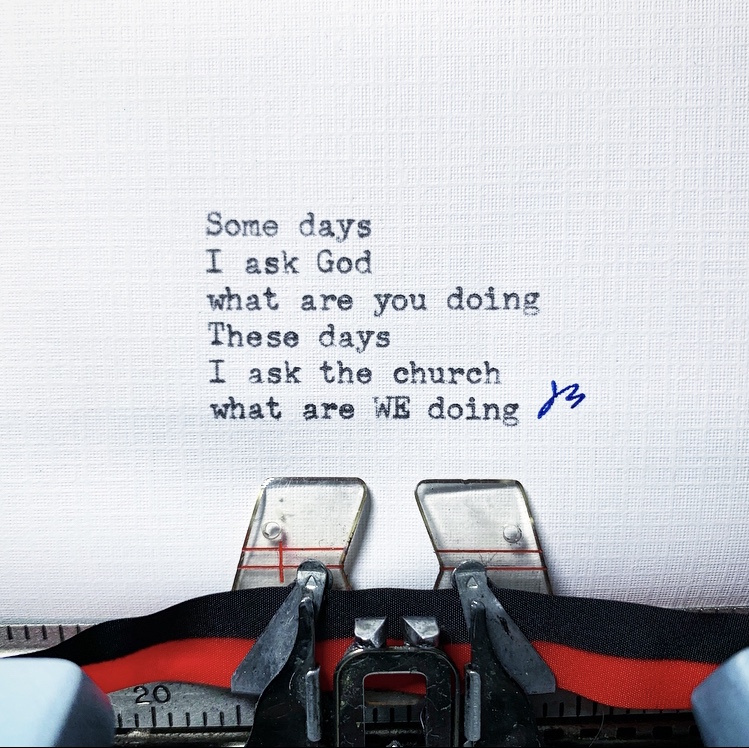
Church: What Are We Doing?


Disclaimer: Angry and disagreeable post to follow.

I’m still not over the American church of 2020 withholding comfort for pandemic anxiety, compassionate wisdom for masks and vaccines, and solidarity with POC—
but instead yelling election fraud and “my freedom.”
The church could’ve ended the pandemic in a summer and cut hate crimes by half.

Every Sunday of 2020, I was overwhelmed and hoped for a word of strength and wisdom. Instead the pulpit told me Black lives didn’t matter, masks were for cowards, and only far right Republicans could be Christians. Then had the gall to say “Don’t get political.”

I would’ve preferred the American evangelical church had said nothing, or at the least, “Let’s respect all sides.” Literally anything else. As someone who works in a hospital and is also a POC, mostly I felt embarrassment. Pastors in 2020 lived outside of reality.

I was told, “Not all pastors, not all churches, leaders, bosses, men”—
But we already know that. I’m grateful for good churches, especially now. But consider even one wounded person is 100% harmed and it matters to them. To say “not all” is to say “not me” which does nothing for those already harmed.
I was told,
“Just trust God.”
But God is all I trusted, especially in this lonely season.
I was told,
“Don’t look to people, look to God.”
But this was a complete cop-out, and I saw where God was looking: to the people.
I was told,
“Stop badmouthing the church.”
But not keeping leaders accountable was literally badmouthing the victims, the church.

I am grateful to the remnant who cared for these wounded. For the healthcare workers, therapists, and clergy over the last twenty-one months who have put compassion over conspiracy. For me, the wound is still too deep. I grieve the vision of what I knew the church could be and hardly was. I grieve knowing maybe this was who many churches really were. I grieve the many leaders I admired who were fooled. I grieve my optimism and complicity.

I’ll say it again. If your faith is making you a jerk, throw it out and start over. If Scripture is your guide, it must move us to justice, to be more kind. Otherwise it’s not what Jesus had in mind.

Over and over I heard stories of people wounded in church by abusers, predators, and political opportunists who worshiped a party over people. Pastors fired for not lifting up Trump. Victims who came forward to their pastors and were shut down or further abused. POC who needed hope and were told, “Calm down, God is in control, don’t worry about it, here’s a guest speaker who’s Black.”

I will never understand how Christian leaders are quicker to defend their denominations over the abused. The church isn’t some institutional concept that needs defending. The church is the people who needed our defense, the ones abused by leaders lording the institution.

When far right evangelicals throw insults because I talk about justice, masks, mental health, and fighting misogyny and racism, it is assumed I am “not in God’s Word.” I can assure you: the work of justice is straight outta the Word of God. Not a brag, but I’ve read the thing a lot. Six times now going on seven (not that the number matters; the words are there for anyone to read). Each time spoke differently. But on justice? That has always been the heart of God. Scripture, if anything, is the fuel for talking about these things. About the wounded.

My faith has changed a lot over the years, especially after becoming a chaplain. I am a witness to suffering around the clock. One of the truths that remain: the Bible is precious to me, which is why people are precious to me. Scripture calls me to see fully. And I hate when it’s used to abuse. It is *for* the abused. Even in the worst of my doubt and disappointment, Scripture calls me to compassion. Never less.

— J.S.
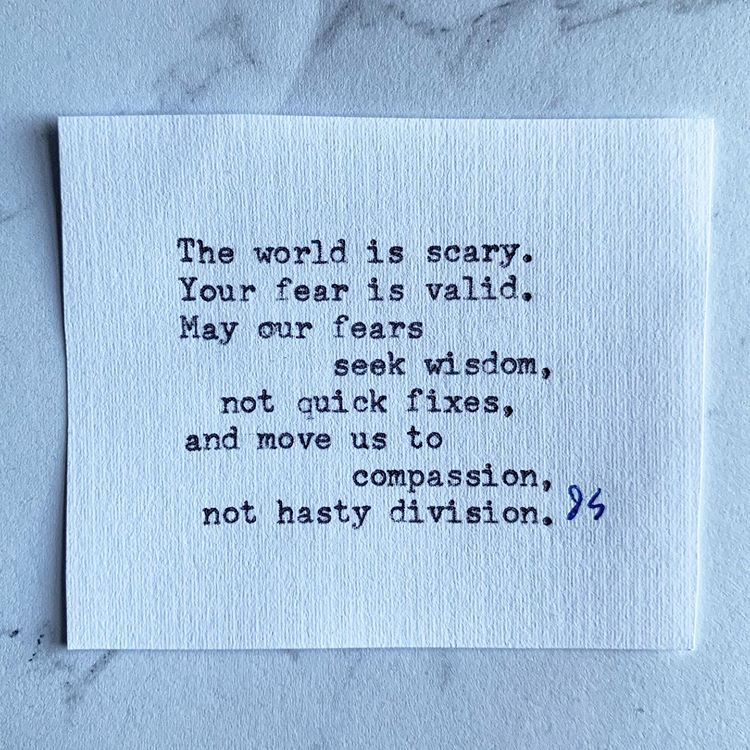
May Our Fears Seek Wisdom


I’d like to think I’m not a fearful person. But I am. I never look like I worry, but I do. A lot.

This week I made the mistake of very publicly bringing up my fears about coronavirus in the workplace. I don’t mind catching the flu, but my wife is pregnant and the flu can adversely affect our baby in utero. I said some uncomfortable things in front of coworkers, when I’m supposed to be the calm voice of a chaplain.

I was not helpful. I probably incited panic and anxiety. I apologized for my behavior. Maybe the fear of being a dad in our current world really got to me. It was still not a good look.

I’m trying to balance the fear we‘re experiencing versus being calm, safe, and rational. I want to validate our anxiety without letting it consume us. I want to be vigilant, but not so on edge that I’m scaring everyone else. I want to say “God is in control,” but also run screaming and lock every window. It’s a tough, strange balance.

We’ve seen where the fear can take us: there’s been multiple racist assaults against Asians, blaming them for the pandemic. We’ve seen misinformation about drinking water and eating garlic and avoiding packages from China. We’ve seen the ugly finger-pointing of political leaders using the panic for vote-bait, promoting xenophobia and catering to the worst leanings of their base. And everyone—including me here—has some take about what to do, how to be, what to say.

I’m trying to stay cool. To be both cautious and optimistic. It’s hard. It’s scary right now. I keep thinking of raising a daughter in this world and how I’m so incapable, unsure, uncertain, lacking the wisdom to say the right thing, to be a pillar when she needs me. I hope I can be strength for her even when I have so little of it in myself.

I’m trying to validate fear without giving into it, to let fear ask questions and seek wisdom and move towards compassionate curiosity, rather than hate or rash decisions. God be with us, who navigates our fears, who hears our worries, who gives us wisdom amidst division, who offers us a peace like no other.
— J.S.

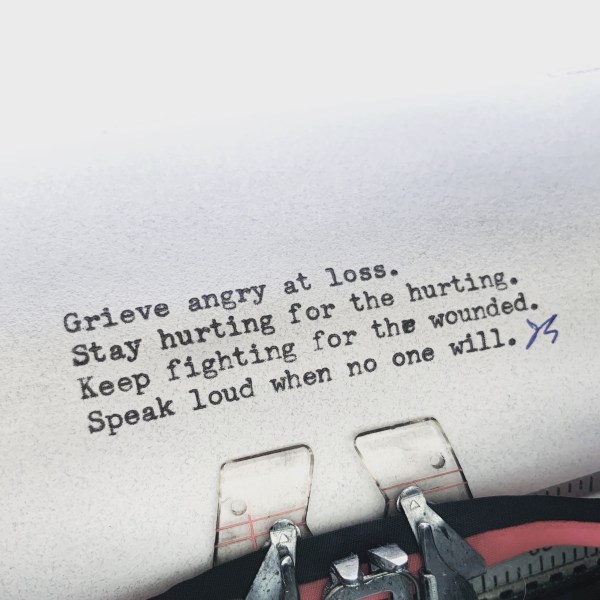
Grieve Angry


The other week, a shooting took six lives and I thought, “That’s not too bad.” I immediately felt sick. Because this isn’t normal. It isn’t okay. And I don’t want to get numb, desensitized, detached, withdrawn. I don’t ever want to get over the anger and grief of how “normal” this has become—whether it’s thirty, six, or one.

It’s a national habit to look at the death toll, but shootings really destroy lives twice. At the hospital, we regularly receive GSW (gunshot wound) patients through the ER. Many survive. Sometimes, surviving is worse. The trauma of it. The nightmares. To witness such a thing is a lifelong wound. The death tolls are horrific, but the mental and emotional toll is just as destructive. I’ve been up close with GSW victims and families—and I can’t watch the news with neutral disinterest. I can’t watch movie violence the same way. I will never get the smell out of my nostrils. When you sit among people with bullet wounds, you see most political “dialogue” for what it really is: fear, cowardice, pomp, rationalizations, and self-aggrandizing, all which speak past the victims instead of for them. I hope I’m not doing the same thing. Please tell me if I am. Please tell me what I can do.

I don’t know if anything will change. Again. It seems hopeless. But I want to grieve angry. I don’t want to calm down. I want courage. And compassion. And champions who will make waves so that something will change. God, keep us loud. God, give us strength.

J.S.

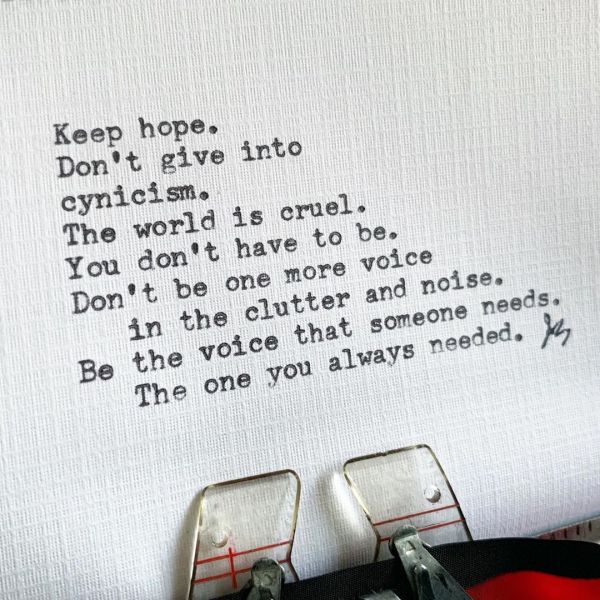
Don’t Get Cynical; Keep Hope


One look at the news and it’s easy to get cynical. It’s easy to give in to pessimism. It’s understandable, given our daily trauma, the terrible headlines, and our disappointing leaders. It’s tiring. But often the world is the way it is because too many of us have accepted the way it is. Pessimism has always been a sport for sidelines. I’m afraid that the detachment of pessimism, as fun as it is, is often just laziness.

No, simply “thinking positive” doesn’t make things better. And it takes momentous effort, decades of sweat and tears and rallies and voices, to move the needle towards real change. That has to start with you. With me. With believing that change is possible. With our little corners and small platforms and unseen podiums. With believing that even ancient institutions like politics and the church and social attitudes can be completely transformed.

Optimism doesn’t only see how we are, but who we could be. I want eyes that see that far. The way ahead was lit by others who dared to hope. Change happened by those who first believed it was possible. So we must carry the light for those coming next. We are the next. We can’t go down without a fight.
— J.S.

I Hope You Will Hear Me


Eventually I’ll say something that you’ll disagree with. I will disappoint you. I’ll come off brash, inconsiderate, ignorant, and misinformed. Your favorite writer or pastor or celebrity will miss an angle or fumble a point or miss the whole thing. You’ll think, “How could I have ever liked this guy?” We then dismiss and demonize based off one sentence, one phrasing, one particular choice of word. I’ve done it, too. You know, farewell forever.

Maybe it’s for a legitimate reason, and they really did go too far. Then farewell, sure. But I wish we could give a little space for a conversation. Even over coffee. It’s possible this person misspoke because they’re just a person and they don’t always get it right. It could be that they need the patience of dialogue to re-examine what they said, instead of the hasty hate-train that offers no fair exchange. It could be they really didn’t know better, or they just needed a nap.

I want your help. I want to know when I’m wrong – but it’s hard to hear what’s right when everyone is yelling. I want the freedom to make mistakes so that I’m not afraid to learn from you. I don’t want to be afraid that you’ll throw things when I don’t phrase things exactly the perfect way. And really, I’m not sure if you would listen to yelling, either. I’d want the same chance you’d want for you, too.

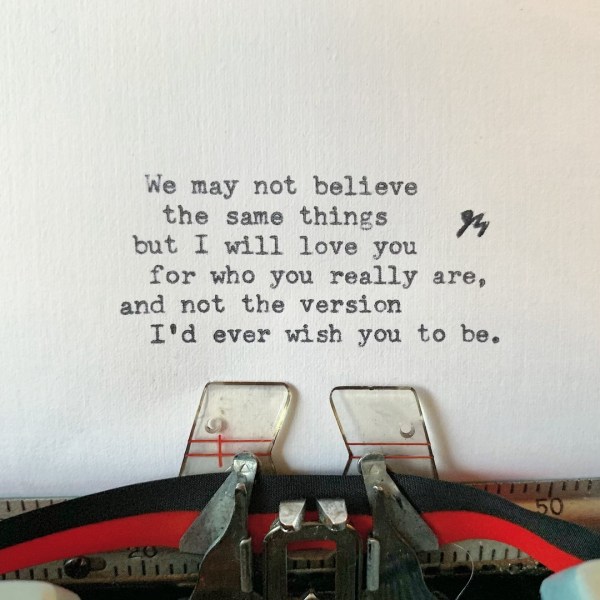
I know there are some non-negotiables that can never be compromised. I cannot say every “side” is equal or that every platform is good. None of us will ever agree on everything. Sometimes we must part ways. And that’s okay. I just don’t want to judge an entire life over a few degrees of difference. We can disagree and still be friends. Even if we must part, I want to become better from our disagreements, to see what I had not seen before, and mostly, to see you. I will hear you.

— J.S.


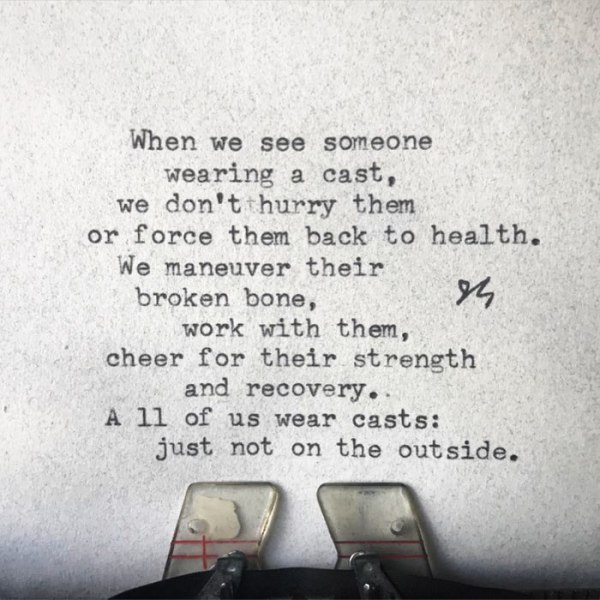
We Wear Casts.


God, forgive me for when I lack empathy,
when I jump to making talking points out of tragedy,
when I forget the pain of community and family,
when my voice is louder than theirs.
— J.S.