I Accidentally Joined a Cult: How a Cult Got Me and the Warning Signs


I was part of a cult once. There was one warning sign that I missed—and I don’t want you to miss it. It’s not as easy to spot as you think.

I never thought I’d fall for something like that. When we think of cults, it seems obvious: they take your money, they isolate you, they talk about aliens or conspiracies, they make you wear pajamas. But this one was way different. It took me a long time to recognize I was being tricked and brainwashed. Because I was a people-pleaser, it was even harder to speak up.

If you’re at a church or workplace or student body or nonprofit or group that doesn’t allow for questions: you have to question if that’s a healthy place. The places I’m most worried about are not the weird ones, but the charming ones that get along too well.

In my book, I talk about how we can easily fall for hidden narratives, groupthink, and persuasive speech, and ways to proof ourselves.

Grab my book here: The Voices We Carry: Finding Your One True Voice in a World of Clamor and Noise
It’s Not Always Persecution


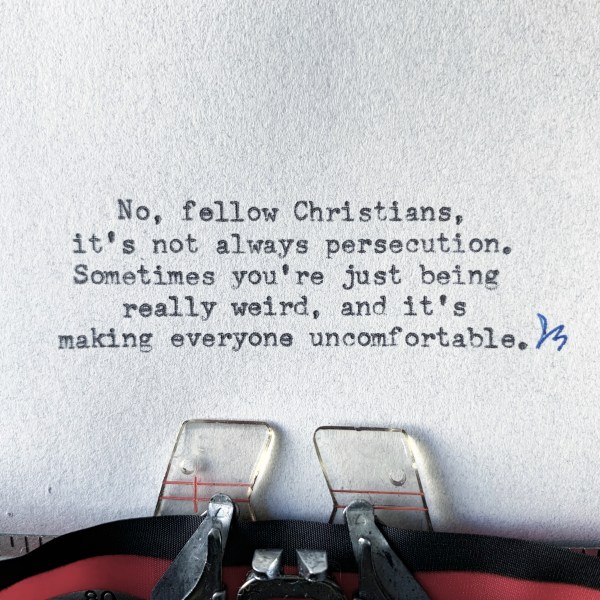
If your faith is making you a jerk, throw it out and start over. If your faith makes you want to fight “worldly people” all the time and you‘re always shaking your head at “this generation,” then your god is too small and your god is probably you.

One of the reasons I was an atheist for so long is because I often wondered if religion makes people worse. Objectively worse. Religion seems to set up a battle position in which “I must guard the truth” and “If you disagree, you’re the enemy, the infidel, the heathen, and evidence of the apocalypse.”

Instead of serving the poor and welcoming foreigners and loving the rejected—you know, the stuff that the Bible cares about—money is spent basically enforcing a kid’s fort with passwords and Don’t Enter signs and alarmist war strategies against a phantom caricature that’s only made up to feel like something important is being fought for.

My guess is that some religious folks do not see their faith as a gift that has saved them, but rather as a weapon by which they must “save” everyone else. So then, the kingdom-military-triumphalist language in the Bible is lifted to boost the ego and separate from “worldliness” and to claim that any criticism against the church is “an attack against the family.” It makes Christians look really weird. I don’t mean that in a good way, like “Wow she’s so weird for giving away money to fight human trafficking.” I mean weird as in “He just hurled that venti Starbucks coffee at the barista because it didn’t say Christmas on it.”

Yes, persecution exists. Which is all the more reason that saying persecution can never, ever be used in a comfortable context. God stop me if I ever think I’m being persecuted when I’m really being called out and held accountable. God help me if I ever use my faith to divide, out of superiority, as a lens of cynicism, instead of giving me hope that we are all within God’s grasp, His grace, His peace.
— J.S.

The Jesus That I “Prefer”


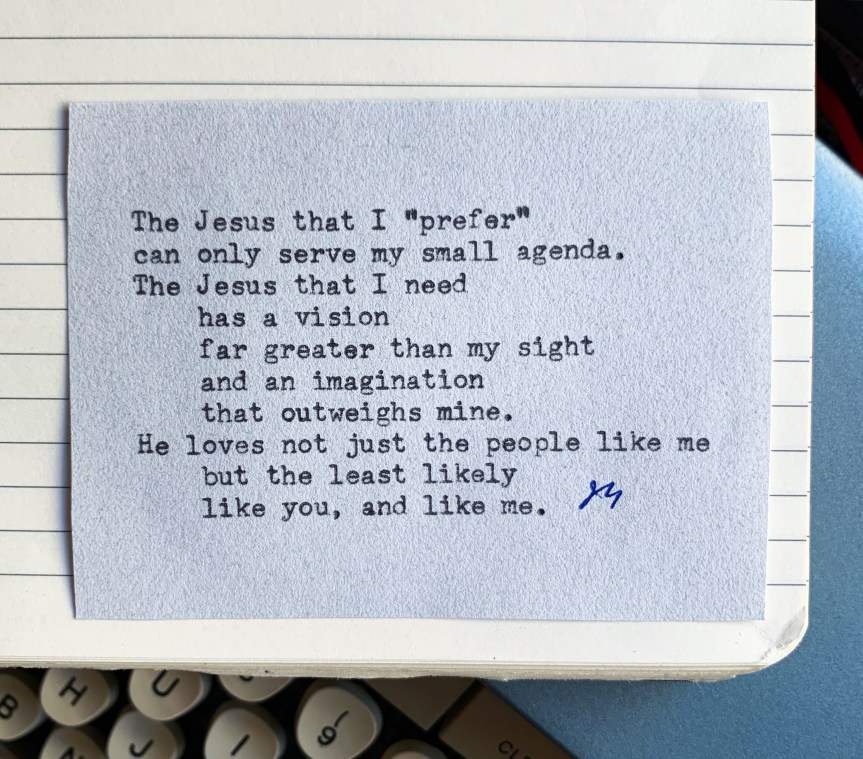
The Jesus that I want would only serve me and my own interests and align with my theological leanings and plans and dreams.

The Jesus that I need would serve the people that I forgot existed, who lived outside my best-laid plans and doctrinal camps, and he would just as quickly subvert my interests to care about others’ interests above my own.

The Jesus that I want would probably listen to my music, look like my race, match my Myers Briggs, and fight for my ideology.

The Jesus that I need would knock me over with songs I never knew I craved, enter my culture without condescending or conforming, would accept and challenge who I am, and transcend my time-locked ideas of ideologies.

The Jesus that I want would probably die for people who liked me or were like me or were most likely.

The Jesus that I need died for the people who were nothing like him and he loved them, and even liked them, and he rose to find them. He even rose to find you and me: the least likely, because he’s the love we want, and need.

— J.S.

How Do I Confront a Friend Who Is “Sinning”?

Anonymous asked a question:

What do you do if you’re asking a non-Christian friend what they’re up to and they respond with telling you they’re doing some activity you know is sinful? Let’s say they could tell you they’re smoking or doing something dishonest or they’re practicing wicca. What’s the proper response to something like that?

Hey dear friend, just a few thoughts on this.

– I would first determine what is “sinful.” Why is it sinful to you? What makes it sin? Is it based on your preference or discomfort? Is there real harm being done? What is the sin against?

– If you lead with, “You’re a sinning sinner and you’re sinful,” I wouldn’t expect that person to hear you out. It has to start with dialogue first.

– If you find that your friend is truly being destructive towards their neighbors and themselves, then I would ask questions. I once knew a person who eventually trusted me enough to say, “I’m going to kill someone today.” My first instinct was to slowly back away and climb out the window. But I asked, “How do you think that would work out for you?” After a few minutes, that person finally said, “Yeah, I guess it wouldn’t work out at all.”

Continue reading “How Do I Confront a Friend Who Is “Sinning”?”

To Be Set Free Takes Honesty


Honesty is the first step to healing. It’s really difficult to confront your own ugliness inside. It’s hard to confront your own selfishness; it’s threatening to confess that you are wrong. But it’s only with a reckless self-confrontation that you can be liberated from the lies you have believed. You can see the lie for what it really is. It’s only by stepping back from the momentum of darkness that has swallowed up your vision that you will begin to see once more. The light is staggering, blinding, painful, and even humiliating, but to see yourself as you really are is to begin the path to be set free.
— J.S.

Challenge What You Believe


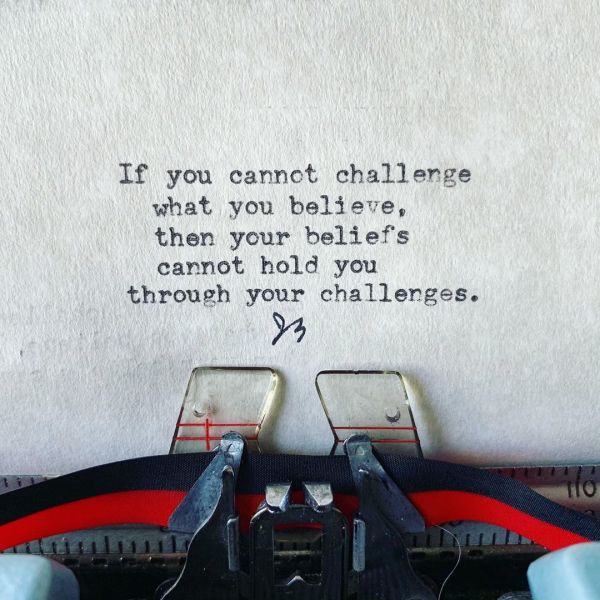
Our convictions can only be as strong as the questions we ask.

I’ve been in places where questions got me shamed, assaulted, and destroyed. Our platforms of social media, church, politics, and campuses might seem open-minded and willing to dialogue, but if you move against the status quo, you’re likely to be called a heretic, sinner, apostate, or ridiculous. Most places will stomp out dissension and cancel you if you mess up a single time. We can play the game of “we are a safe place,” but conflict always shows our true selves.

I’ve been guilty of this, too. I don’t like asking uncomfortable questions, or being challenged with ideas I’ve never heard, or assuming that my precious ideas are too narrow and naive, when really my own ideas have never evolved. I’ve shut down disagreeable opinions not because the content was unsound, but because I was comfortable where I was. God forgive me for covering my ears to a better version of life.

If you’re in a place that won’t ask questions and always reject what you ask, then 1) you might be called to shake the status quo, or 2) it’s time to leave.

I want beliefs that have been strengthened by skepticism, that have gone through the crucible of confrontation, experience, and a choir that doesn’t always echo each other. I want truth that will keep me through darkness. I need a faith full of doubt to make it through the hardest valley. I want resilience born of grit and growth.

— J.S.