Remembrance is resurrection.
An excerpt of my audiobook for As Long As You Need: Permission to Grieve. On remembering the dead and bringing them back to life.
Remembrance is resurrection.
An excerpt of my audiobook for As Long As You Need: Permission to Grieve. On remembering the dead and bringing them back to life.
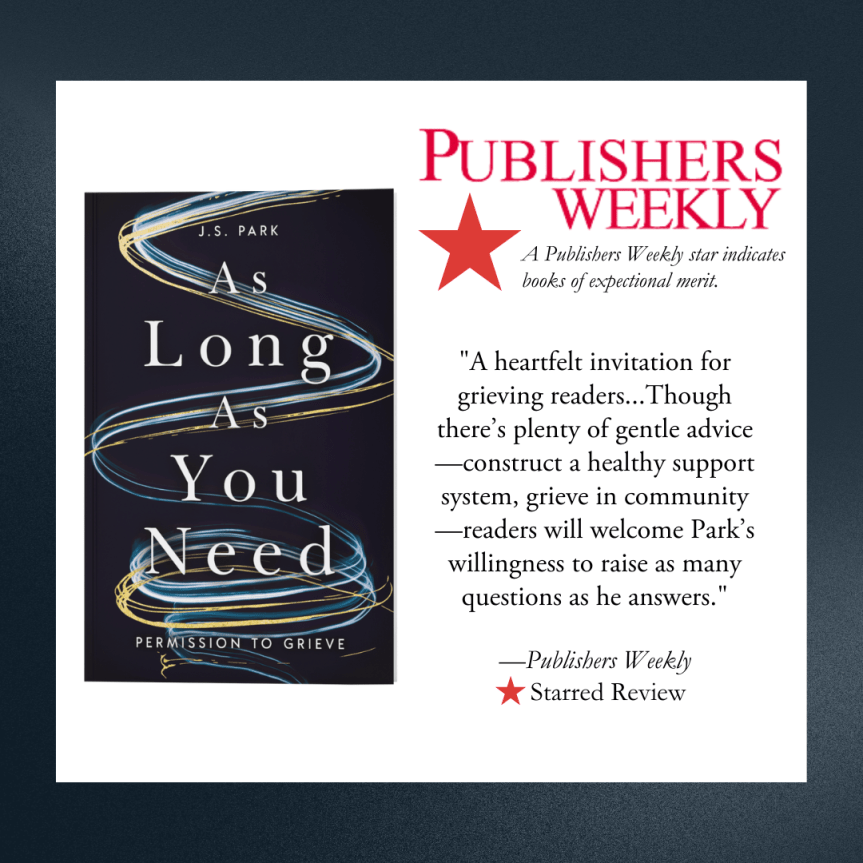
I am very happy to share that my book As Long As You Need received a star review by Publishers Weekly. I’m told this is rare, given to about 5% of tens of thousands of books.
I’m really, truly, sincerely blown away.
Book releases on April 16th. 🙌
AsLongAsYouNeedBook.com
—
Here is the book trailer:
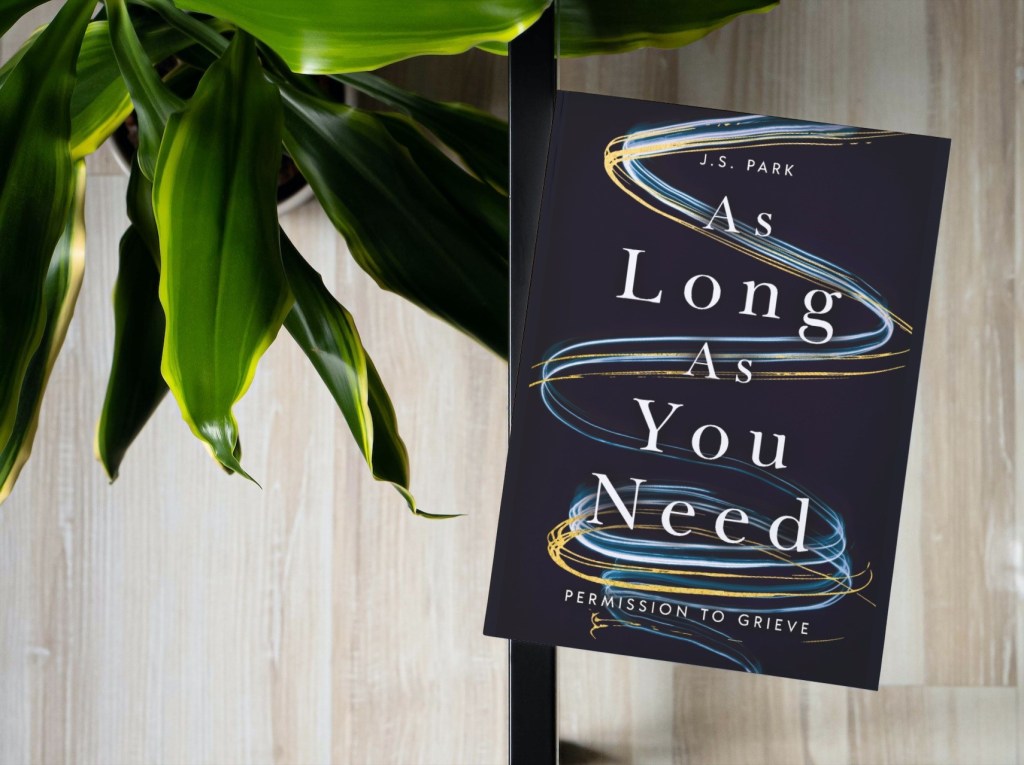
Book title and cover reveal:
• As Long As You Need: Permission to Grieve •
You can now preorder ![]()
•
My book releases on April 16th, 2024.
It’s about grief.
I talk about my hospital chaplain work and multiple dimensions of grief, such as loss of:
/ dreams / mental health / autonomy / community / self-worth after abuse /
I dismantle myths about grief,
share stories from the hospital,
and share what I learned and unlearned from sitting with hundreds of patients.
And it is partially a memoir of my own grief: the death of my friend John, witnessing my wife survive PPD, witnessing the hardest losses on the frontlines, the loss of my faith (and coming back to it, sort of), and confronting my own history of trauma through EMDR. ![]()
•
Second to last photo is my co-author. I always had an open door policy when I was writing. Any time she dropped in, I paused and spent time with her. She’d watch me write or ask me to read it to her or just vibe to the lo-fi. She now calls lo-fi “daddy’s writing music.”
•
Last photo is me after recording some of the audiobook. I didn’t get to narrate my last one (I was told I failed the audition). My new publisher assured me from the start that I’d get to record for this one. Very glad and grateful and honored to be reading my book for you. ![]()
•
This book could not have been written without you. Online family. Your kindness, comments, messages, stories, and feedback were my strength as I took on this emotionally challenging work.
I’ll be doing a few readings randomly in April and May. Would love to meet you. ![]()
•
A special thank you to Faith M Karimi, CNN digital senior writer, for writing the article about me and my work. I got a lot of interest in a book after the article. From phone calls at the hospital to hundreds of messages, I heard from so many sharing their grief stories. I’m reminded that even when it seems like grief is a scary topic, many of us really do want to talk about loss, death, and dying. In this very tough space, I hope to meet you there.
— J.S.
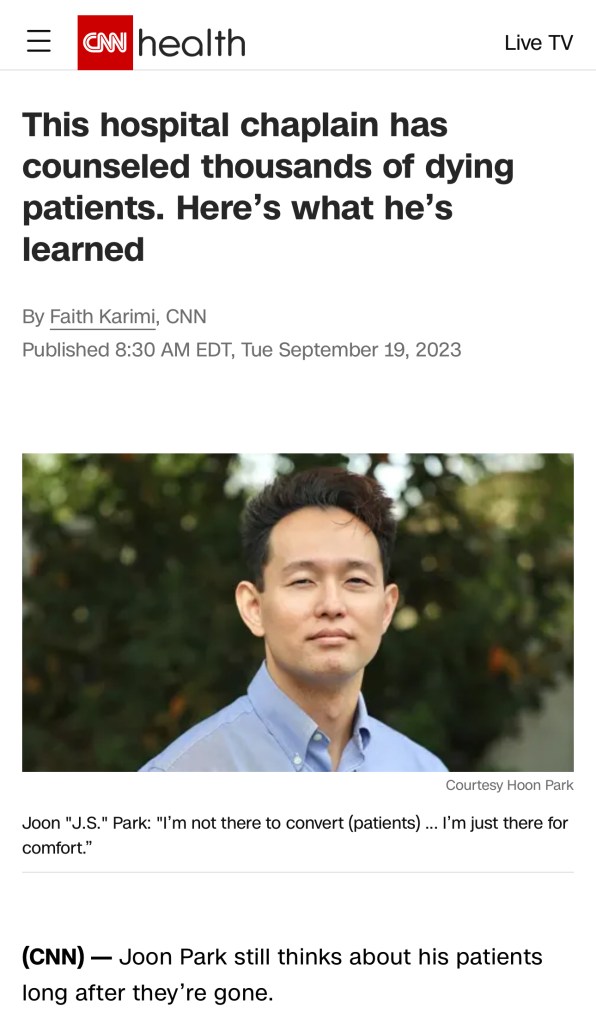
Hello online family. I am very happy to share that I was interviewed by CNN journalist Faith M Karimi about my hospital chaplain work. Thank you Faith for interviewing me and our amazing palliative physician Dr. Tuch about our care for our patients. Very grateful for my fellow chaplains and healthcare workers.
Full interview: https://www.cnn.com/2023/09/18/health/hospital-chaplain-lessons-wellness-cec/index.html
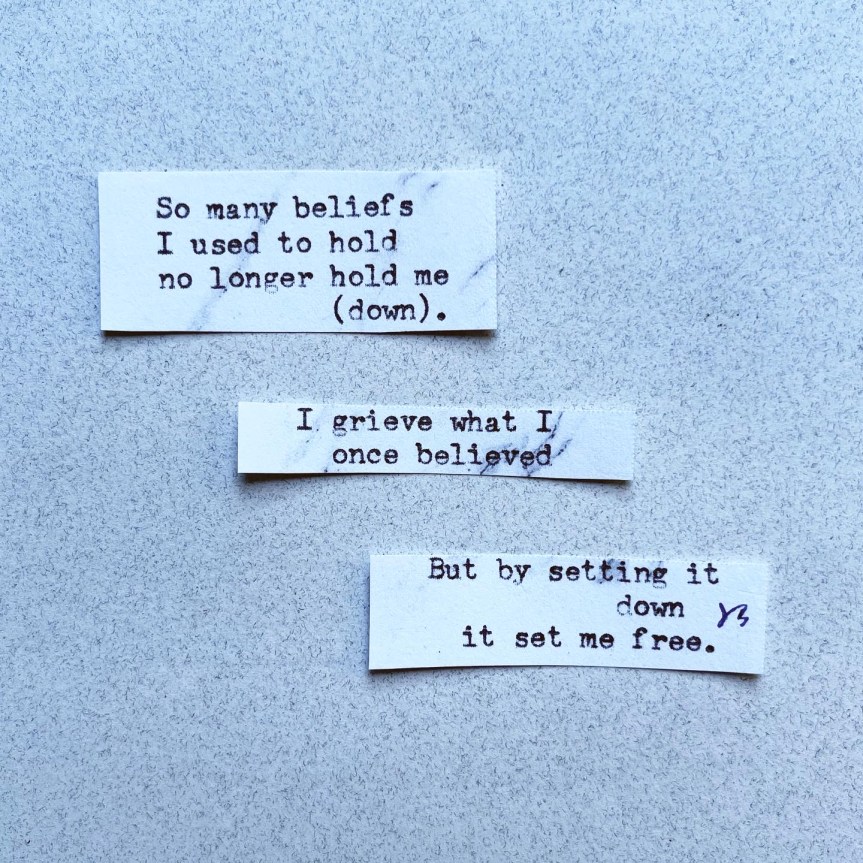
What do you no longer believe?
What are old beliefs you grieve?
I used to believe
all anger was wrong, so I was the captain of the tone police—
until I discovered politeness is not rightness, that anger is not always hate, but hurt, and to be loving is to be fiercely angry at injustice.
I used to believe
forgiveness meant friendship and even a flicker of pain meant I hadn’t forgiven my abusers—
but I found I can forgive from afar, over a lifetime, and that the pain was not my lack of forgiveness but how deep the wound was carved.
I used to believe
that death could bring people together—
until I saw covid take hundreds of thousands of lives and not even their deaths could evoke compassion,
until I saw refugees ceaselessly die in the headlines and too many justified their demise.
I used to believe
that god was American, homophobic, emotionless, and secretly disappointed in me—
until I found God had a vision of grace far greater than our sight, an imagination that far outweighed mine.
I used to believe
my value was found in my usefulness and contribution,
instead of inherently being human,
in an irrevocable Image.
I used to believe
every pain had a purpose, a connect-the-dots lesson, a fire to refine us, a reason to teach us—
until I saw pain is pain, it is not mine to explain, and maybe the only reason it happened was evil and abuse and systems that need to be unmade.
I used to believe
my depression was from a lack of prayer or faith or moral grit or fortitude—
but my mental health only lacked the help I needed and I found that therapy and medicine were not giving up, but giving life.
I used to believe
those who looked like me chose to be silent and passive—
except we were not silent, but silenced, and we had always spoken up despite this.
I used to believe
we could never unravel lopsided power dynamics and racist systems—
until I saw heels in the dirt making moves insistent, for years they had woven new stitches by inches.
I used to believe
everything I believed
was so certain.
I grieve my certainty
but I trust the mystery, to know
there is always more unknown.
Being “right” is to be alone,
but in discovery
we walk each other home.
— J.S.
There’s a classic dispute among psychologists that’s best shown by the hair dryer story. It goes like this:
A woman believes her hair dryer is going to burn down her house. It gets to be a real problem; she’s driving back home twenty times a day. Her work life and love life and social life all take a hit.
Finally a therapist asks her, “Have you thought about just bringing the hair dryer with you?”
It works. When the fear creeps in, the woman opens her office drawer and sees the hair dryer and she’s fine.
Some psychologists see a major problem here: “Nothing was solved! She still has issues! She needs to get to the root of it!” But others say she found a solution that worked for her.
I lean toward the second camp. The problem was real to her and so was the solution. Maybe later she would get to the bottom of things. But until then, she had found a way to make it okay.
The big idea is her story was taken seriously. That was the start of her wholeness. Only when a story is fully heard is there the possibility of connection or challenge or growth.
The thing is: Too many of our injuries are real. It is not merely “in their head” or “their side of the story.” And it is not enough just to believe it happened.
Abuse, racialized trauma, mass violence, systemic failures, misogyny, manipulated power dynamics, and all the mental health issues not seemingly visible—all of these need empathy, but it doesn’t stop there. They also need presence, action, compassion, and a complete reframing of all the ways that things are done. Justice would make things so right that we would never need accountability or to convince others to “believe me.”
It is already hard enough proving my injury is real.
I have the scars to prove it.
But what I need is more than belief,
more than moved hearts, more than speech.
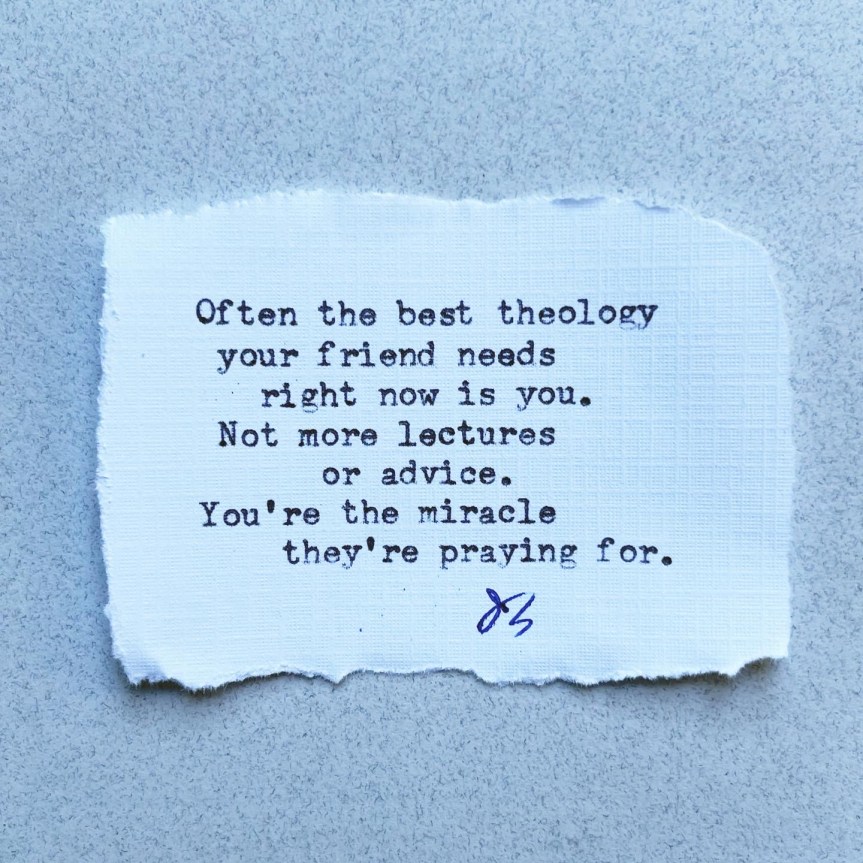
Theology is only complete with our hands and feet.
Psychology can diagnose and make valuable notes, but only heels in the field, in the dirt, bring us hope.
Even with all our treatment and remedies, I still need you to sit with me.
In grief, your advice is probably good, but not as good as being on the floor with me.
May your pain be mine,
and your hopes mine too.
— J.S.
Part of this post is an excerpt from my book The Voices We Carry
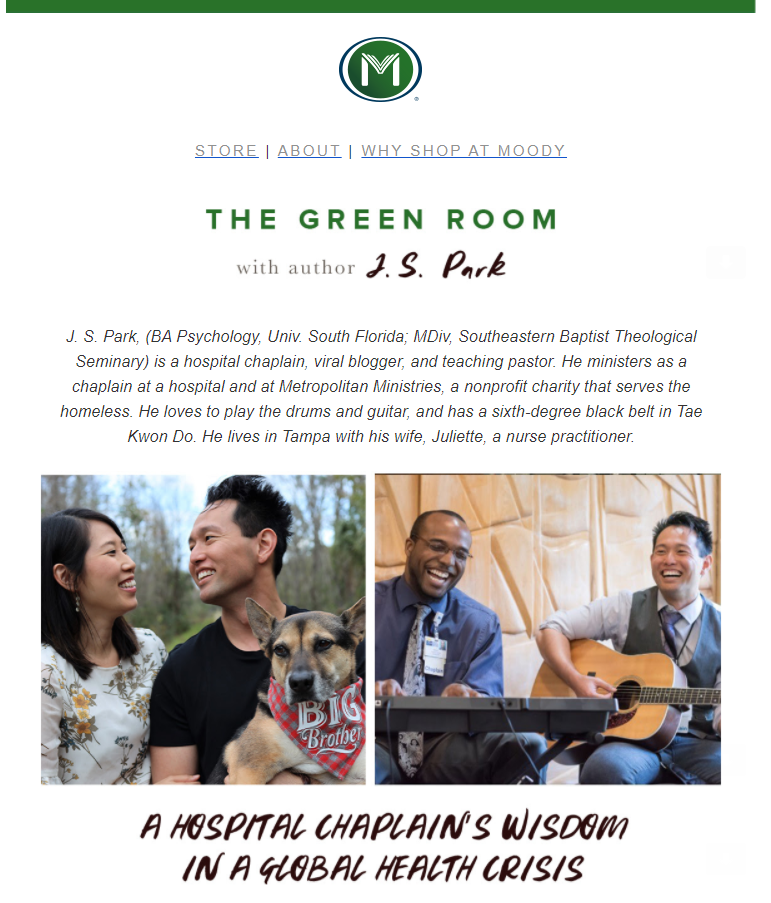
I was interviewed by my publisher Moody for their author series Green Room.
They asked me about my chaplain work, childhood, faith, my writing process, and my book The Voices We Carry, which is available in paperback, ebook, and audiobook.
With my publisher’s permission, here is the entire interview below.
I share three true hospital stories which are “deleted scenes” from my upcoming book, The Voices We Carry.
— J.S.
[Stories have details changed to maintain privacy.]
Hey friends, I did a video with my publisher Moody Publishers to talk about COVID-19.
I go through five points: How to approach the pandemic from a chaplain’s perspective—dealing with our fear, with each other, and with ourselves—and I directly address those who have tested positive for COVID-19 or have lost someone to it.
I hope even a single sentence will help you through this time.
(Also, this might be the first time you’ve heard my voice or seen me in video, I apologize in advance.)
God bless and much love to each of you, friends.
— J.S.
Anonymous asked a question:
I’m a medical social worker and quite new to the profession. For a long while I had thought that it was what I wanted to do in life. Now… I’m not quite sure. It’s exhausting and I’m not quite sure if it’s beneficial for my mental health in the long run… so many patients to see who need a lot of help but hospitals just want to hurry and discharge them. Part of me wonders if it’s worth it or is it better to just work an unemotional administrative job. Any advice? Prayer please
Hey dear friend, I’m sorry that you’re going through this. I also applaud you for choosing your profession. I work alongside many social workers (I’m a hospital chaplain) and y’all are seriously the best of the best.
A few things. If you haven’t done so already, I would consider seeking therapy. It helps. Anyone in the field of service and healing takes on so much, and it’s too much for any one person to hold. It requires processing.
I would find experienced people in your field and be in conversation with them. Process with them. Ask them how they did it and how they continue to do so.
Some hospitals are not like others. I’m fortunate to work at a really good one where the nurses and doctors really care. Your issue might be the place you’re working at.
You had also mentioned it might be better to work an “unemotional administrative job.” I can tell you right now, almost any job is emotional, including admin. It really depends on how your workplace helps you to deal with those things.
Which brings us to “compassion fatigue.” This is a very real issue. Some of us (like me) over-identify with our patients and tend to feel everything all the time. It’s not entirely a bad thing, but it can also be draining. Some of us (also me) have a bit of a savior-martyr-hero syndrome and really need to check our motives. We need safer boundaries and more spaces of rest. We’re likely to pour out so much as if this is “sacrifice,” when really it’s self-harm and it ends up harming everyone.
It’s helpful to know what your rhythms look like. It’s worth asking: When do you get most tired? Most hurt? What do you do for rest? What is your body telling you today? What are your heart and mind saying? How can it be changed for better today?
Two other important things.
Continue reading “Compassion Fatigue: The Heartache of a Job That Requires All Heart”

Anonymous asked a question:
Do you have any idea as to how I can combat my death anxiety related to a generalised anxiety disorder? Despite having been a Christian for the entirety of my life, I’m really struggling with the fear of losing loved ones and eventually, dying myself. My greatest fear is just becoming nothing.
Dear friend: I have the same fear.
The other day I was on the couch watching a show with my wife and my dog, and I had the crazy (if unoriginal) thought that a hundred years from now, we’ll be gone. The people in the show: gone. Our pictures and trinkets and trophies and stacks of collected papers will soon mean nothing to no one. What will become of our stories? Who will remember us?
I can’t say that I know how to deal with this all the time. The terror of death is a real anxiety. Some theories have said that we work and play and create and pray to ease the fear of annihilation. It could be true. All our living could be a futile dance towards the grave.
As a Christian too, sometimes the Christian story gives me great comfort. Other times it can feel so abstract and unreal. I want to believe so badly that we are headed towards a better eternity. But my doubts run rampant. I doubt, a lot.
Here are my Top Twelve Posts of 2018, including topics like the benefit of grief, dealing with depression in marriage, misogyny in the Bible, people-pleasing, and my brush with suicide this year.
For all my typewriter posts, click here or my Instagram here.
My top two selling books this year were the one on fighting depression and the one on King David.
12) Grief Over the Death of a Loved One: To Move On or Hold On?
11) I Called the Suicide Lifeline
10) An Interview About Mental Health, Minority Stigma, and the Church Vs. Depression
8) I Want My Life to End—What Do I Do?
7) I Have Doubts: Am I Allowed to Say That?
6) How Do You Know You’re Persecuted or Just a Terrible Person?
5) Working Through Depression As a Team: What to Do and Not to Do with Your Friend’s Mental Health
4) I Think I Hurt Someone: How Do I Clear the Air?
3) I Care Too Much What Other People Think About Me
2) What’s Up with the Bible Saying “Wives Submit to Husbands”?

Anonymous asked:
How do I deal with the death of a loved one?
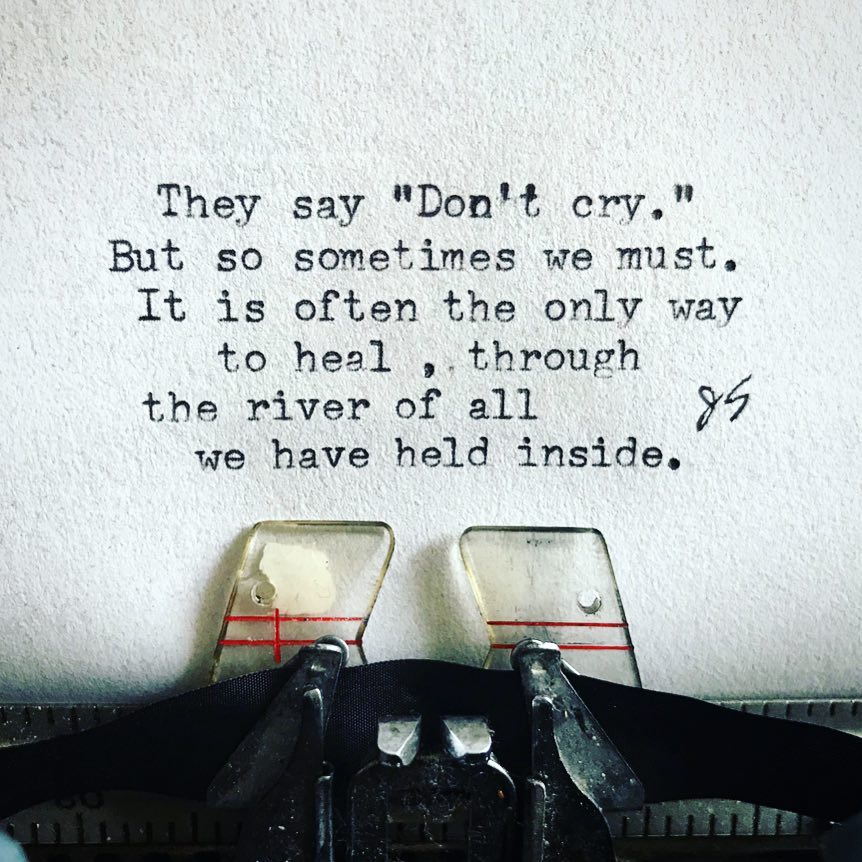
Dear friend: I’m so sorry. A close death is one of the most difficult things you will ever experience. There’s almost no getting over it. Grief is less like a cold and more like a shadow, always lingering even in the brightest light. It gets easier, but it stays with you in all kinds of ways.
As a hospital chaplain, I have seen hundreds of people die now, and there’s no formula or plan or mantra to get you through. All the hard things you’re feeling, whether it’s numbness or waves of pain or a deep soul itchiness or a tight chest or an empty stomach or rivers of tears, are all a part of grief. You’re not crazy. You might see a random thing that will remind you of your loved one, and it will hit you in the gut. You might visit a street or see someone’s smile or hear a movie quote that reminds you of everything, and it will hit you all over again. That happens. You’re not crazy.
Continue reading “Grief Over the Death of a Loved One: To Move On or Hold On?”
It’s a crazy incredible thing to be in a place where people slow down and listen, where they hear your whole story and let you paint your full heart in the air.
I was telling one of my fellow hospital chaplains about life lately, about my health problems and secret panics and suddenly about a billion other things, every humiliating and painful and neurotic moment that had been twitching over for the longest time, and I didn’t realize how much I had bottled up in my neatly wrapped fortress. My chaplain friend never judged, only nodded, never flinched, stayed engaged. She then prayed for me, a really beautiful prayer, like cool water for bruised purple hands. And I wept. A lot. Quietly, but inside, loudly. It was a little embarrassing. But something shifted and settled and became still for a moment, like the leaves of a tree coming together after a strong wind, a momentary painting. I left lighter.
Later I visited a patient who had nearly died from a brain bleed, and when I offered prayer, the nurse grabbed me and said, “Me, too.” I took her to the side, and she whispered, “Cancer. I might have breast cancer, and I’m afraid, chaplain. I’m so damn afraid.” She clenched her teeth and tried not to weep, but I put a quick hand on her shoulder and she wept anyway. She talked. I listened. There was nothing for me to say but to be there. And maybe nothing had changed—except we were made light somehow, and together drew something bigger than us. We drew colors into the gray.
There are still places, I believe, even in a busy and unhearing time, where we can draw free. I hope to meet you there, where we are not okay, but less gray than yesterday. I hope to pray for you, that we become bigger.
Officially graduated from my year long chaplain residency. Pics of our ceremony service. Thank you and love you friends, for your prayers and encouragement. Thank you to the incredible doctors, nurses, surgeons, unit coordinators, PCTs, environmental services, and every other unsung hero of the hospital. On to more chaplaincy and the next chapter!
— J.S.

Part of my hospital chaplaincy duties is to write a reflection on how it’s going. Identities may be altered for privacy. All the writings are here.
—
No—it doesn’t always work out.
The storm doesn’t always pass.
There isn’t always closure.
Not everything will be all right.
I won’t know why.
There’s a moment in the hospital when our illusion of safety is shattered and the stark reality sets in:
Things won’t change,
they won’t get better,
there won’t be a miracle,
and there won’t be a happily ever after.
It looks like God has exited the building, and that maybe He’s not coming back, and that we will never, ever know why this awful tragedy had to happen.
Babies die. Spouses drop dead at thirty. Diseases take and they take and they take. Prayers go unanswered. Drunk drivers walk free and their victims die slowly in a fire. People die alone. Some people don’t know who they are when they die; some people don’t have a single number they can call. They’re cremated by the county without a trace.
I soon found that I was having a series of tiny panic attacks over faith, more and more disorienting, these little underground bombs that threw me into crisis and left me scrambling for answers.
After a particularly hard case where a young woman’s dad shot her mom and then himself, I came home and tried to pick up some random inspirational book from my bookcase. What I found inside was so unimaginably distant and disgusting that I nearly threw it at the wall. I went through a few more books, and words that had once comforted me were crass and trivial. I couldn’t possibly believe that any of these authors had really suffered or seen suffering. I’m sure they had—and that’s what I wanted to see. Their raw edges. Not these luxurious, over-privileged travels and extra tips on mental re-arrangement, completely removed from the wounded. I saw these first-world tales as they really were: shallow, out-of-touch, and bereft of consequence.
I was lost in the whirlwind of malheur, the pain underneath our pain. I was struck by intrapsychic grief, from the loss of what “could be” and would never come to pass. I was a wax thread in a hot oven, my old beliefs dripping and frayed.
I suddenly understood the intensity of the Psalms, all the anger and violence and whiplashes of doubt, encapsulating the moments when we can no longer un-see this garish void of the nether, the unreturned.
I wondered if maybe it was easier not to believe, because believing was so dangerously painful.
Continue reading “The Irretrievable Vacuum of Unhappily Never After.”

Part of my hospital chaplaincy duties is to write a reflection on how it’s going. Identities are altered for privacy. All the writings are here.
The doctor tells him in one long breath, “Your wife didn’t make it, she’s dead.”
Just like that. Irrevocable, irreversible change. I’ve seen this so many times now, the air suddenly pulled out of the room, a drawstring closed shut around the stomach, doubling over, the floor opened up and the house caving in.
“Can I … can I see her?” he asks the doctor.
The doctor points at me and tells Michael that I can take him back. The doctor leaves, and Michael says, “I can’t yet. Can you wait, chaplain?” I nod, and after some silence, I ask him, “What was your wife like?” and Michael talks for forty-five minutes, starting from their first date, down to the very second that his wife’s eyes went blank and she began seizing and ended up here.
I’m in another room, with a father of two, Felipe, whose wife Melinda is dying of cancer. She’s in her thirties. She fought for three months but that was all the fight in her; she might have a few more days. Felipe is asking if his wife can travel, so she can die with her family in Guatemala. The kids are too young to fully comprehend, but they know something is wrong, and they blink slowly at their mother, who is all lines across greenish skin, clutching a rosary and begging God to see her parents one more time.
“Can I see them?” she asks the doctor.
Another room, with a man named Sam who has just lost his wife and kids in a car accident. Drunk driver, at a stop sign, in the middle of the day. Sam was at home cooking; his wife was picking up their two daughters from school; the car had flipped over twice. The drunk driver is dead; Sam doesn’t even have the option to be angry. Sam was hospitalized because when he heard the news, he instantly had a heart attack. He keeps weeping, panicked breaths, asking to hold my hand because he doesn’t know how he can live through this. He hasn’t seen the bodies of his wife and daughters yet.
“Can I see them?” he asks me.
The patient really believed her cancer was somehow “God’s amazing plan for my life.” She went on to say the things I always hear: “He won’t give me more than I can handle. Thank God we caught it early. God is going to use this for my good.”
I get why we say these things, because we’re such creatures of story that we rush for coherence. But even when such theology is true, I want to tell her that it’s okay to say this whole ordeal is terrible and that it really hurts and that we live in a disordered, chaotic, fractured, fallen world where the current of sin devours everything, that bad things happen to model citizens, that nothing is as it’s meant to be, and the people who don’t catch the cancer early aren’t well enough to thank God for anything, and that not every pain is meant to be a spiritualized, connect-the-dots lesson as if God is some cruel teacher waiting for us to “get it.”
Pain doesn’t always have to be dressed up as a blessing in disguise. God hears our frustration about injustice and illness: for He is just as mad at suffering as we are. He doesn’t rush our grief. He bled with us, too, in absolute solidarity, and broke what breaks us in a tomb. He is the friend who meets us in our pain, yet strong enough to lead us through. I can only hope, in some small measure, to do the same.
— J.S.
I’ve been thinking about how much has changed over the last few years.
I’ve been grieving over the reactionary microcosm of social media. The fiery rhetoric. The click-baiting. The “experts.” Beirut, Paris, Syria, the two earthquakes in Nepal, the ISIL threat, the US shootings, the protests in South Korea, racial tension, the political circus, the same celebrity drama.
I’ve been expecting the same predictable cycles at every headline: the outrage, the outrage against the outrage, the ever-loving trolls, the escalating comment sections, and the sudden silence when the bandwagon has moved on. I’ve been thinking how easy it is to lose sight of the real outrage, when we truly have the right to be offended amidst the “crying wolf,” and how unfortunate it is that true pain gets drowned in the viral-seeking echo chambers that never reach across the divide, but choir-preach with buzzwords and snarky flashy lines.
I’ve been wondering if we’re really this crazy.
If we’re really this hateful.
If we’re finally in the burning wreckage of a dying age.
If we’re really this angry about the wrong things and silent about the right things.
If we’re really this lost.
I’ve been thinking about how we can get better, or if we’re beyond recovery. That maybe I should give up, and give in to the cynicism, because it’s easier.
I was with a patient in the hospital who had a blood condition. “Derrick” suffered debilitating physical pain his entire life. His knees were twisted in circles, his fingers into claws, his body turned sideways, his eyes burned with baggage. He didn’t have much longer to live. It hurt him to talk, but he wanted to talk so badly. We were face to face, and he spoke about his illness, his dreams, his hopes, his insecurities, his faith, his fears, his family. We didn’t break eye contact for over an hour.
The news was on TV and there was another awful headline. The ticker-tape was scrolling at the bottom, one thing after another. The TV caught Derrick’s eye.
He said, “I don’t understand. I don’t get how we’re still fighting. I don’t understand how we’re still so mad. I’m hurting every second, and I see the news, and people still want to hurt each other. When is it enough? I can’t even play with my kids; I can’t hold them long; I can’t work or run or laugh too loud. If I just … if I could just walk without falling into a heap, the things I would do. The things we could do, you know, and we choose this instead.”
He tried to point to the television but he barely got his arm up.
“I’ll never get better. Physically, I mean. I’m at the end of my time here. But we can get better, you know, in the way that matters. I think if we knew … if we knew we’re all hurting somehow, we might be better. We might reach for each other.”
I looked over at Derrick and he was weeping. For the world. For himself. For me. For you. For us to get better.
And I wept, too. I knew that sort of pain, that desperate burden for healing and connection. To reach across the divide.
Derrick looked at me and said, “This is what matters. Right here. You and me, this is it. Can you stay with me? Can you pray with me? Can you pray for me and the hurting people?”
Through tears, we prayed. At the end, all I could really think to say was, “God—give us hope.”
I prayed for hope against the cynicism. Hope to make the best of it. Hope to hold on in the burning wreckage. Hope that there’s still good in us. Hope that we’ll make it. Hope that we’d find each other with our tiny little time on earth.
We held hands tightly. We held onto hope.
— J.S.