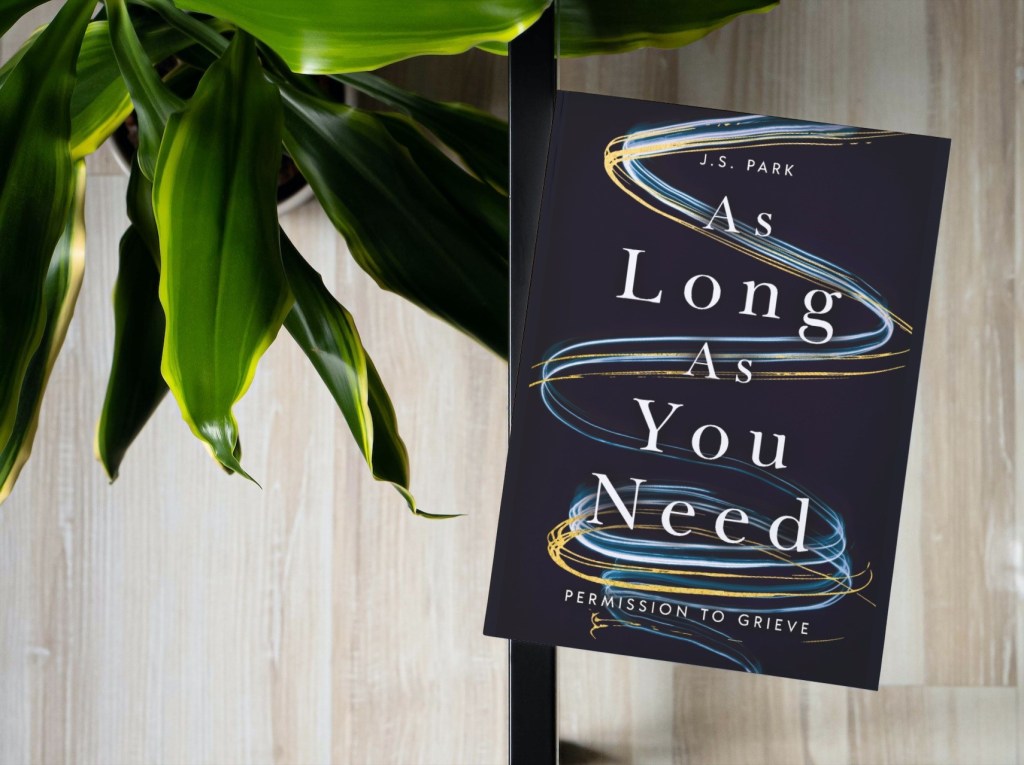
Preorder My New Book, As Long As You Need: Permission to Grieve

Book title and cover reveal:

• As Long As You Need: Permission to Grieve •

You can now preorder 🙌

AsLongAsYouNeedBook.com

My book releases on April 16th, 2024.

It’s about grief.

I talk about my hospital chaplain work and multiple dimensions of grief, such as loss of:

/ dreams / mental health / autonomy / community / self-worth after abuse /

I dismantle myths about grief,

share stories from the hospital,

and share what I learned and unlearned from sitting with hundreds of patients.

And it is partially a memoir of my own grief: the death of my friend John, witnessing my wife survive PPD, witnessing the hardest losses on the frontlines, the loss of my faith (and coming back to it, sort of), and confronting my own history of trauma through EMDR. ❤️‍🩹

Second to last photo is my co-author. I always had an open door policy when I was writing. Any time she dropped in, I paused and spent time with her. She’d watch me write or ask me to read it to her or just vibe to the lo-fi. She now calls lo-fi “daddy’s writing music.”

Last photo is me after recording some of the audiobook. I didn’t get to narrate my last one (I was told I failed the audition). My new publisher assured me from the start that I’d get to record for this one. Very glad and grateful and honored to be reading my book for you. 🎙️

This book could not have been written without you. Online family. Your kindness, comments, messages, stories, and feedback were my strength as I took on this emotionally challenging work.

I’ll be doing a few readings randomly in April and May. Would love to meet you. 🫶

A special thank you to Faith M Karimi, CNN digital senior writer, for writing the article about me and my work. I got a lot of interest in a book after the article. From phone calls at the hospital to hundreds of messages, I heard from so many sharing their grief stories. I’m reminded that even when it seems like grief is a scary topic, many of us really do want to talk about loss, death, and dying. In this very tough space, I hope to meet you there.

— J.S.
Who I Speak For


I need to tell you this story.

When I was a pastor over ten years ago, I preached at a tiny conference and afterwards a young woman approached me. She had tears in her eyes, said she was single and anxious all the time and nearing forty years old and had “accomplished nothing.” I hurt for her.

Then suddenly—
I drew a blank on what to say. My seminary hadn’t prepared me for this. And I was scared for her. How would her church reply? Her pastor? Was this place safe? All I could do was process with her, validate her feelings, remind her of her inherent value, pray with her. Was that enough?

After I had met this young anxious woman, I changed two things.
1) I rewrote the rest of my sermons for the week.
2) I vowed to always think of this woman and others like her every time I spoke or wrote.

I knew up to then, to my own shame, I had never preached for the ones in the back row.

How could I have forgotten? I was once in the back row too. But my eagerness to keep “sound” and sound pretty and to please my professors overshadowed grace.

To this day, if anything I say does not speak to the person in the back row, to someone like me or her, it’s not worth saying. I have to remember where people really live. Hope cannot smother or bypass, but must only gently enter.

If our words only work for the well-off, able-bodied, and undisturbed, then maybe we’re
1) only speaking to popular powerful folks,
2) expecting profit from big pockets, or
3) comfortable outside reality.

I have a litmus test when new theological movements pop up. Will it matter to one of my dying patients and their families? Maybe that’s basic and unfair. But that litmus test has simplified and clarified my faith.

I still make this mistake, but always a reminder to myself: If it doesn’t work in the end, it won’t work at the start. If it doesn’t work for the wounded, it won’t make you whole. If it means a lot of arguing and posturing instead of compassion and action, I’m too tired to care. I don’t. Leave it out of the patient’s room and keep it on your platform.

Jesus is with the wounded and that’s where I want to be. Bottom line, dotted line, and end of the line.

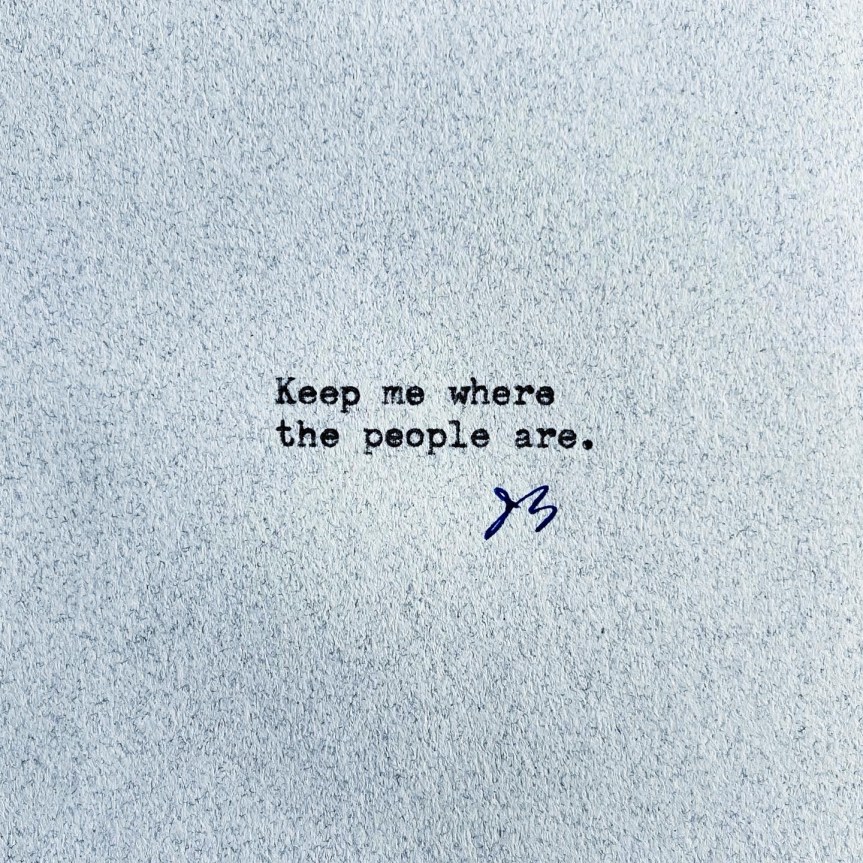
Keep me where the people are.

— J.S.

Black Lives Must Matter


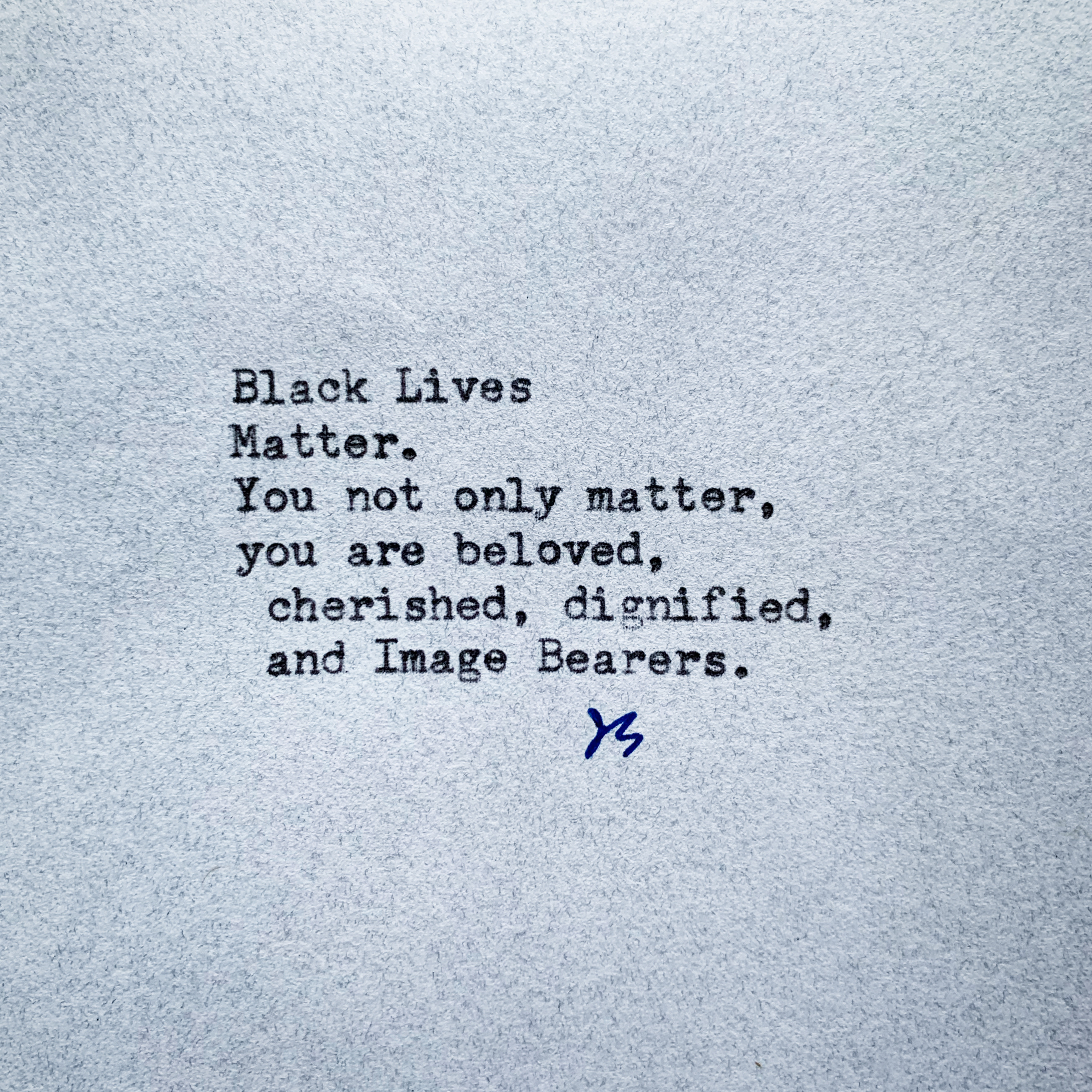
You more than matter. Black lives are beloved, cherished, dignified, and bearers of the Image of God. It is a truth denied but it is no less true.

My friend “Shayla” (who gave me permission to share her story) was telling me that after the hundredth video of a Black person beaten in the streets, after one more citation of false facts and stats, after one more demand to “just work harder and get off welfare and quit drugs,” she had the terrible thought, “Maybe they’re right. I’m not human.”

After so many racist messages and images, it can become impossible not to believe, “I’m not human.” Or, “They’re right.”

The internalized trauma of racism is crushing. Day after day, the Black community is denied their lives, art, beauty, voices, stories, truth. Even when we know these racist messages are not true, they have a way of creeping in, suffocating, infiltrating our beliefs.

It cannot be overstated how much the trauma of racism deteriorates a soul. Trauma has a way of saying, “I am what has happened to me.”

I say as a chaplain but also as a human being: I have seen so many kinds of grief, but to believe your skin makes you deficient is one of the saddest, most haunting pains of all. It sticks so hard. It kills. It takes a thousand times more work to restore wholeness than to tear it down.

I will always be on the side of the wounded. I will do all I can to be part of that thousand steps towards wholeness.

For me, to say Black Lives Matter is a starting point to recognize the full worth of Black Lives. In Korean, the phrase Black Lives Matter is “huhg-in-eh seng-myung-un so-joong-hapnida,” which means Black Life Is Precious. I will continue to say Black Lives Matter, but even more, precious and worthy—not just worthy of protecting, but also having inherent worth.

If you are burned out, traumatized, overwhelmed by racist messages and images, please know the truth: you bear the Image of God. Your worth is not in what you’ve done or how you’ve been treated. It may be hard to believe today, but you are loved. I am with you and for you. As much as I love you, the Creator loves you infinitely more.

— J.S.

If You Hurt, I Hurt Too


I never want to politicize, moralize, or spiritualize someone’s pain.

I am always on the side of the wounded. Where there is loss, I am for the bereaved. Where you are hurting, I want to bring healing. Anything less is making us less human and not more.

It would take only a few seconds to consider the other person’s pain and perspective and point of view. That has the power to heal. The only cost to empathy is losing bigotry, self-righteousness, and pride. Empathy is that good.

It should never be on the wounded to explain their pain, defend their injury, or to forgive over and over the injustices that never should’ve happened but keep happening. Even if your hurt is not my hurt: because you’re hurting, I hurt too.

I want to empathize first, to listen first, to grieve first, and to be angry and to weep alongside. Not lecture, lessonize, or minimize. I don’t want to add burdens, nor demand explanations, nor kick you while you’re down. I want to crawl down there with you.

I cannot understand the hasty, vicious speed by which real hurting people are turned into talking points. I don’t mean the platforms for justice. I mean the ones that degrade and deny. I cannot understand the evil scorn and jeering and mockery: there is no honor in desecration, but only violence to the soul. And while I do not believe we must be forced to give our opinion all the time—so often the silence is chilling, and apathy can be the most destructive force of all.

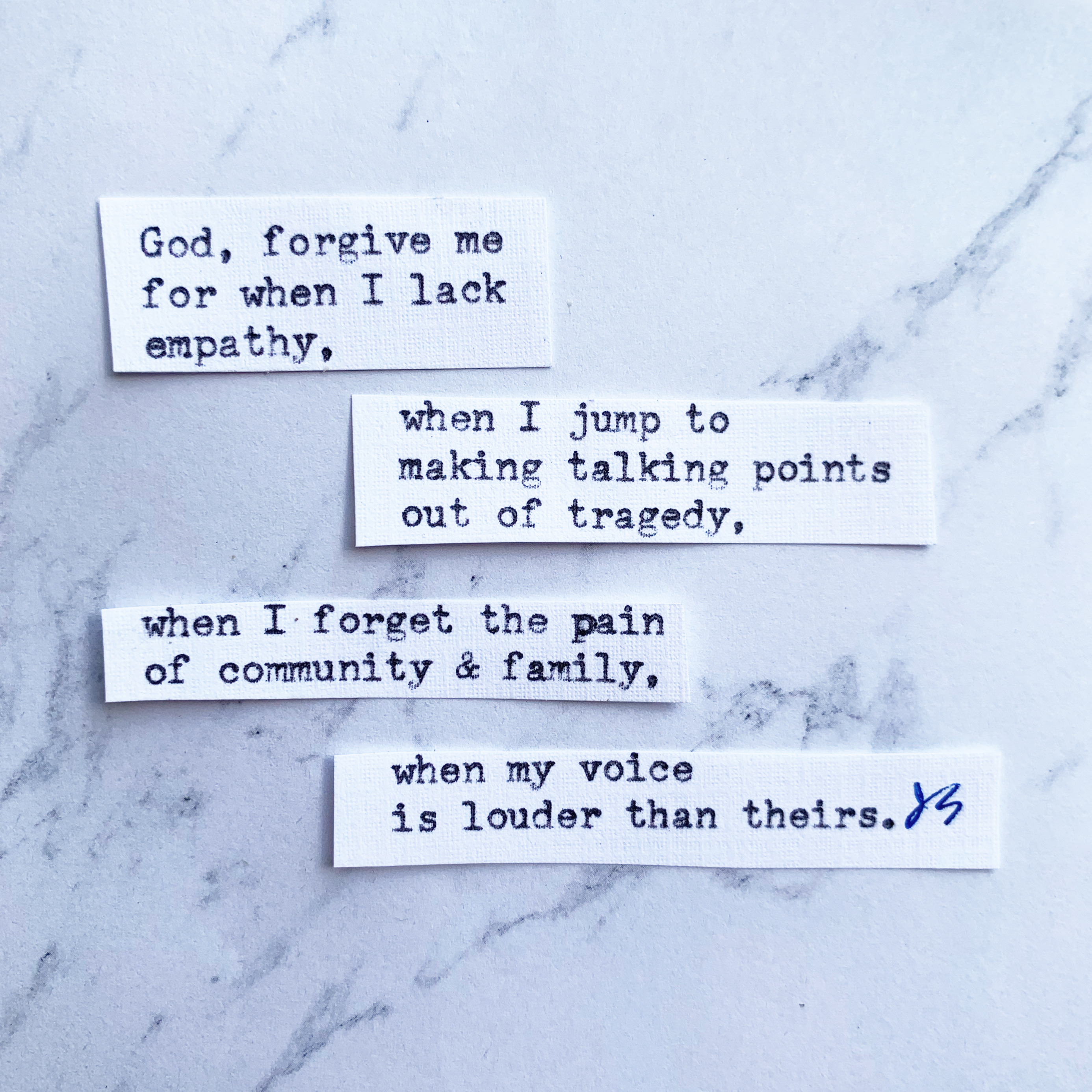
May I never lose sight of the wound and the wounded. May God forgive me for when I wasn’t listening, for not getting it right. Above all, I must grieve. Through tears, prayer, and action, I grieve with you.
— J.S.

#AhmaudArbery

May Our Fears Seek Wisdom


I’d like to think I’m not a fearful person. But I am. I never look like I worry, but I do. A lot.

This week I made the mistake of very publicly bringing up my fears about coronavirus in the workplace. I don’t mind catching the flu, but my wife is pregnant and the flu can adversely affect our baby in utero. I said some uncomfortable things in front of coworkers, when I’m supposed to be the calm voice of a chaplain.

I was not helpful. I probably incited panic and anxiety. I apologized for my behavior. Maybe the fear of being a dad in our current world really got to me. It was still not a good look.

I’m trying to balance the fear we‘re experiencing versus being calm, safe, and rational. I want to validate our anxiety without letting it consume us. I want to be vigilant, but not so on edge that I’m scaring everyone else. I want to say “God is in control,” but also run screaming and lock every window. It’s a tough, strange balance.

We’ve seen where the fear can take us: there’s been multiple racist assaults against Asians, blaming them for the pandemic. We’ve seen misinformation about drinking water and eating garlic and avoiding packages from China. We’ve seen the ugly finger-pointing of political leaders using the panic for vote-bait, promoting xenophobia and catering to the worst leanings of their base. And everyone—including me here—has some take about what to do, how to be, what to say.

I’m trying to stay cool. To be both cautious and optimistic. It’s hard. It’s scary right now. I keep thinking of raising a daughter in this world and how I’m so incapable, unsure, uncertain, lacking the wisdom to say the right thing, to be a pillar when she needs me. I hope I can be strength for her even when I have so little of it in myself.

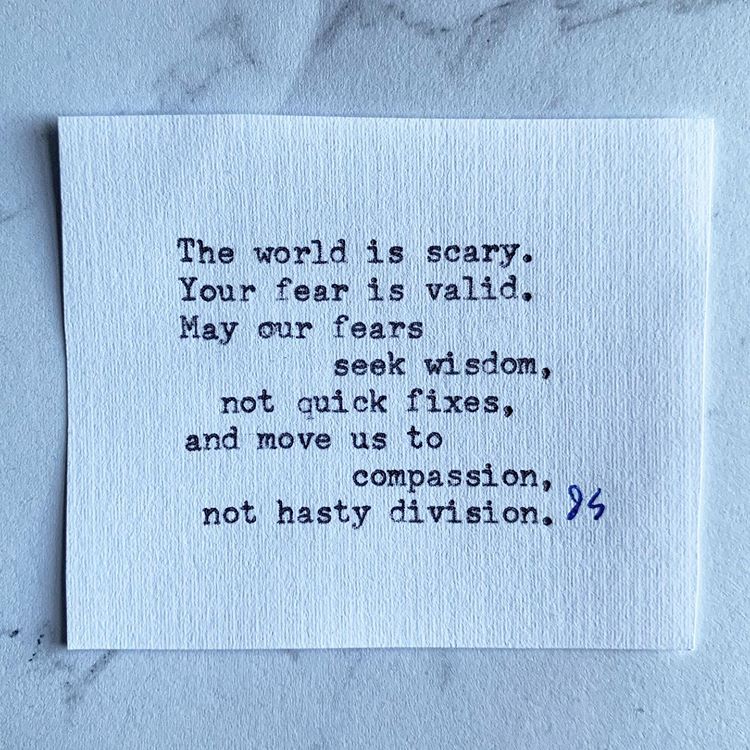
I’m trying to validate fear without giving into it, to let fear ask questions and seek wisdom and move towards compassionate curiosity, rather than hate or rash decisions. God be with us, who navigates our fears, who hears our worries, who gives us wisdom amidst division, who offers us a peace like no other.
— J.S.

Grieve Angry


The other week, a shooting took six lives and I thought, “That’s not too bad.” I immediately felt sick. Because this isn’t normal. It isn’t okay. And I don’t want to get numb, desensitized, detached, withdrawn. I don’t ever want to get over the anger and grief of how “normal” this has become—whether it’s thirty, six, or one.

It’s a national habit to look at the death toll, but shootings really destroy lives twice. At the hospital, we regularly receive GSW (gunshot wound) patients through the ER. Many survive. Sometimes, surviving is worse. The trauma of it. The nightmares. To witness such a thing is a lifelong wound. The death tolls are horrific, but the mental and emotional toll is just as destructive. I’ve been up close with GSW victims and families—and I can’t watch the news with neutral disinterest. I can’t watch movie violence the same way. I will never get the smell out of my nostrils. When you sit among people with bullet wounds, you see most political “dialogue” for what it really is: fear, cowardice, pomp, rationalizations, and self-aggrandizing, all which speak past the victims instead of for them. I hope I’m not doing the same thing. Please tell me if I am. Please tell me what I can do.

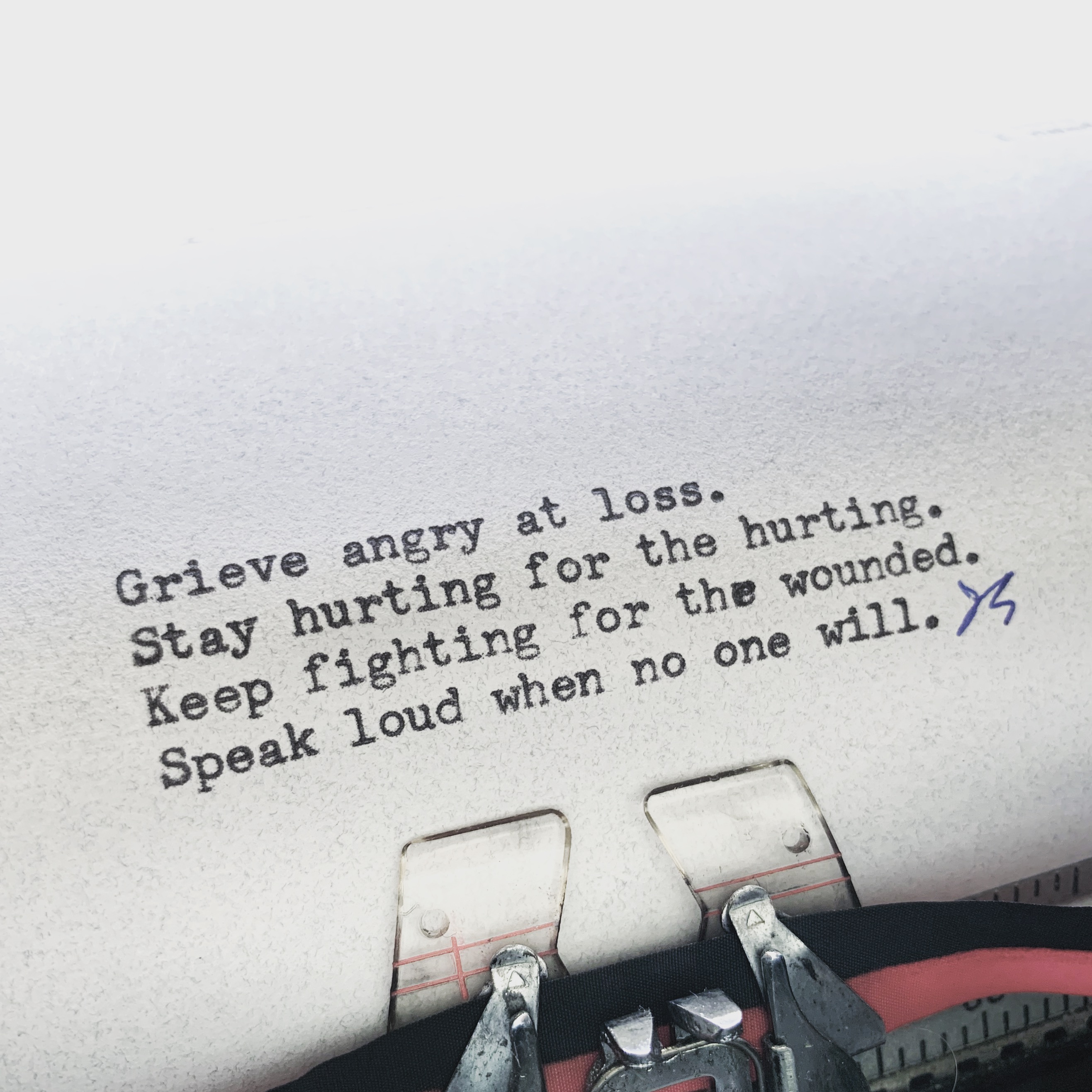
I don’t know if anything will change. Again. It seems hopeless. But I want to grieve angry. I don’t want to calm down. I want courage. And compassion. And champions who will make waves so that something will change. God, keep us loud. God, give us strength.

J.S.