Foreword to My Newest Book, by T.B. LaBerge

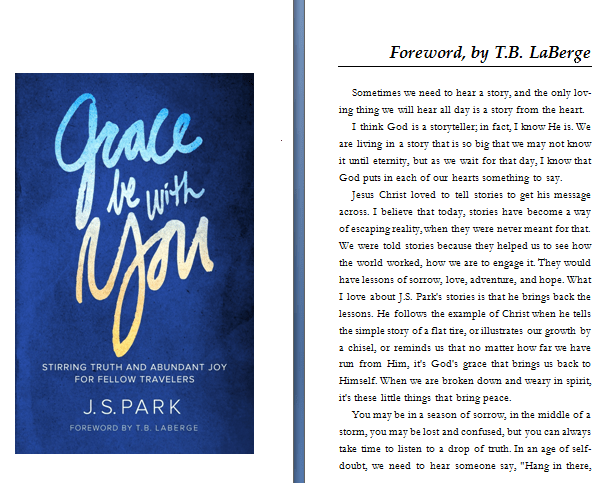
Grace Be With You Foreword TB LaBerge


My very good friend and blogger T.B. LaBerge wrote the Foreword to my newest book, Grace Be With You.

The book is a collection of short stories, poems, and thoughts, many of which you’ve seen here on this blog.
It’s available now in paperback and ebook!


http://www.amazon.com/Grace-Be-With-You-paperback/dp/069269031X/

http://www.amazon.com/Grace-Be-With-You-ebook/dp/B01E4XXCVM


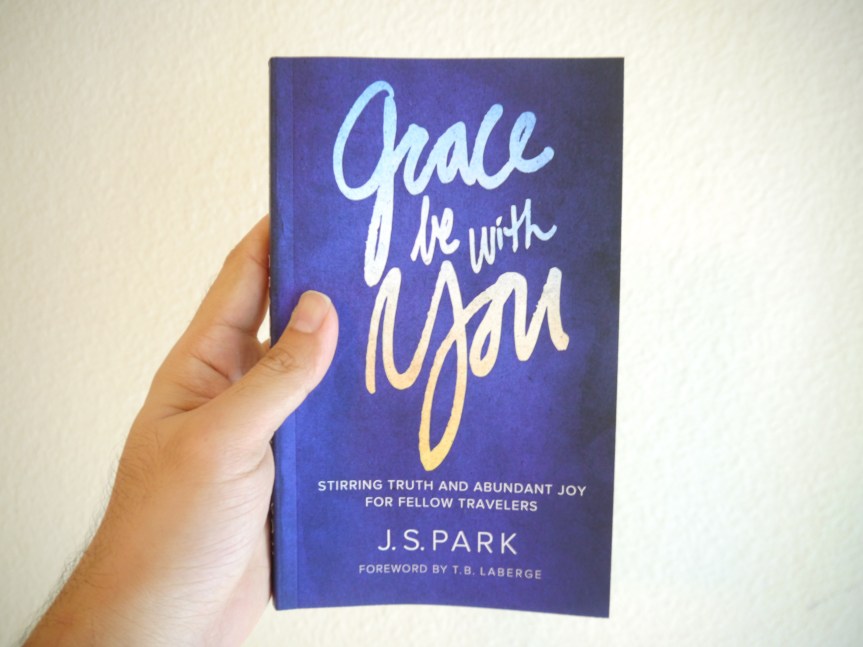
My Newest Book: Grace Be With You, a Compendium of Stories, Thoughts, & Poems

Grace Be With You paperback


Hey dear friends! This is my newest book, Grace Be With You: Stirring Truth and Abundant Joy for Fellow Travelers. It’s a collection of stories, quotes, and poems, most of which have gone “viral” on this blog, with all new content. The Foreword is also by my wonderful friend T.B. LaBerge.

The book has four chapters, each a unique theme: to encourage, convict, engage, and transcend. Contained are quick quotes, humbling plot twists, and everyday encounters on the road, at the hospital, at cafes and gas stations and funerals and churches.

The paperback is only 8.99 here and the ebook is only 3.99 here and it works on every device. If you’re blessed by the book, please consider leaving a review on Amazon.

Be immensely rocked by His grace!
J.S.


Paperback: http://www.amazon.com/Grace-Be-With-You-paperback/dp/069269031X

Ebook: http://www.amazon.com/Grace-Be-With-You-ebook/dp/B01E4XXCVM

Bible Showdown: Literal Vs. Allegorical Interpretation

horizontescuriosos asked:

I came across one interpretation of Genesis that I thought might be insightful to ask someone about. The idea I found is that Genesis is really an allegory about human sin … Like before sin, Adam and Eve were naked and unashamed. Then Eve tried to sneak eating the apple, sin entered, and from then on Adam and Eve wore clothes out of shame … As a pastor, do you think this idea of Genesis being an allegory for human sin has credit? (Edited for length)

Hey dear friend, I’ve definitely seen Genesis (and much of the Bible) interpreted as allegory, and it’s a legitimate way of reading the Bible, called the Alexandrian method, that’s been around for centuries.

However, I personally view most of the Bible as literal, factual history — or at the very least, I assume that the Bible authors had an original intention that wasn’t meant to be stretched towards a “spiritualized” meaning that says whatever we fancy.

Scripture doesn’t read as an allegorical account, but more like a news periodical. There are parts of Scripture that are definitely allegory, but it’s usually obvious, with the author even saying so.

Ancient accounts of legend only revealed details that were much like Chekov’s gun, which were set-ups for a moral lesson. From the Epic of Gilgamesh to Beowulf to The Odyssey, no detail was wasted. But Scripture would describe things that had no other purpose but to describe them. Jonah talks about buying an actual ticket to board a ship. Peter and his fellow fisherman caught 153 fish, which has no other meaning, except that they caught 153 fish. When Jesus is arrested, a naked guy totally flees the scene. Mythological stories never read this way. Most of Scripture has a prosaic, open-ended description that was not a type of genre for myths back then, but for eyewitness testimony.

While the Alexandrian method certainly has merit, here’s one huge advantage of the literal interpretation of Scripture.

Continue reading “Bible Showdown: Literal Vs. Allegorical Interpretation”

The Bible in 56 Days


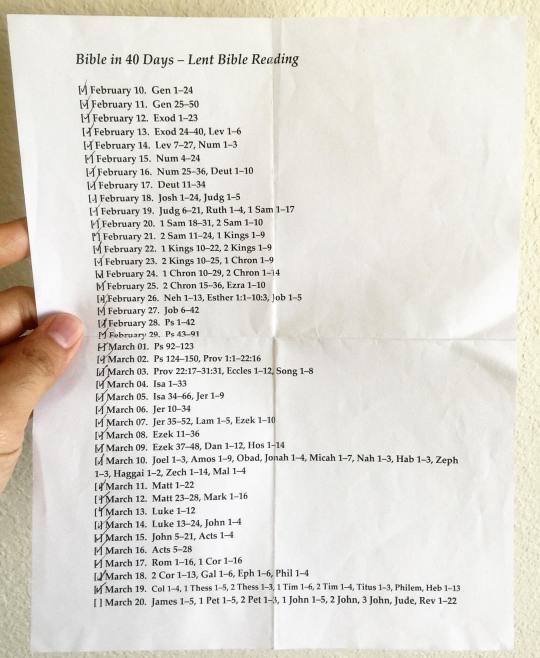
I finally finished the Lent Bible Reading Plan (but it took me 56 days instead of 40). Reading the whole Bible that fast brought an entirely different perspective, like I lived a thousand lifetimes watching from heaven, or had read the last will of a million year old sage. I recommend rapid-reading of the Bible at least once.

J.S.

Does Social Media Really Help a Cry-for-Help?

shatterrealm asked a question:

When Internet strangers rally together to assure a suicidal person that they are loved and precious, are we really helping? Or are we making things worse by arguing with their depression? Should we simply be referring them to professionals?

Hey dear friend, this is an excellent question that I can’t possibly hope to adequately cover, but I’ll offer a few thoughts on this to consider.

– On one hand, if you can save a life with words, do it. I think it’s absolutely a good idea to press in when someone expresses depression, anywhere, every time, all the time. It might really pull back someone from the edge, even for one more day.

I can’t really stop to evaluate the whole thing on whether it’s real or not, or if it’s really helping. That’s not for me to decide right then. If someone is drowning in a river headed towards a waterfall, I don’t ever want to think, “Am I enabling this person to not learn to swim?” I can think about that later. At this very second, I have to throw a lifeline, or I’ll jump in there myself.

– On the other hand, I’m less sure about how this will work for the long-term. It’s the old dilemma: “Give a person a fish for a day or teach them how to fish for life.”

In the short-term, rallying together online can certainly be helpful for a person who cries-for-help. I’ll be the first one there. But at some point, the online world becomes very limited in truly helping a depressed person. It doesn’t go deep enough, and in some cases, can actually be more harmful.


Continue reading “Does Social Media Really Help a Cry-for-Help?”

The Fearful Moment When Your Faith Is Utterly Shaken

wherethecherryblossomsdance asked a question:

What can we do when we read evidence against faith and our faith wavers horribly? I know this is my case some days, and there are some arguments that my non believing friends bring up, along with comments in these posts that really shake my faith and I realize that I don’t know or have all the answers. What do you think about this?

Hey dear friend, to be truthful, I think it’s a good thing to have your faith shaken sometimes. I mean really, really beat up. Many of us are scared of being scared, but that’s part of life. We can’t protect ourselves from all the terrifying questions. If we avoid every scraped knee, we’ll eventually be too weak when the harder things happen—and so we need a faith that has questioned itself to its barest bones.

Every psych class will tell you that when your worldview is challenged, you’ll experience an actual physiological disorientation in the brain. It can cause nausea, depression, anxiety, and hostile anger. But if you know this is coming and you can work past the emotions, you can rationally approach both sides of the argument without it threatening you.

Continue reading “The Fearful Moment When Your Faith Is Utterly Shaken”

Holiness, Humility, and How to Give Your Life Away


Hello wonderful friends! This is a message I preached called Holiness, Humility, and How to Give Your Life Away.

It’s about how the holiness of God irrevocably changes us in two ground-shaking ways. Stream below or download here.


Some of the things I talk about are: The two things I hear at every deathbed in the hospital, my body’s crazy involuntary response when I flew over the Grand Canyon, every instance of the Bible characters seeing God and falling over crying, the unseen thankless art of raising children, how to live generously with zero guarantees, and a letter from Belize.

My podcasts are on iTunes here (leave a review if you wish!).

Be immensely blessed, dear friends!
J.S.

The Brutally Honest Surgical Self-Confrontation


Why doesn’t Nathan simply rebuke David on the spot? Why the long story and the strategic side-tackle?

It’s because before confronting ourselves, we need to undo our self-righteousness.

We each have a nearly impenetrable fortress of resistance when we’re called out on our wrongs. It keeps us blind to our blindness.

The way that God punches through David’s self-deception is one of the most lauded turns of literary brilliance in written history. Nathan doesn’t simply accuse David. Nathan peels back David’s self-righteousness by turning his rules against him. David is knocked over by the weight of his own standards. The very mechanism by which David has condemned the guilty to cover his guilt is turned on himself. His excuses have become his own liability, like a sword with a blade on both ends. It’s what Jesus meant when he said, “For in the same way you judge others, you will be judged, and with the measure you use, it will be measured to you.”  

David required a brutally honest confrontation, but it would take more than a lesson in theology or a list of sins. No one changes that way.

God rebukes David by first removing any possibility of an excuse or objection.
God revokes David’s self-righteous capacity to absolve his own sin.
David needed to confront himself, before the sight of God, without the slimmest avenue of escape or deflection.

If you want any hope of change, freedom, progress, recovery, and growth: you’ll need to confront yourself, too. It’ll be the most painful thing you’ve ever done, because we’re so used to protecting our fragile, brittle egos. But it’s more painful to stay stuck in the lie.

If you’ve ever tried to confront your friend about their thing, you were amazed at their automatic defenses and sudden snarling. I’m sometimes surprised by my own excuses, too. When I’m guilty, I attack. It’s the perfect way to get out of accountability. When someone does something wrong, it’s all their fault, but when I do something wrong, it’s my environment or my family or my stress. When we get caught red-handed, we go into a monologue of rehearsed responses that we almost really believe, because it took so many steps of rationalizations to get there.

When you want to escape by saying, “Well-what-about-them?” — God will twist you around to say, “Well-what-about-me?” The only thing that will destroy hypocrisy is humility. Part of humility is to quit holding up a mirror at others and to use it on myself first.

For the first time in a long time, David is being honest with himself before God. He lets the truth undress him. There’s no place for him to run. His own judgment has betrayed him, and this is how God will work on us, too. He will dislocate your blame, one excuse at a time, until you really take a look at yourself and see you as you really are.

J.S. Park | The Life of King David

I Trusted My Guilt Until Grace Spoke The Truth

Photo from The Work of Chad


I trusted my guilt, my shame, my self-pity to move me.
I grit my fists, clenched my teeth,
I reached for the person I should be.
Yet I could not be shamed into change, because it only re-arranged my behavior. I could not fundamentally break my ego, for I was only restraining my nature.
I needed a new heart, a Savior.
Grace caught me: by faith, He had already raised me, and had moved me far much more than I dared to believe.
For I forgot the price of grace to bring me back, grace that cost His hands and feet.
I dared for a love stronger than all my shouting, my sickness, my shadow in the mirror.
A love busting at the seams of my heart, a new heart –
– a love that loosened my fists and my failure.


— J.S.


The Gospel in Two and a Half Minutes


The entire storyline of the Bible in two and a half minutes. And a different way to see the Gospel.

Subscribe to my channel here.
Be blessed and love y’all!

— J.S.

[Thank you to Steven Hause of pudgyproductions]


Rolls The Stone Away.


In darkness, He rolls the stone away.
At your worst, He loves you anyway.
— J.S.


Our Contradictory Divided Self

We can be pretty weird.

We cry “It’s not fair!” when it happens to us, but blink when it happens to the next guy.

Hardly ever do we admit we’re wrong, and when we do, it comes with a “But” explanation that undoes our apology.

We’re threatened when someone else achieves success, yet run to those who are successful to ask for special favors and collaborations.

We’re quick to buy into the false philosophies of Hollywood and pop songs and romanticized soundbites, but we re-post dreamy idealistic quotes and never live out what they say.

We resist change, even when those changes come from free services we don’t have to pay for.

We feel entitled to things that didn’t exist a year ago.

We get mad in traffic, which does nothing to the traffic.

We do everything possible to extend our lifespan and live comfortably, but are less likely to work on our motives and our hearts and our inner hurts.

We know this is all true: but we think it’s true for someone else. Not you. Not me. We read these kinds of things thinking about someone else, including me. I can worry later. I’m fine today. She needs the help. He needs the advice. I’m the hottest, smartest one in the room, you know. I secretly know more than the guy I’m talking to, I think, with an amused half-grin on my face, and they’re thinking the same about me.

But we all have blind spots, and we can’t see them: which is why they’re called blind spots. I can only hope a friend loves me enough to twist my head around, turn on a light, and get me to see what I’ve been missing. To help me laugh at my own ridiculous hang-ups. To love me through the worst of myself, to a better place, where I’m a step closer to the person God has created me to be.

Love does not belie truth. We need both. Be my friend today and help me to see what I cannot see on my own.

J.S.

The Hardest Thing About Perseverance Is the Whole Thing


I wrote a guest post for the wonderful Pursuit NYC, headed by my friend Sam Won.
The post is about perseverance and what it really means.

An excerpt:

Plenty of us can quit without physically quitting. We can live this way for years, thinking that “showing up” is enough and we can skate by on the bare minimum.

In other words, perseverance is not just staying in, but being in. It’s being present and engaged.

It’s not that we don’t have it in us to persevere. It’s that all of us wasn’t in the task at hand. Even a person who gets to the finish-line, who didn’t put their all into it, hasn’t really persevered.

I do this, too. I can be there but not there. And I’m learning that being disengaged begins with my expectations.

… No one ever told me, “Emotions are different than passion. Emotions are the little spark that gets it going. Passion is what keeps you running the marathon, even when it gets boring, even when things don’t go your way, even when the path takes a bunch of detours and it’s not as pretty as the picture in your head.”


Read the full post here!

J.S.

Dialogue, Maybe Over Coffee.


Some time ago, a blogger completely destroyed my entire blog. He wrote a detailed analysis of the whole thing, from my theology to posts to quotes to my childhood. He posted it all over my blog just to make sure I saw it. He actually had great points, and I imagine that if we sat down for coffee and discussed these things, we would find a lot of common ground. I had to really think about some areas that I mishandled. My only issue, really, was that he was so very distasteful and trashy and condescending that I just couldn’t take him very seriously. (He later deleted his blog and I never heard from him again.)

I’m afraid I’ve fallen into the same trap of just going off on someone online, especially when I’ve had a bad day. I usually don’t respond to hate, but when I do: it never works. Even when someone offers fair criticism, I’m not always sure they’re interested in actual dialogue. There’s about a zero percent chance it will be a healthy talk, anyway. The more you defend and explain, the more it’s misinterpreted. If you miss a single thing, it will be pounced on and torn to pieces. If you apologize, it’s never enough. Semantics always escalate. And I’ve learned: Christians love to devour their own. There’s some epidemic of Christian men who love to watch other Christian men burn. (Cue the Hans Zimmer TDK horns.)

Tone, approach, and demeanor are all crucial to being heard. I can’t hear someone who makes a million assumptions with the subtlety of a sledgehammer. It doesn’t matter that we agree or disagree. My question is: Would you listen to you if you spoke the same way to yourself?

I’ve failed at this many times, and I want to do better.

I love conversation. I love to be challenged. I think even conflict with a direction can lead to growth. The point isn’t to see eye-to-eye. The point is to lay down our presumptions and to grow from the best of each other. It’s to not make a false parody of the other viewpoint, but to truly listen, and then to offer an angle that hasn’t been considered. It’s to humanize someone so that we’re not equating disagreement with moral value. It’s to first consider that we don’t see the whole thing ourselves, and maybe the meeting of our perspectives can create an even higher ground to see more than before.

Of course, it has to start with a sensible approach on both sides, and the willingness to be teachable. If your mind is already made up, then never mind. We don’t have to like each other, but there’s a huge difference between winning points for preaching to the choir and actually caring about what you’re saying. There’s a difference between proving the point right and proving yourself right. One gets you heard; the other gets a shrug. We don’t have to agree. I just want to talk, over coffee.

J.S.

A Quick Interview About Christian Faith.

Photo from Hillsong Gallery

An interview about my faith and denomination, from sjpark11 for his class.

1. What is your understanding and experience of spirituality?

– There exists a divine pulse to the universe, a breath of creation by a Creator. To experience spirituality is to be in touch with this pulse, to be “aligned” with creation in all its potential and possibility.

As a Christian, I also believe this divine pulse, God, revealed Himself on the earth at one point in time as one of us, to reverse the human condition of entropy and invite us into that story of healing.

2. What are some images or metaphors that support your understanding and/or your experience of spirituality?

– I like C.S. Lewis’s metaphor about the door. Currently, we are on one side. We get glimpses of a “reality” beyond us, something so grand and beautiful that we can hardly take it in. It’s evoked sometimes in our natural experience, whether by sunset or ice cream or romance or song, though these things in themselves come quickly and go. One day we will get to the other side of the door.

Faith is about the journey of looking through the keyhole, getting a glance of infinite beauty, until we permanently partake in the radiance of all that we hoped for.

Continue reading “A Quick Interview About Christian Faith.”

Eugene Cho’s Book “Overrated” Is Free Today


Eugene Cho‘s book “Overrated” is totally free today. He’s the founder of One Day’s Wages and very much the real deal. He also mentions my story in his book about the time I gave away half my year’s salary to fight human trafficking, a check for 10k, which was matched by contributing donations.

Grab his book here: www.amazon.com/Overratedebook/dp/B00K04IX9Q/

His book is incredibly good. The two parts that impacted me the most were his personal story about working as a janitor for years before being able to successfully launch a church (nothing wrong with being a janitor by the way, but throw in Asian cultural expectations), and the process of how he sits on an exciting idea for a while to see if it’s just emotional hype or truly deep passion. Powerful stuff.

The story about the donation here: https://eugenecho.com/2012/11/26/an-inspiring-story-of-courage-and-generosity-youth-pastor-donates-half-of-his-salary-to-fight-human-trafficking/


eugene cho overrated ODW book Joon

I Hope You’ll Know Me As I Really Am.

julettejoonengaged-094

Lately, I’ve been trying to be as super-vulnerable as possible, even if it looks inelegant and clumsy. Even unprofessional or unkempt. Even if it looks sort of crazy.

I don’t mean over-sharing or crossing boundaries or being silly for the sake of appearing relatable. I mean just saying exactly what’s going on inside. Every neurotic little twitch and concern. Every fear and hope and held-back giggle. What my needs are. All the conflicting emotions and motives. The whole mess of it, the gritty weird details down to the inner guts.

Sometimes in the middle of talking, I’ve been backing up and saying, “Actually, I didn’t mean that. I just said it because I was processing out loud and I sort of winged it right then. Or maybe I was trying to impress you. I really don’t know anything about what I just said.” I’ve been catching myself when I know I’m about to exaggerate or cover up. I’ve been rewinding myself when I might have said something sketchy or incomplete or disingenuous.

Continue reading “I Hope You’ll Know Me As I Really Am.”

Finding Home in the Dark: A Fiber of Fine Light.


The hard part is that when you decide not to call on lesser idols to numb your hurt and you finally reach out to God, suddenly you’re inside the pain. It’s all there. You can’t do anything to hide it anymore. It seems like a terrible idea.

One of the toughest things about excruciating pain is that it’s embarrassing. There’s a humiliating stench of astonishment that this is happening to me. It’s malheur, or a pain about your pain. If you live with it long enough, you’ll begin to identify yourself by your hurt, as if this is your only value. It’s understandable, because it takes up so much space in your mind. It’s no wonder why we’re tempted to run to everything else.

The pain is blinding. But — blinding ourselves to the pain is even worse. In doing so, we erase ourselves down to the bottom.

So then: Calling out to God is remembering who you are.
Remembering where you come from.
Remembering what you were made for.
Remembering that you are not your pain.

Most of all, remembering who He is.

This will look different for everyone. It could mean taking a long drive to the shoreline. It could mean standing over the sea in total silence. It could mean opening your Bible to Isaiah 40 or Psalm 23. It means asking a friend to hot chocolate and hearing you out. It means actively seeking encouragement and community, because 1 John 4:12 says, “No one has ever seen God; but if we love one another, God lives in us and his love is made complete in us.” It means journaling, or busting out your guitar, or crying for a long time, or having an intense conversation with yourself. It means finding a need and serving that need. It means finding an older brother or sister and asking for wisdom on what to do next. It means dressing your Sunday best and singing at church at the top of your lungs, in hot tears and laughter.

A lot of this might feel rote and mechanical. You might not feel like doing any of it, and I don’t mean to add another burden on your hurt.

I just know that for a moment, when I can trace the sunbeam back to the sun, I remember who I am. It doesn’t make me instantly whole. It doesn’t solve things today. It’s often just a brief glimpse. But when I return to the heart who made me, I momentarily find something stronger than my pain. It is stronger than everything else that calls my name.

This is a difficult thing to do. It’s not merely psychological re-arrangement, because it requires getting up. It requires tapping into a very fine frequency, which is there for a flash and gone. But it’s there.

You might have even been on the other side of this and helped someone else remember. Maybe you took someone to lunch and listened to them without interruption for an hour. You made actual eye-to-eye contact, and you never knew, but you changed the course of that person’s day from driving off a cliff. You randomly volunteered. You wrote a thank you note. You picked up a call from a distant friend. You wrestled with someone’s questions, maybe not even fully paying attention, but you stayed with it to the end.

You didn’t know, but you were part of the frequency.
Once in a while, God breaks in. He reminds us of beauty. The pain doesn’t stop, but there’s a joy in the middle of it, just loud enough to remember.
We can break in, too.
You can pray. You can sing. You can seek others. You can visit home in His Word.

It is painful, sloppy, and scary. It’s not easy to turn our internal axis to Him, especially in hard times. But by slow, stumbling degrees, I can breathe Him in — and He is the only air that fills these crumpled lungs.
I remember: we’re not home yet.


J.S. Park | Mad About God


The Strength You Never Knew You Had.


Photo from Noel Shiveley


I know that not everything has a happily-ever-after. We do hurt, a lot. There are lifelong battles and unconquerable defeats and irreversible losses. There is, at times, unresolved tension that remains unresolved.

Yet our bold response to all these things can show a reservoir of strength we never knew we had. Our daily victories build scars that build stories that build bridges to broken hearts. Our boldness shows we don’t need to lose ourselves in loss, that we don’t need to fall apart when everything else does. The dark can make us more human, and not less. In our outright rebellion against apathy, we find a flash of divinity. We find a story better than the childish bleakness of tragedy, but instead the mature growth of comedy, where we have the humility to laugh at ourselves. We find hope in pain together. Maybe even the hope that there’s an ever-after. We don’t have to hope in solitude.

— J.S. from Mad About God


Does God Use Pain “For My Good”? Does Everything Happen For a Reason?


Is suffering a “part of God’s Plan”? Does God use trials to teach us a lesson? Does everything really happen for a reason?

A hard look at the Problem of God vs. Suffering, and why easy answers won’t work in the middle of the mess.

Get my book on persevering through trials & suffering, Mad About God.

— J.S.