9 Tricky, Self-Deceptive Defense Mechanisms That Completely Undermine Dialogue

If you’ve ever been in an escalating argument, you’ll always notice how it becomes a “meta-argument” about unrelated things that are not really the point. The dialogue gets further and further away from the main thing, until you’re both screaming out your lungs and throwing appliances at the ceiling. Arguments, in hindsight, often look embarrassing, full of cringe and regret and wreckage like an irreversible radioactive wasteland.

When conflict comes around, everything feels like it’s at stake: your value, your truth, your work, your very life. So understandably, we resort to self-preserving mechanisms to scratch and claw for our very lives. Here are a few defense mechanisms that get us stuck, and how we can get un-stuck.

Continue reading “9 Tricky, Self-Deceptive Defense Mechanisms That Completely Undermine Dialogue”

Editors’ Picks: Frontpage of WordPress


Hello friends! I’m on the frontpage of WordPress by Editors’ Picks for a post called:
When Do Politics Decide Friendship?

Join the conversation. Be blessed and love y’all! 
J.S.


My Hero.


Here’s my hero.
#womensday #internationalwomensday #nurse #marriedlife #wife

Does Your Theology?

Photo by Lindsey Noel


Does your theology drive you to your knees to weep for people who disagree?

Or does it provoke a surge of self-righteousness and increased volume and overpowering tactics to prove your point?

Does your theology allow room for growth and imperfection and an eye-to-eye understanding of the whole story?

Or does it imprison a person into a one-dimensional caricature who must think exactly you like do, or else?

Does your theology look for ways to love and engage and move in? Or does it look for permission to cut off and shut down and divide?

Does your theology have grace for people with bad theology?

Or did you read this thinking “This is for them and not for me” …?

Without grace, our theology is only posturing, and that’s not what Jesus came to die for.

J.S.


Say the Whole Thing, Fully Everything

img_1197


If you express a strong opinion and get attacked for it, please don’t backpedal with “I was only trying to say” or “What I really meant was.”

Of course we want to be humble and teachable. There is always room for criticism and dialogue. It’s good to say you’re wrong: but don’t apologize for being strong. Please don’t hold back on your heart to look more rational than you really are. You can’t always be so cool and calculated. The strength of your voice is necessary in a nervously muted world.

Your expression is who you are in the heat of the moment, fully imbued by your wild strokes of passion and personality, and no one should be sorry about that. Don’t minimize your own humanness by trying to appeal to everyone’s civil sensibility. You might need to examine your content, but don’t let it shrink your character. In a silent world of jaded conformity, we need more of your voice and not less.

J.S.


Photo by TOM81115, CC BY-NC-SA 2.0

Tell Me Your Story.

I was nearly an abortion. I was an unplanned accident, born out of wedlock, and the one before me was aborted.

I was born to immigrant parents, who naturalized and met in New York. They started with nothing, working as many as 100 hours per week, slowly and painfully saving money until they could open their own businesses. They believed this was a great country, and still do. My father served alongside the U.S. in the Vietnam War, and he is a proud veteran of this nation.

Many of us have these sorts of stories; they inform who we are, what we believe, and what we fight for, and so we are a myriad of uniquely shaped stories, each giving rise to a different voice in the world.

The really tragic thing is when we superimpose a particular idea on someone without attempting to hear their story first, and their voice is then stamped and smothered. We can too quickly assume a person is only their picket sign, their political party, their social media feed, or a cartoonish, dogmatic, one-dimensional archetype sensationalized by a grab-bag of Hollywood images. We predict what they might or might not believe without asking, without listening, without understanding.

A person’s voice is always built from their stories, their experiences, their very real pains, and it’s this blend of blisters that has brought them to stand on their particular hill. It is a hill, whether rightly or wrongly, that has been reached by a stream of forces that no two individuals can fully comprehend in each other.

So we can only try. Patiently, graciously: to hear their story on the hill.

Continue reading “Tell Me Your Story.”

Jesus: For Them


The entire Bible goes out of its way to lift up the widow, the orphan, the foreigner, and the poor. God loved the “inconvenient.” If you’re not for them, you’re certainly not for the Bible, and the whole irony of it is that I’m pretty sure Jesus died for both them and for you, too.
J.S.


Photo by Demi Brooke Kerr

Love Is a Fighting Word


Love is not passive,
kindness is not silence,
and compassion is not quiet;
sometimes it means we raise our voices
to fight for our very lives.
J.S.


Art by 1of1doodles

My Top 16 Posts of 2016 from My Tumblr


16) Breaking Through Jealousy: Passing the Fire

15) She Stole My Shoes: What Being the “Other Guy” with a Cheater Taught Me About Loneliness and Lasting Love

14) 5 Ways to Diligently Discern All the Good and Bad “Christian Advice”

13) I Believe It Is Enough

12) I’m Not Okay. Is That Okay?

11) I’m Sorry and I Was Wrong

10) 5 Kinds of Romanticized Crushes That Will Mess You Up 

9) As I Really Am

8) You Won’t Like This: But I Hope You Hear Me

7) We Bleed, All The Way Up

6) How Do You Believe This Bulls__t?

5) A Few Quick Things About Forgiveness: What It Is and What It’s Not

4) I Held a Swastika

3) Five Husbands

2) Which Books of the Bible Do I Start First?

1) 15 Things I’ve Learned Not to Say at the Hospital


Photo from Image Catalog, CC BY PDM

Top 16 Posts of 2016

golden-2016-home-decoration-sign-desktop-wallpaper


Here are the Top 16 Most Viral Posts of 2016 from my blog, ranging from topics such as porn addiction, feminism, neo-Nazis, being at the bedside of death, and the time my wife and I broke up for six months.


16) The Christian Life Isn’t a One-Shot Deal, But a Walk Painted by Steps

The Christian walk isn’t a “one chance and it’s over,” but a life-long mosaic.


wave-water-tank-australia-ocean-storm-ed-dunens

15) The Irretrievable Vacuum of Unhappily Never After.

Sometimes it doesn’t work out; the prayers go unanswered; we won’t know why.


14) I’m Not Okay. Is That Okay?

I need to know I can tell you everything.


jesus-saves-california-la-sign-city-phil-dokas

13) How Do You Keep Believing This Jesus Bulls__t?

I’m often asked how I keep believing, and I can’t believe that I keep believing.


12) A Few Quick Things About Forgiveness: What It Is and What It’s Not

Seven truths and myths about forgiveness.


truman-show

11) Movies That Christians Should Watch: The Truman Show

In my movie analysis series, I go over the spiritual and cultural themes of The Truman Show, a deeply tragic comedy about opportunism and freedom.


10) I Hate My Life and Myself and I Want to Die: What Do I Do?

The reality is, our dreams get crushed, and people will leave or cheat or abuse us, and our perseverance doesn’t always pay off. Most of us are not prepared for how harsh and brutal that life can be, because no one gives the hard talk about what it’s really like.


man-mountain-hooray-x3church

9) “4 Unexpected Things That Happen When You Quit Porn”

An article I wrote for X3Church about four incredible things that happen when you quit pornography.
(My book on quitting porn is here.)


8) Breaking Up and Getting Back Together: About Me and My Wife

My wife and I had a six-month break-up. We needed it.


bench-sunset-blue-sky-river-sea-nikos-koutoulas

7) Five Husbands

On a whirlwind day at the hospital, I visit five husbands who have lost their spouses.
(My other chaplain stories are here.)


6) What The Bible Talks About When It Talks About Women: A Mega-Post on Those Troubling “Anti-Women” Bible Verses

Contrary to pop opinion, the Bible is one of the most, if not the most, pro-women document in history.


feet-city-silhouette-night-image-catalog

5) She Stole My Shoes: What Being the “Other Guy” with a Cheater Taught Me About Loneliness and Lasting Love.

A girl gets mad at her boyfriend and tries to cheat with me, and things only get worse from there.


4) You Won’t Like This But I Hope You Hear Me

No one likes to hear the hard truth about themselves: but without it, we will never grow, never heal, never go.


paint-brushes-colors-mae-chevrette

3) I Held a Swastika

At the hospital, I visit a patient who tried to bite a nurse and threw urine at a surgeon, and happens to have a tattoo of a swastika.


2) 5 Kinds of Romanticized Crushes That Will Mess You Up

When “romantic feelings” overtake you, here’s a little guide to see where that goes.


coffee-n-medd-window

1) 15 Things I’ve Learned Not to Say at the Hospital

My work as a hospital chaplain has helped me to know what not to say to patients and the hurting.


The Worst of Me, the Best of Me.

img_0085


I believe people are worse than we think.

I believe people are better than we think.

As a Christian, I’m both a pessimist and an optimist at the same time.

I’m painfully aware that we are capable of the worst sorts of evil, and worse, that we too easily turn a blind eye to the real grief of others. Many of us are so sheltered that we deny how deep such depravity runs in our veins. We laugh it off, we whistle past the graveyard, we gloss over the wounded. I’m pessimistic because I see how awful we can be.

I’m also painfully aware that we can be manipulated into thinking people are one-dimensional cartoon caricatures, so much that we become cynical and jaded over the possibility of change. Our very real fears are often exaggerated by a binary social narrative that has us ravenous for blood. We forget that each of us do have hopes and dreams and passions that overlap and interweave. I’m optimistic because I see how harmonious we can be.

I’m hopeful that the best of us, within us and among us, can build bridges through open scars and new stories through broken hearts. That we can give a voice to our uncertainty. That we are on hand one not extremely dismissive, and on the other hand not completely nihilistic. That we validate each other’s concerns and lean into our very real wounds, while not buying into the back-and-forth backlash of answering hurt with hurt.

I am holding space for our fears.
I am holding space for our hopes.
I’m a cynic and a critic.
I’m a believer and I’m with you.
Will you be with me, too?
J.S.


Photo by Image Catalog, CC BY PDM

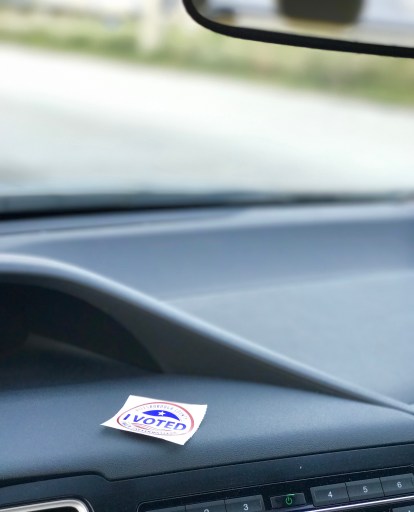
Voted.


Praying for a hurting world that needs prayer. Praying I won’t forget what matters amidst so much that doesn’t.
J.S.

Seven Questions to Ask Before Voting


Some questions to ask ourselves before voting:


How will my vote affect the story and direction of our country?

Is this candidate I’m voting for going to help defuse our current racial tensions?

Is this candidate going to hold themselves accountable as an example?

Is this candidate capable of proper foreign policy as well as bridging the divisions between American individuals?

Is this candidate a step forward in the tapestry of progress and history?

Is this candidate the kind of person who can address grief, loss, and prayers with sincerity and movement?

Who are we more or less comfortable with in directing our social and cultural narrative?

J.S.


Photo by Saint Julian, CC BY-ND 2.0

How Do I Know If It’s God or the Devil? A Mega-Post On Pain, Evil, and Suffering

Anonymous asked a question:

Would God purposely put His children in a situation where they would be hurt in any way (rape, kidnapped, something like that)? Or is this the work of the devil? I don’t think He would, but I don’t know.

My dear friend: There’s probably a huge list of questions I’d like to ask God the second I see Him (right after I collect my eyeballs back into my head).  So right upfront: I’m not sure why the devil is given such a long leash.  I’m going to ask God about that one, probably with my arms crossed and eyes rolled (and my head on fire).

The Question of Evil has not been adequately answered by the greatest philosophers of history, and I probably won’t be the one to crack it today, either.  It’s the kind of stuff that makes me doubt God everyday.  Even if I did have some solid theology on why certain atrocities happen, I still doubt it would satisfy the victim of abuse and slavery and oppression and terminal illness, no matter how much “logical sense” it makes to the brain.  Even if I concluded, “All the bad stuff is really from Satan,” then a suffering person could only reply, “So what?”

I can only offer a few thoughts that might help you on your journey here, because this tension of why bad things happen will never be resolved by any single answer.  Anything we say on pain will always be inadequate for the actual suffering person.  No such all-encompassing answer from any belief system really exists. I say this as a chaplain who works in the hospital, who has seen the very worst kinds of suffering, knowing that any amount of inspiration or explanation will never be enough.

I can only say that I believe the Christian perspective best accommodates the problems we see today.  I’m also aware that some of us will never meet eye-to-eye on this and we can “deconstructively reduce” anything I’m saying with snark and cynicism. That’s easy mode.  And that’s okay.  We’re free to disagree and wrestle and think for ourselves.

And please know: I would never, ever enumerate these reasons out loud the moment after a person has been seriously harmed.  I would never bring this to the bedside of any of my patients in their inexplicable grief. None of this theology really matters as much as you being there in the trenches with a heart of listening and love.

As always, please feel free to skip around.

Continue reading “How Do I Know If It’s God or the Devil? A Mega-Post On Pain, Evil, and Suffering”

I Don’t Feel Bad for the Bad Guy


[An angry post.]

You know, I’ve dealt with abusive, manipulative people nearly my entire life—and more and more, people want to show “empathy” for the abuser instead of the abused, and we’re too quick to explain away how much suffering that the abuser has actually caused.

One thing the movies get wrong is that they give the abuser some “depth” and “layers” and “multi-dimensionality.” Terrible villains are given backstories to justify their behavior and make them seem like “underdogs” who got dealt a bad hand. While this idea has some merit and it makes good movies, it also creates a harmful narrative where abusive people have a supposedly good reason to be abusive, or external factors are to blame, or you should feel really bad for them.

This completely leaves behind the abused person.

It’s as if abusive behavior can only be redeemed after the abuser sees how much suffering they’ve caused, and if that’s the cost to redeem an abuser, it’s too high of a price. Remorse shouldn’t be born at the expense of trauma.

I can see why the media would “feel bad” for a disgusting rapist and his future, because we’ve become trained in glorifying and empathizing with the bad guy. We offer way too much benefit-of-the-doubt. And yes, some people are just terrible. Not everyone has depth and layers and sad backstories. No, they’re not irredeemable, but we underestimate the detestable capacity for evil and we over-promote self-esteem (perhaps because we then must admit we’re also each capable of the same evil). We use words like “empathy” without also considering boundaries, safety, and trust. Good people get used up because they are fearfully obligated to a morally heightened, hyper-dramatic view of “love,” when it’s really just enabling. And some of us selfishly appear to have empathy to be awarded as outstanding citizens, when there’s neither an ounce of compassion for the abuser nor the abused.

In all this, we force the victim to take the “higher ground.” We trivialize and simplify the victim’s role to be the “bigger person” all the time.

But if we only place the impetus on the victim to forgive, to rise up, to heal, and to reconcile, then we’re not any better than the abuser. Doesn’t the victim have to be redeemed, too, from the pain that was caused? The abuser can certainly feel remorse, but are we going to ignore the remorse that the victim feels from both their pain and “blame”? The abuser can feel bad, but are we going to ignore how awful the victim feels from the actual wound?

It seems unfair to appeal to both sides when nothing about abuse is equal, and it must be on the abuser to pay for their crimes, to make reparations, and to be restricted unless they can prove otherwise that they can be trusted again.

I always want to hear “both sides of the story,” but in cases of obvious abuse, I’m not forfeiting justice out of some misguided sense of courtesy. Justice was already forfeited by the abuse. I must stand staunchly and stubbornly with the victim, and to do that, I must sit with them first, in their pain, not at my tempo but theirs, and to look evil in the eye with courage, unflinching at excuses and rationalizations, and to offer grace when it is no longer foolish, by the plumb line of wisdom and trust.
J.S.

Condemning All Violence.


“Dallas sniper attack: 5 officers killed, suspect identified”

http://www.cnn.com/2016/07/08/us/philando-castile-alton-sterling-protests/index.html


Absolutely horrified by the events in Dallas. Any and all violence must be condemned. Praying for both protestors and the police.

Police Chief David Brown: “He wanted to kill officers, and he expressed killing white people, he expressed killing white officers, he expressed anger for Black Lives Matter. None of that makes sense.” The sniper had pure hate for every side of the discussion.

Saying “eye for an eye makes the whole world blind” or “don’t fight fire with fire” assumes protesters did this. They didn’t. The sniper expressed hate for both whites and blacks. Don’t buy into it.

J.S.

I’m Sorry and I Was Wrong.


God help me, I’ve been a coward long enough, carefully curating my words not to make enemies, not to alienate, playing the passive agreeable token minority.

So let’s call it what it is. Racism. Systemic, culturalized, indoctrinated, institutionalized racism.

You say it doesn’t exist, but I’ll show you my scars. You say it isn’t real, but I see my brothers and sisters slain by a lawless authority that lacks sufficient accountability, feeding itself by Orwellian double-talk and distancing rationalizations, covering for each other’s inner-circle by playing the ambiguity-card with Walter-White-monologues, jumping to words like “healing” and “calm down” without acknowledging the injury. No, I have met and trained (yes, trained) and I continue to work with many good upholders of the law: but they remain the best of them because of their submission to the very sanctity of which they uphold.

It’s unsettling to confront the possibility of prejudice in our hearts, but it’s there, and we have to talk about it, uproot it, from the top of every system on down.

I’m reading dozens of thoughtless, cruel, heartless comments that neglect the actual human life that is gone, that invalidate such an atrocity to validate the comfortable status quo. If you find yourself justifying a horrible death without recognizing its grief and horror, then you make yourself and that person less human. I cannot fathom such a startling deficit of compassion and empathy.

God forgive me, I get scared of hate-mail and “unfollows” when the streets are covered in blood. God forgive us, we try to win our little “political points” but neglect the tragedy of what is happening right now, to real families who deserved better.

I’m sorry, I was wrong, and I want to help.
J.S.

Is Christianity Just an “Imperialist White Man’s Tool”?

Anonymous asked a question:

How should I respond to people seeing Christianity as a eurocentric tool for imperialism?? I’m sometimes embarrassed that I’m still holding onto Christianity when it seems like it’s only the “popular religion” that it is today because of its adoption by white westerners and the imperialistic conquests, genocides, physical and cultural displacement, etc. caused by efforts to spread it. I don’t know what to think of this haha. Thanks (for a lot of things i don’t have room to explain here haha)!

Hey dear friend, thank you so much for this question — I believe it’s absolutely important to get this one straightened out, quickly and completely.

First please know: I’m responding as an Asian-American Easterner born and raised in the West, who is fully aware and infuriated by the danger of Western imperialism and the cultural gentrification of “manifest destiny.” In other words, I have every reason to be disgusted by Christian/western/imperialist attitudes. My own country’s history (South Korea) also has a terrible past of being oppressed by particular people-groups that have nearly stamped out my heritage.

There’s no doubt that Christianity has been associated with some awfully terrible injustices. The Crusades, witch hunts, slavery, child abuse, and the early church’s indulgences and cycles of corrupted power are just a few of the detestable atrocities that, whether directly or indirectly, were fueled by religious fervor. We must be held accountable for every single infraction.

When a Christian asks me, “How do I defend Christianity’s history?” — I can only say, “Don’t.” Christianity ought to be the most self-critical life philosophy, always asking the simple question: Is this making us better or worse? We must own up to our past, not avoid it, and if anyone challenges us on how Christianity has been harmful, we must give ground to these righteous accusations. Many people are mad (including me), and understandably so, at how Christianity has danced around its mistreatment of others.

Having said that: I believe the idea of the Christian Imperialist, while obviously holding some credence in very specific instances, is largely a tired, exaggerated myth if we look at the whole picture of Christian contribution.

Continue reading “Is Christianity Just an “Imperialist White Man’s Tool”?”

5 Ways to Diligently Discern All the Good and Bad “Christian Advice”

There’s a ton of Christianese literature out there, and some of it’s bad, bad, bad advice.

In my best movie trailer voice: In a world of Christian bestsellers, blogs, podcasts, and instagrams with Bible verses on ocean wallpaper, who are all coincidentally on an “authentic relevant struggling faith journey,” one ESV-carrying Christian millennial rises above the handlettering and “I’m not like those Pharisees” YouTube channels to authentically struggle with discerning what’s theologically sound and really works in the mess of real life.

But seriously: witty snark and pretty prose in bite-sized blog posts (like this one) don’t ever mean credibility. We really do need to know what “works in the mess of real life.” And it’s not going to be stitched-up quotes and here’s-what-I-would-do sort of fluff that sounds ideal but doesn’t work down here in the dirt.

I don’t claim to know any better on this. In fact, please don’t trust me, because I will let you down and inevitably disappoint you. Bloggers are not your counselors, no matter how flowery and fluffy their words. And your favorite “Christian celebrity” with the million followers might not be as inspirational as his tweets and t-shirts in his Etsy store.

Christians are called to discern everything we read, especially from sources that claim they’re fellow Christians. Here are a few questions to consider when we run into any kind of advice.

1) Where is it coming from? Says who?

It’s easy to start a blog and start preaching way further than our lives have actually lived. So much of Christian advice is idealistic guess-work that hasn’t been field-tested or approved by experience, much less cited or researched. In fact, a lot of it’s packaged to get hits and go viral, instead of actually caring about the real person it claims to help.

This will sound mean, but a lot of the shrill imperatives we see in blogs and books are from well-intentioned, untested upstarts who vicariously uphold an image that isn’t really them, either to compensate for their own shortcomings or to grab those precious followers. I only know this because I started that way, and I regress easily. Social media, for all its benefits, has made pedestal preachers of us all. I’d much rather someone tell me how it really is, with candid humble honesty, instead of how it “should be,” and to learn from their mistakes rather than get imprisoned by an impossible parameter—a paremeter, by the way, which is hardly practiced by the ones preaching it.

A suggestion: Check their bio. This isn’t to judge them or to assign value, but to see what they’ve actually been through. This also doesn’t mean that “youth” can’t say wise things, or that only experienced elders have knowledge. But rather, it’s to ask: What makes this person credible in this particular subject? What have they seen and who have they been around? How have their experiences informed their faith? And certainly there are those who have hardly been through much but can still write wonderful things, beyond their years, and it’s worth celebrating the exceptionally rare gift of youthful wisdom.

2) Is it reactionary?

I love snark and sass, but some advice is just a childish temper tantrum that caters to pseudo-outrage and preaches to a choir in an ivory tower. I call it Popular Discontent: find something wrong, multiply the fear and anger, call out some names, and you’re instantly viral. Also include, “I’m not like them, we’re like us, I’m protecting you, and everything is terrible and evil and I miss the good old days and these young people don’t even know.” Hashtag: Get off my lawn.

Another thing is that contrary to the cool postmodern professor, Christianity always challenges you to think for yourself. Discernment also means investigating every voice and giving it a fair hearing, no matter how dissenting, unpopular, or critical. But a church steeped in reactionary backlash tends to say, “My way is better than theirs and it’s the only way,” which becomes an echo-chamber cult of self-congratulatory chest-bumps.

A suggestion: This one’s tricky, because we do need to call out things that are obviously harmful, and I definitely sympathize with people who have been extremely hurt and must react as loudly as possible. The problem is building an entire platform on what you’re against instead of what you’re for. We go too far the other way, and it’s not hard to find something wrong with everything. Cynicism is easy mode. And everyone can tell when someone is secretly barking at a bone to pick or beating a dead hobby-horse. It’s a constant “throwing them under-the-bus.” I have to catch myself on that all the time (and I’m trying my darn hardest to balance that here). If the tone is passive-aggressive instead of pro-active, I let myself out. It’s a balancing act to be fair and firm, which leads us to—

Continue reading “5 Ways to Diligently Discern All the Good and Bad “Christian Advice””

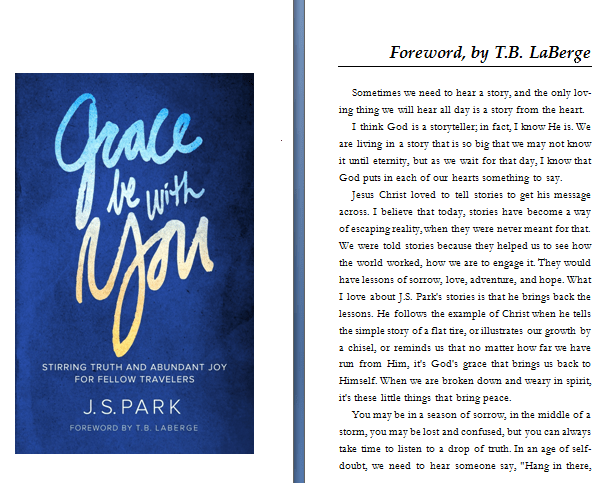
Foreword to My Newest Book, by T.B. LaBerge

Grace Be With You Foreword TB LaBerge


My very good friend and blogger T.B. LaBerge wrote the Foreword to my newest book, Grace Be With You.

The book is a collection of short stories, poems, and thoughts, many of which you’ve seen here on this blog.
It’s available now in paperback and ebook!


http://www.amazon.com/Grace-Be-With-You-paperback/dp/069269031X/

http://www.amazon.com/Grace-Be-With-You-ebook/dp/B01E4XXCVM